98% of influenza cases in India are H1N1, but no cause for alarm: ICMR chief
ICMR director general Dr Rajiv Bahl noted that despite a recent uptick in infections, severe cases requiring hospitalisation remain low | India News
ICMR director general Dr Rajiv Bahl noted that despite a recent uptick in infections, severe cases requiring hospitalisation remain low
Nearly 98% of influenza cases tested across the country were Influenza A (H1N1), a top official of the Indian Council of Medical Research (ICMR) said on Tuesday, adding that hospitalisation rates remain low, with severe illness largely restricted to high-risk individuals.
Dr Rajiv Bahl, ICMR director- general, also stressed that there was no cause for concern and that no deaths had been reported due to influenza.
“Our surveillance network has shown that about 98% of the cases that are tested are of H1N1; however, there is no need to panic as there is no shift in the seasonal flu pattern that we normally see. There are two peaks usually— monsoon and winter— and the cases that we are seeing are usual for this time of the year. We haven’t found any trend or pattern out of the usual that should concern us. Having said that, we have to be watchful and follow preventive measures,” Dr Bahl said.
He underlined that there was is a robust surveillance network in place in 23 hospitals across the country that function as sentinel sites for syndromic and other testing. “There are 73 labs that test at least 25 samples each in a week for severe acute respiratory infection (SARI) and influenza-like illness (ILI) to know which pathogens are circulating in the community.”
Dr Bahl acknowledged that while the number of infections may have increased in the past few weeks, there weren’t many severe cases requiring hospitalisation.
”Some cases are severe, but the number is not unusually high. And those who require admission are usually people who have some underlying medical condition,” he said.
There may, however, be some time before the infection peaks.
“We can never know when the peak is going to hit until the number of cases start plateauing and then coming down. So far, the trend shows the number of infections is going up,” he said.
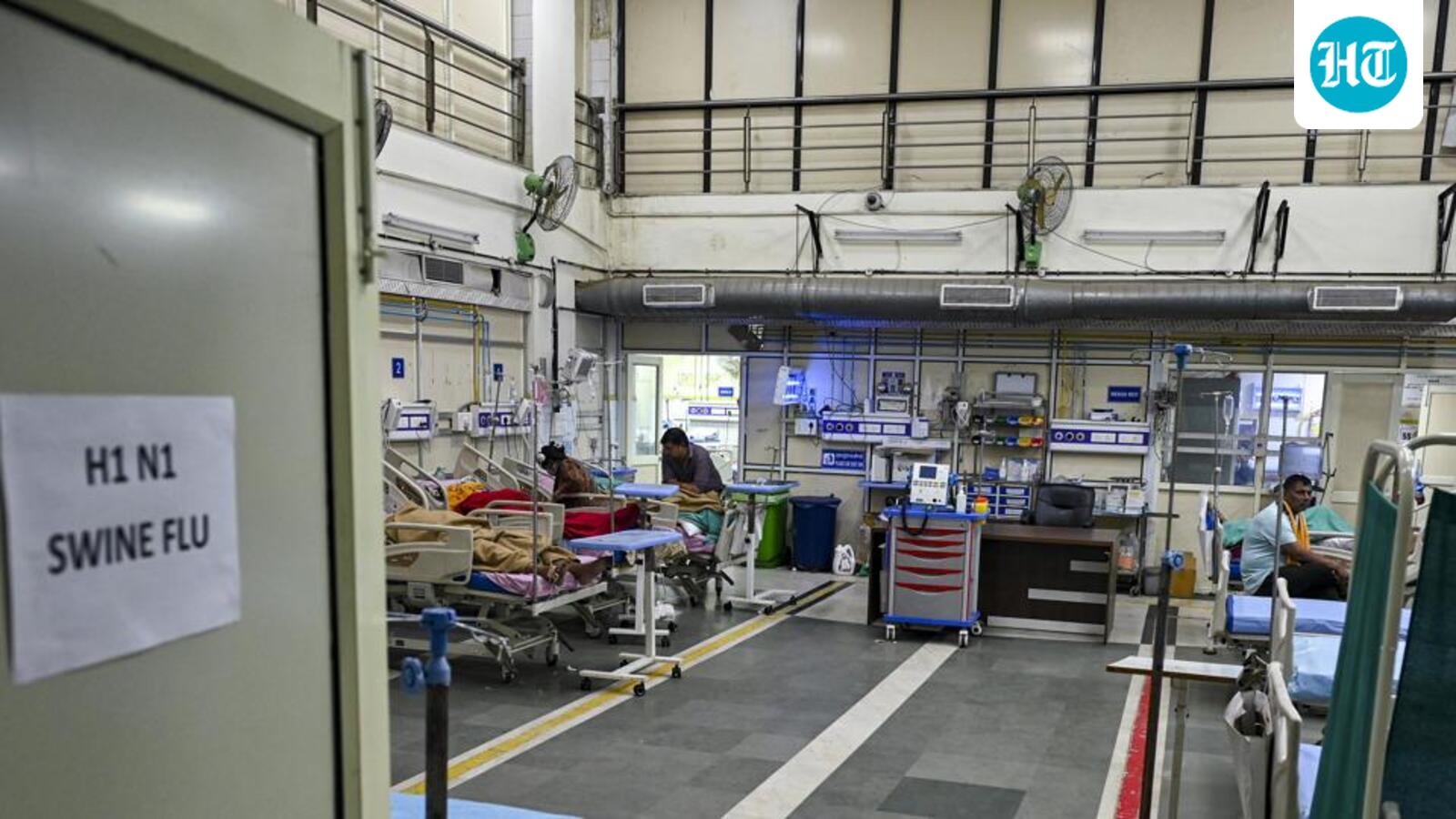
Hospitals said there has been an uptick in the number of admissions related to respiratory illnesses but the numbers were not overwhelming.
“The number of admissions of respiratory cases is high, but these are people who suffer from some form of comorbidities. Not all need admission. Also, the numbers aren’t overwhelming and people are getting better, “ said Dr Sumit Ray, medical superintendent, Holy Family Hospital.
ICMR has earlier said the strain wasn’t new and vaccines available were effective against the current strain.
“The Influenza A (H1N1) pdm09 viruses currently circulating in the country belong to the A/Missouri/11/2025 (H1N1) pdm09-like virus strain. These viruses belong to clade 6B.1A.5a2a, subclade D.3.1.1, and have been in circulation since 2025,” said ICMR.
“The Influenza strains currently circulating are also well matched with the vaccine strains recommended by the World Health Organisation for the Northern Hemisphere.”
Dr GC Khilnani, chairman, PSRI Institute of Pulmonary, Critical Care, and Sleep Medicine, said the ”silver lining is that there is also a section of young healthy adults that isn’t showing much symptoms even though there is a large number of patients whose tests are returning positive for H1N1. There are some patients in ICU needing oxygen but these are people who already had compromised lungs.”
Rhythma Kaul is the national health editor of the Hindustan Times. She has been reporting on public health, medicine, and medical research, with a particular focus on how government decisions and health system reforms shape people’s lives. Rhythma has over 25 years of journalistic experience. She joined Hindustan Times in 2008, and has since covered everything from pandemics and infectious diseases to cutting‑edge medical research and climate‑related health challenges. Her stories routinely track the work of the Ministry of Health and Family Welfare, department of pharmaceuticals, and key national health programmes, making complex medical science and policy accessible to a wide audience. One of her prominent news breaks has been the 2012 Baby Falak case: A two-year-old brutally battered baby girl was admitted to AIIMS-Delhi with severe head injuries, multiple fractures, human bite marks, and burns. The police investigation revealed this to be a case of multi-state human-trafficking racket. She was profiled by The Wall Street Journal for breaking this story. Rhythma holds a Master’s degree from Jawaharlal Nehru University, Delhi. Prior to Hindustan Times, she worked with the India Today Group. Rhythma can be contacted at rhythma.kaul@hindustantimes.com. Her X handle is @RamblingBrook.Read More