Apple warns of future 'supply constraints' for Mac, iPhone, iPad
Shares of Apple plunged on a warning of slower sales in the coming months.
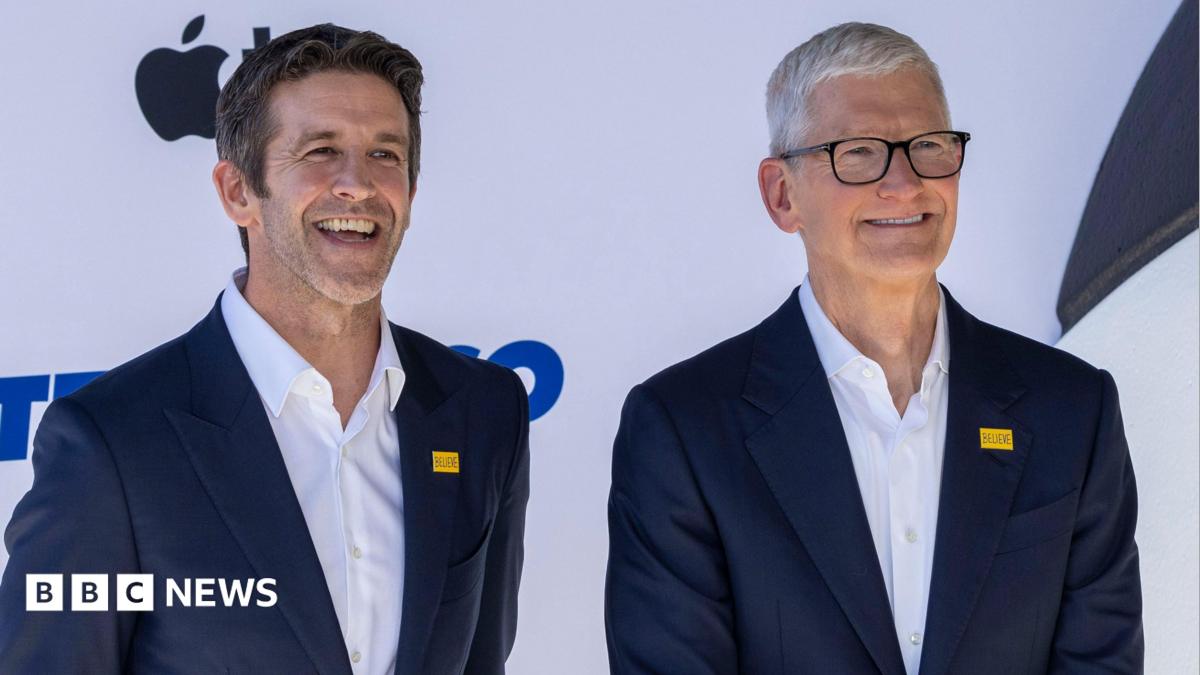
Apple spooked Wall Street on Thursday by warning it expected a "significant" hit from growing supply constraints for its most popular products.
Outgoing chief executive Tim Cook said while the impact of supply constraints had already shown up with the availability of Mac computers, it was expected to worsen and spread to affect iPhone and iPad products.
"We're seeing some very significant constraints currently with limited flexibility in the supply chain to remedy it," Cook said.
One of the supply constraints was in key chip components of Apple's products, the firm said.
Devices such as Macs and iPhones require microprocessors with "advanced nodes" - essentially computer chip technology that allows them to operate more quickly - most of which Apple has manufactured through TSMC, which is based in Taiwan.
However, Cook insisted that the core issue was unexpected demand, mainly for iPhone and Mac products. Sales of those products grew 22% and 25% respectively during the June quarter.
Earlier this year, Apple said its iPhone 17 was so in demand that its launch was the biggest in the company's history.
"This is not a regular supply issue, it's a demand forecast issue to be candid," Cook added. "We've got a quarter ahead where we'll be scrambling on the supply side."
Apple also noted that its gross margin, or the amount of money it keeps from every sale, was 2% larger than it otherwise would have been during the last three months because of tariff refunds. That would mean the company received roughly $1.1b in such refunds, according to calculations by the BBC.
Cook said Apple intended to "reinvest the tariff refunds into the US".
The company previously said, external it intended to put $600b toward building out more domestic manufacturing over the next four years. China is currently the largest manufacturer of Apple's products.
Cook also addressed Apple's impending public relaunch of Siri, an AI assistant that the company has seemingly struggled to make competitive in an era of proliferating AI chatbots from the likes of OpenAI and Anthropic.
While the new version of Siri AI is still in public beta, essentially a testing phase before broader release, Cook said it is part of "an enormous opportunity for Apple going forward in AI."
"The ability to run on device is also very strategic, and sort of a competitive weapon, if you will," Cook said.
He added that negotiations with authorities in the European Union about releasing the new version of Siri are ongoing with the goal of making it available "to everyone, everywhere at the same time."
Boom in Amazon cloud boosts stocks
Investors proved less concerned with Amazon's future performance, pushing the company's stock up 10% in after hours trading.
Despite showing free cash flow of negative $7.6bn due to massive and ongoing spending on AI projects, Amazon's core businesses grew enough to offset any immediate worry on Wall Street.
Free cash flow is metric that details how much money is left over after a company pays for operations and investments. So, over the last year, Amazon has spent significantly more money that it has brought in.
Chief executive Andy Jassy boasted 37% growth in Amazon's Amazon Web Service (AWS) cloud business, noting it was the segment's best showing in four years.
"AWS is booming," he said.
Overall, Amazon's sales grew 20% compared to a year ago, to $200bn, while its profits more than doubled over the same period to hit $63bn.
Forrester analyst Tracy Woo said the growth in Amazon's cloud business was impressive and its combined company results were "a clear indicator that its infrastructure investments are meeting market demand rather than outpacing it."
The company's expectation that it will spend $220b this year on AI, up from a planned $200b just three months ago, did give Woo some slight concern over how successful such ongoing and ever-growing spending will be in the years ahead.
"The bigger question is whether long-term commitments, capacity, power, leases, and guarantees will continue to be a source of economic exposure when capacity comes online in 2027 and 2028," Woo said.
Some tech shares are plunging - what does that mean for the AI revolution?


