Assisted dying: How laws differ around the world
About 400 million people have access to some form of assisted dying - what are the policies of other countries?
Around 400 million people now live in countries which have legalised assisted dying.
Canada, Australia, New Zealand, Spain and Austria have all introduced assisted dying laws since 2015 – when UK MPs last voted on the issue – some allowing assisted death for those who are not terminally ill.
Just last month, France adopted an 'aid in dying' law for adults with incurable conditions causing them unbearable pain.
While most jurisdictions forbid medical help to die, assisted dying laws around the world vary.
Across the US, assisted dying - which some critics prefer to call assisted suicide - is legal in 30 out of 50 states, as well as in Washington DC.
Oregon was one of the first places in the world to offer help to die for some patients, in 1997, and so has nearly 30 years' experience. It has become the model on which other US assisted dying laws have been framed.
In Oregon, assisted dying is open to terminally ill, external, mentally competent adults expected to die within six months - and must be signed off by two doctors. Since 1997, external, 5,520 people have received a prescription for a lethal dose of medication - with 3,691 deaths.
In a 2025 report, external, 61% of patients who ask for help to die had cancer, 14% had a neurological condition like motor neurone disease and 11% had heart disease. Of the 400 patients who took a lethal dose of medication last year, the vast majority (89%) said loss of autonomy was a key concern, while others cited:
Losing control of bodily functions (47%)
Concern about being a burden on family and friends (43%)
Inadequate pain control (28%)
Financial implications of treatment (4%)
In Oregon, as in other US states that permit assisted dying, the lethal medication must be self-administered - the same is proposed in England and Wales. Around one in three of those prescribed a lethal dose don’t go ahead with it.
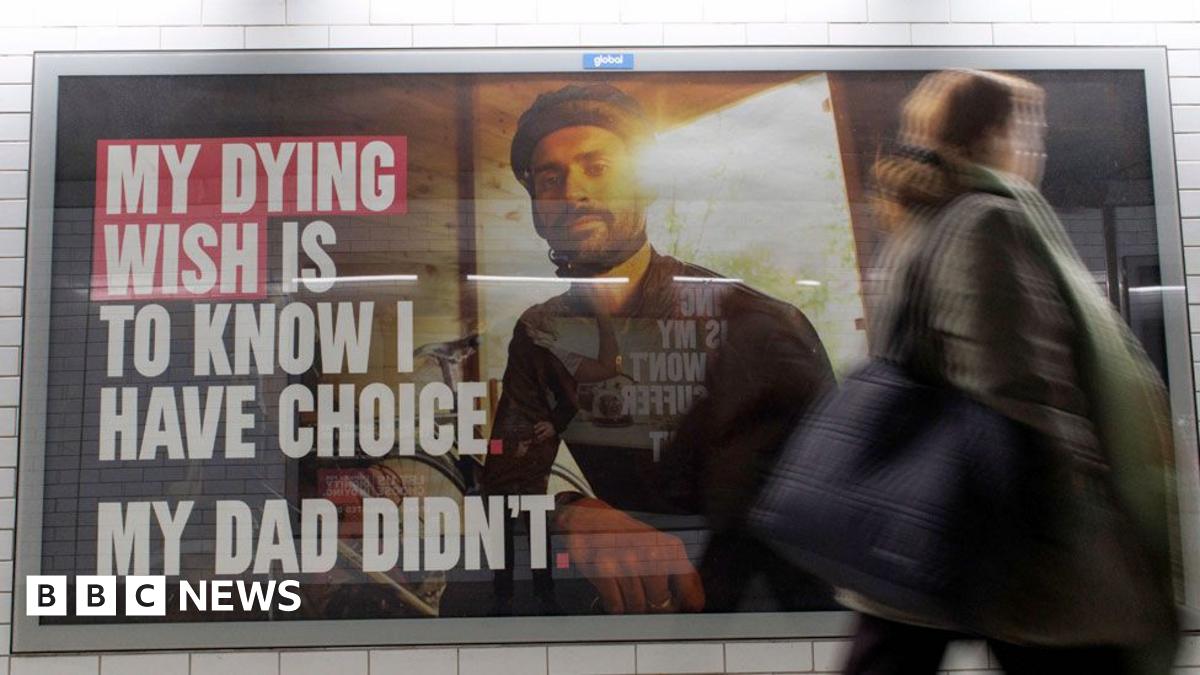
Oregon is important for supporters of assisted dying in England and Wales as they point out it has remained restricted to terminally ill adults since its introduction. However, opponents say some of the rules have been relaxed. A residency requirement has been lifted, which means it is open to people from outside the state. The number of assisted deaths has also risen substantially over the years.
Canada is the country often cited by opponents of assisted dying as an example of the so-called "slippery slope" - a place where assisted dying has been extended and made available to more people since it was first brought in. Medical assistance in dying (Maid), external was introduced in 2016, initially just for the terminally ill.
This was amended in 2021 and extended to those experiencing "unbearable suffering" from an irreversible illness or disability.
It had been due to be extended to people with a mental illness but that is now on hold.
Critics say the more the law is widened, the more disabled and vulnerable people will be put at risk. There has also been a dramatic growth in the number of people using Maid.
Roughly one in every 20 deaths in Canada are now medically assisted, external, compared to about one in 100 in Oregon.
Across Europe, six countries have some form of legalised assisted dying: Switzerland, the Netherlands, Belgium, Luxembourg, Spain, Austria and - most recently - France. In all of them - unlike the proposals in England and Wales - help to die is not restricted to the terminally ill.
Switzerland was the first country in the world to create a “right to die” when it made assisted suicide legal in 1942. It is one of the few countries which allows foreigners access to help to die via organisations like Dignitas, in Zurich. More than 600 Britons have died at Dignitas, external in the past two decades, including 43 last year. The lethal medication must be self-administered.
The Netherlands and Belgium both legalised assisted dying more than 20 years ago for patients experiencing unbearable suffering from an incurable illness, including mental health issues. It has since been extended to children - the only European countries to allow this. Both allow euthanasia - or physician-assisted dying.
Most recently, Spain and Austria have legalised assisted dying for both terminal illness and intolerable suffering. In Austria, the drugs must be self-administered, whereas in Spain a medical professional can administer them.
In England, Wales and Scotland, parliament has so far rejected assisted dying proposals.
But assisted dying has already been legalised in one part of the British Isles.