Bihar’s deadly river crossings: When the journey home becomes a gamble
Along the Ganga, Gandak, Kosi, Ghaghra, and others, settlements in the Diara areas remain dependent on boats for access to farms, schools, markets, etc. | India News
Along the Ganga, Gandak, Kosi, Ghaghra, and others, settlements in the Diara areas remain dependent on boats for access to farms, schools, markets, etc.
For families living along Bihar’s rivers, crossing the water is rarely an adventure. It is part of an ordinary day. A boat takes a farmer to his fields, a teacher to a school, a child to a classroom and a worker to a job on the other bank. Markets, hospitals and social gatherings can all lie across a stretch of water that is deceptively familiar.
Yet an everyday journey can turn into a last one.
On the night of October 13, at least 13 people died when a boat capsized in the Ganga near Raghopur in Vaishali district. Twelve of the victims were reported to be children. The passengers were travelling at around 8.30pm to attend a feast when the boat overturned. Initial reports suggested that the vessel was small and may have been carrying more passengers than it could safely accommodate.
The tragedy was devastating in its immediate human cost. But it also raised a more uncomfortable question: why does crossing a river in Bihar remain so dangerous when the risks have been known for years?
For the families who lost loved ones, compensation and rescue operations may offer some immediate assistance. They cannot explain why an ordinary journey was allowed to become a catastrophe. Nor can they guarantee that another family will not face the same loss at another ghat.
A river is a road, but without its rules
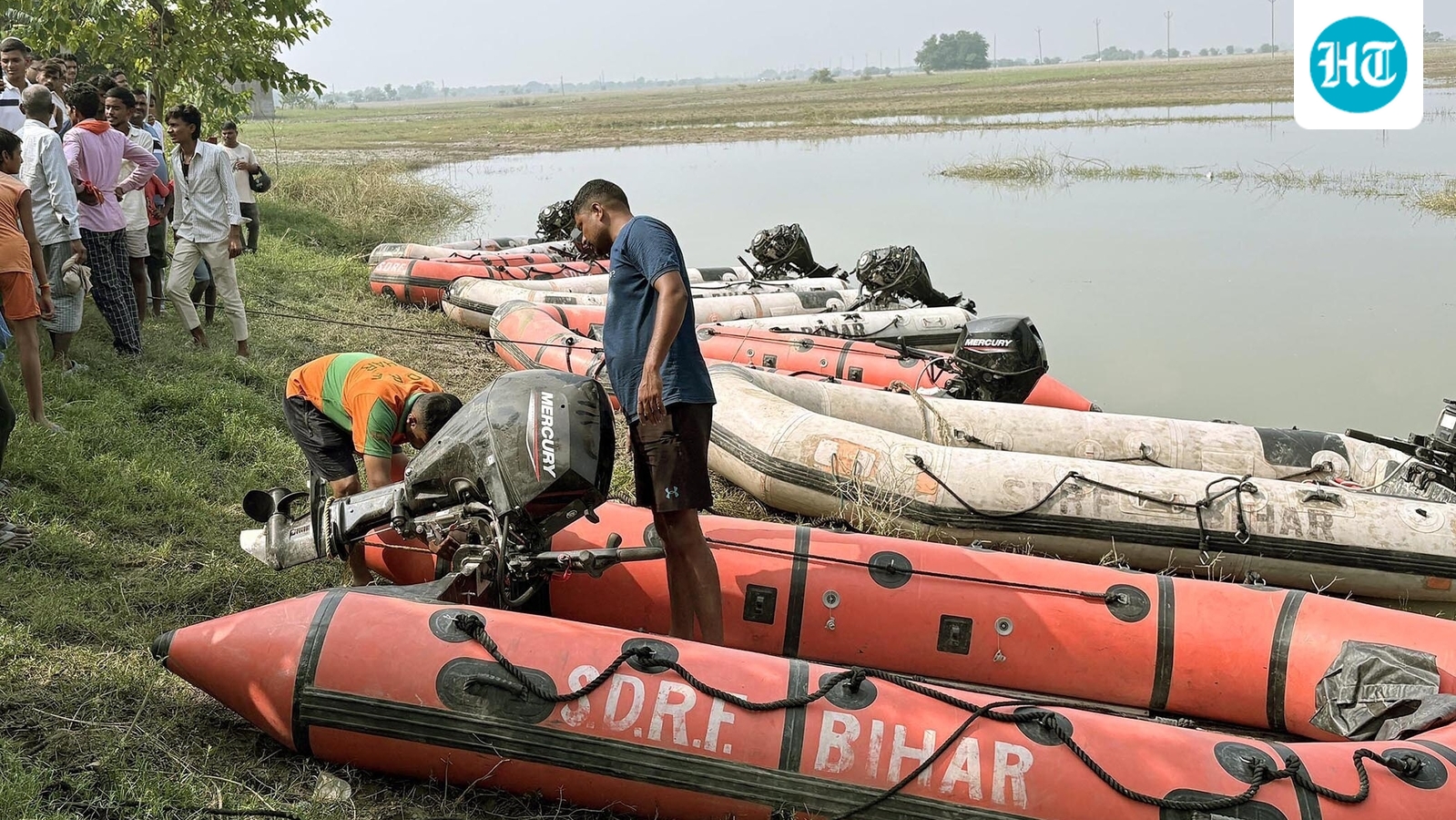
Bihar’s rivers are both a lifeline and a hazard. Along the Ganga, Gandak, Kosi, Ghaghra, and other waterways, settlements in the diara areas remain dependent on boats for access to farms, schools, markets, and essential services. In some places, a bridge is unavailable; in others, reaching one requires a long detour.
The scale of this dependence is considerable. Information obtained from the Patna centre of the Inland Waterways Authority in January 2026 put the number of operational boat services across the state at more than 7,000, spread across 1,550 ghats. The state government has also planned community jetties at another 150 locations.
These figures describe more than a transport network. They represent thousands of daily decisions made by people who must weigh convenience, cost, and necessity against the river's dangers.
For many passengers, refusing to board an overcrowded boat may not be a straightforward choice. The next service could be far away, a road journey could consume precious hours, and a missed trip could mean lost wages or a day’s work abandoned. In such circumstances, risk becomes normalised. What should be an exceptional breach of safety becomes part of the routine.
That does not absolve passengers or boat operators of responsibility. But it does explain why public safety cannot depend entirely on individual caution. When a service is essential, the state must ensure that the risks are controlled.
A bridge does not end dependence
Raghopur illustrates the limits of infrastructure-led solutions. A six-lane bridge has recently improved connectivity between Patna and the area. It would be tempting to assume that the bridge has made river crossings obsolete.
Raghopur is a large riverine area, and the bridge does not connect every village to every destination. Residents still need boats to travel between settlements and reach places such as Bidupur. The geography that makes a bridge valuable also ensures that smaller crossings remain necessary.
Dhirendra Kumar, a Patna-based journalist, said boat services at ten ghats in Raghopur—eight along the Ganga and two towards the Gandak.
“At Jameendari Ghat, motorised boats can be seen carrying motorcycles alongside passengers. No visible load lines to indicate safe passenger limits and no readily apparent life jackets for travellers, which resulted to the death of a teacher who had fallen from a boat the previous year. The warning signs are never invisible,” he said.
A bridge can shorten a journey. It cannot substitute for inspections, enforce passenger limits or ensure that a boat carrying children at night has the equipment needed to protect them.
The cycle of tragedy and forgotten promises
Bihar’s record of boat accidents reveals a familiar pattern: disaster, public outrage, official instructions and, eventually, a return to business as usual.
In September 2009, a boat capsized near Phultora Ghat in Khagaria district on the Bagmati, killing around 60 people. Overcrowding and bad weather were among the factors reported at the time.
In January 2017, a boat accident on the Ganga in Patna during the Makar Sankranti festivities killed 24 to 25 people, according to different reports. The passengers were returning from a kite-flying event in the riverine area.