Brics to set up research repository, youth startup platform, explore uni ranking
The grouping of the world’s 11 major emerging economies looks to deepen cooperation in science, education, innovation and skilling | India News
The grouping of the world’s 11 major emerging economies looks to deepen cooperation in science, education, innovation and skilling
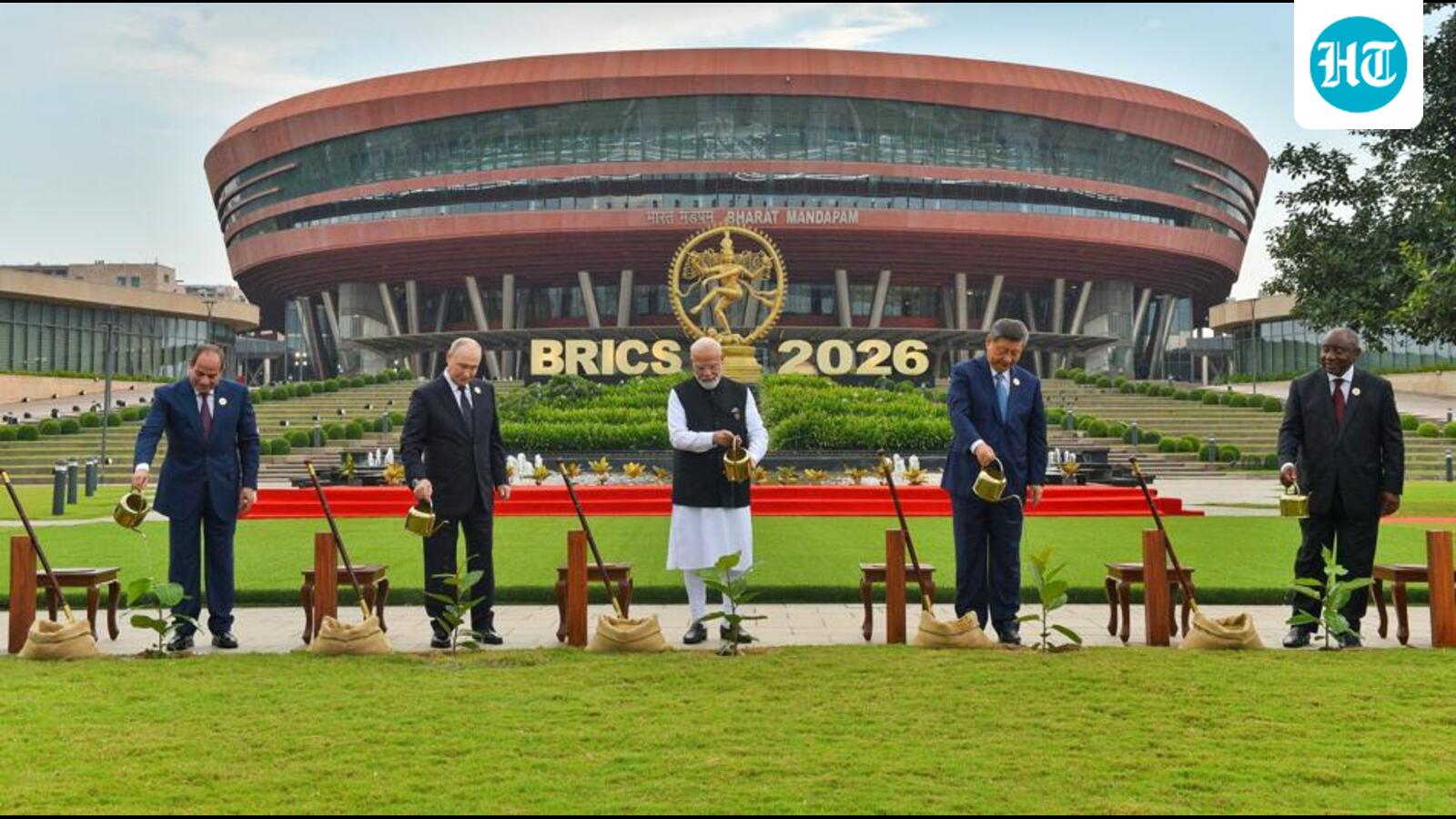
The Brics member countries will set up a common digital research repository, a platform to support youth startups, and explore a new university ranking and evaluation system, as the grouping of the world’s 11 major emerging economies looks to deepen cooperation in science, education, innovation and skilling.
The New Delhi Declaration, adopted on the first day of the grouping’s summit in India’s capital on Saturday, said the Brics Science and Research Repository (BSRR) will map and share research outputs, datasets, infrastructure and expertise across member countries.
The Brics Youth Startup Platform (BYSP) will facilitate collaboration and support for youth-led startups. It will provide a virtual platform for dialogue and support for them.
The declaration recognised the need to catalyse financing for early- and growth-stage startups in alignment with the Brics Startup Innovation Fund.
The grouping will strengthen large-scale research infrastructure and megascience projects under a 2026-30 action plan.
The declaration welcomed the outcomes of the 13th Brics Education Ministers’ Meeting held in Bhubaneswar in August. It backed efforts to develop a Brics University Global Ranking and Evaluation System proposed in 2023.
A specialised workshop is scheduled between September and December 2026.
The Brics Education Olympiad is also being developed and is currently at the conception stage.
The grouping resolved to continue the Brics Rectors’ Forum, which brings together university heads and academic leaders to strengthen higher education, scientific research and cross-border partnerships.
Brics countries adopted an action plan of the working group on research infrastructures and megascience projects for 2026-2030. It will operationalise the Brics Global Research Advanced Infrastructure Network (BRICS GRAIN) for cooperation in research infrastructure, megascience projects, research facilities and engagement with the global research community.
In education, the countries welcomed India’s guiding principles on ‘Strengthening Academic Collaboration on Traditional and Indigenous Knowledge Systems’, aimed at identifying, preserving, protecting and promoting traditional and indigenous knowledge through responsible use of digital technologies.
The declaration encouraged the Brics Network University to consider the possible inclusion of traditional, indigenous and local knowledge systems as an additional International Thematic Group (ITG), in accordance with established governance procedures consistent with the national laws and policies of Brics countries.
It backed cooperation in early childhood care and education, foundational literacy and numeracy, mutual recognition of qualifications, academic and professional mobility, digital literacy and the safe, ethical and human-centred use of emerging technologies, including artificial intelligence.
The grouping reaffirmed support for the Brics-Technical and Vocational Education and Training (TVET) Cooperation Alliance (BRICS-TCA) and committed to strengthening skill development, digital literacy and workforce preparedness, including the “alignment of training programmes with evolving market demands” and “linkage of TVET institutions with industries.”
People-to-people engagements are also planned, though the schedule is yet to be announced.
An academic forum in Lucknow will bring together academics and experts for dialogue and knowledge exchange. A virtual ‘Brics Network University’ conference will focus on traditional and indigenous knowledge systems in the digital age.
A ‘Brics Young Scientists Forum’ in Bengaluru aims to promote scientific interaction, knowledge sharing, and collaborative research.
Sanjay Maurya is a Principal Correspondent with Hindustan Times, where he covers education, with a focus on school and higher education, competitive examinations, education policy and governance. Working as part of the National Bureau, he is based in New Delhi and reports on the Ministry of Education and covers various statutory bodies like UGC, AICTE and NCTE and autonomous bodies like CBSE and NCERT. His reporting also tracks the implementation of key government reforms and policies from school education to higher education including in IITs, NITs, IIMs, central and state universities, and their impact on students and educational institutions. His reporting on the irregularities and rushed implementation of CBSE's On-Screen Marking (OSM) system for evaluation of Class 12 board exams 2026, triggered administrative action, leading to the transfer of the board's two senior-most officials and the constitution of a committee to probe alleged irregularities in procurement process of the system. He joined Hindustan Times in December 2024. Prior to that, he had a three-year stint at Careers360, where he reported on school and higher education, entrance examinations, admissions, rankings and various education policies involving universities and professional education bodies. Over the years, Maurya has reported extensively on major developments in India's education sector, including the implementation of the National Education Policy (NEP) 2020, reforms in the National Testing Agency (NTA) following the NEET-UG 2024 controversy, changes in school education, higher education regulation, and the evolution of entrance examinations such as NEET, JEE and CUET. He regularly produces data-driven and explanatory stories based on government documents, parliamentary proceedings, court records and official data. His focus remains on helping readers understand how education policies and institutional decisions affect millions of students, teachers and educational institutions across the country.Read More