CBSE says no to Class 6 exemption from 3-language rule; SC suggests 2027 rollout
The CBSE opposed a one-time exemption from its three-language rule for Class 6 students. The Supreme Court suggested a January 2027 rollout and sought a response. | India News
The CBSE opposed a one-time exemption from its three-language rule for Class 6 students. The Supreme Court suggested a January 2027 rollout and sought a response.
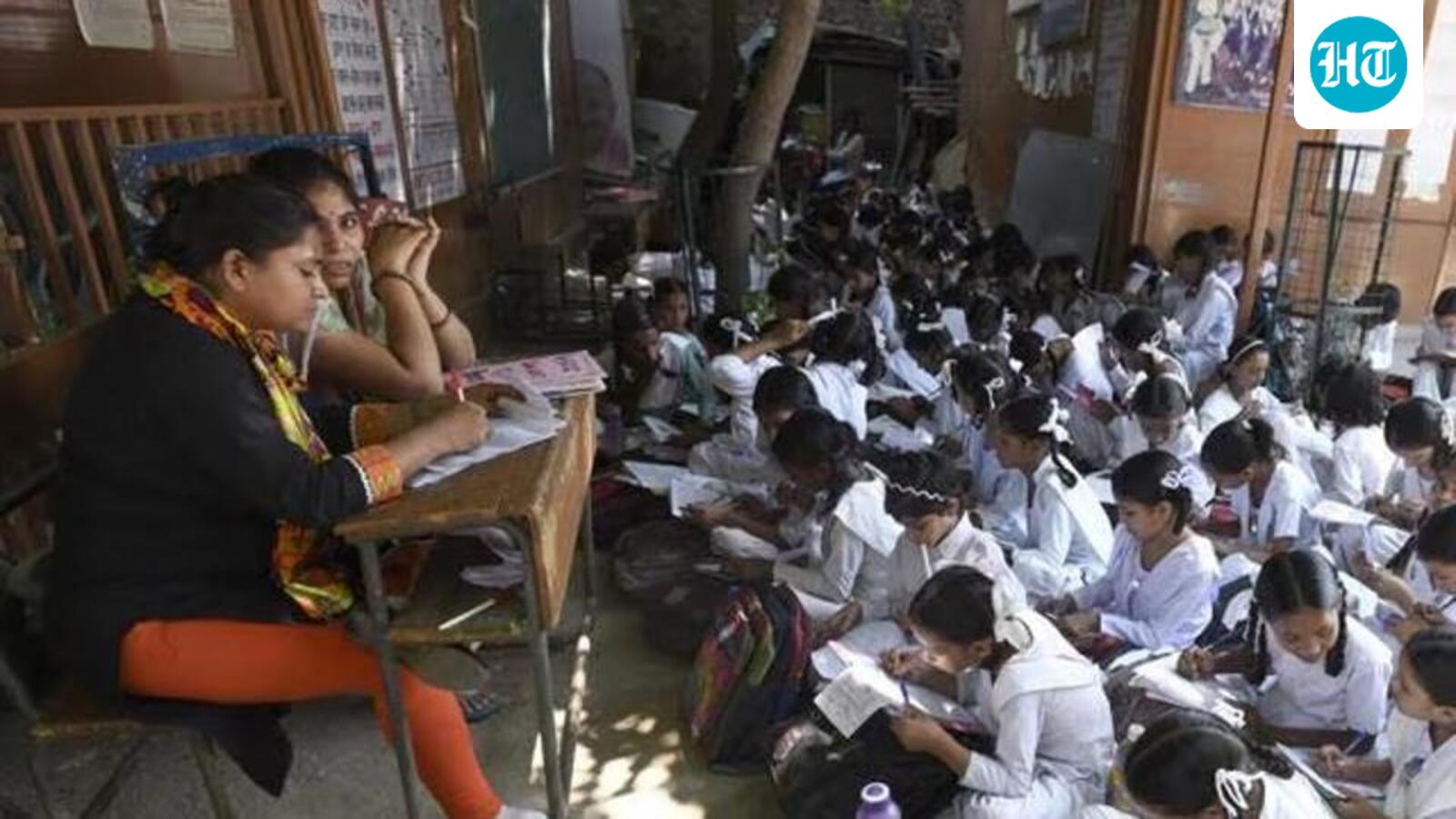
The Central Board of Secondary Education (CBSE) told the Supreme Court on Thursday that it cannot grant a one-time exemption from its three-language requirement to students currently in Class 6, arguing that doing so would create learning gaps, disrupt the progressive implementation of the language framework and open the door to similar demands from every subsequent batch.
The court, however, again nudged the Board to reconsider its position after going through the fresh note, suggesting that mandatory implementation for Class 6 could instead begin from January 2027, while allowing students of the current batch to voluntarily opt for the third language in the interim.
A bench comprising Chief Justice of India Surya Kant and justices Joymalya Bagchi and V Mohana said the objective was to give students, families and schools some time to adjust to a policy that was conceived in 2020 but brought into effect only this year.
“From next year, you can have this exercise from 6th standard…2020 the policy was envisaged…it has been put in place in early months of 2026…we are saying put it in early 2027, so that everyone comes to terms with it…give some elbow space,” Justice Bagchi said.
The court’s suggestion essentially revisits the same issue it had flagged on August 20, when it had first asked the CBSE to consider a one-time reprieve for the current Class 6 batch. The latest exchange came after the Board returned with its detailed reasons for declining that suggestion.
The CBSE said Class 6 was intended to be the starting point for the relevant cohort under the National Education Policy (NEP) 2020 and National Curriculum Framework for School Education (NCF-SE) 2023. Exempting the present batch, it said, would mean that students would enter Classes 7 and 8 without the learning exposure and continuity contemplated under the revised framework.
“If the present Class VI students are exempted at the foundational stage of implementation, they would enter Classes VII and VIII without the learning exposure and continuity contemplated under the framework,” said the Board.
Requiring them to join the revised scheme at a later stage would create “avoidable learning gaps” and place them at a pedagogical disadvantage, it added.
The CBSE also warned of a cascading effect if the present Class 6 students were given relief.
“Giving relaxation to current Class VI students will lead to a cycle wherein every subsequent batch will expect and ask for a relaxation, thereby indefinite delay in implementation,” it said.
The Board relied on data to contend that the policy was already being implemented by an overwhelming majority of schools and that concerns over teachers and learning material were being addressed.
According to its note, only 1.05% of approximately 28,195 CBSE schools have Class 6 students who have opted for more than one non-indigenous language.
The Board said Class 6 textbooks for the third language in all 22 scheduled Indian languages were already available on the NCERT website, covering the choices of 98.36% of schools. For the remaining languages, SCERT textbooks and resources would be used.
On teacher availability, the CBSE said data from 20,777 schools showed that 19,386, or about 93.3%, already had teachers for at least two distinct indigenous languages. Of these, 3,523 schools had teachers for three or more such languages.
The Board also informed the court that a five-member committee had been constituted on September 16 to facilitate and monitor implementation of the three-language framework in Classes 6 to 10. The committee is headed by education ministry director Bhagwati Prasad Kalal and includes NCERT secretary Rajeev Kumar, CBSE director (academics) Praggya M Singh, KVS additional commissioner Chandana Mandal and NVS deputy commissioner Somvir Poonia.
The committee has been tasked with assessing language options offered by schools, the availability of qualified teachers, textbooks and digital resources, besides recommending measures to remove implementation bottlenecks.
Despite these submissions, the court pressed the Board to consider a transition for the current Class 6 batch.
Senior advocate Anand Grover, appearing for the petitioners, told the bench that the CBSE had decided not to extend to Class 6 the transitional relief already given to Classes 7, 8 and 9.
The court suggested that the revised requirement could become mandatory for students entering Class 6 from January 2027. It also indicated that students currently in Class 6 who wished to take up the third language could be permitted to do so voluntarily during the current academic year.