Elon Musk asks why Starlink still lacks India licence, gets a reply from Rahul Gandhi
SpaceX CEO Musk noted that while Starlink is licensed in 165 countries, it has spent five years complying with Indian laws and government requirements. | India News
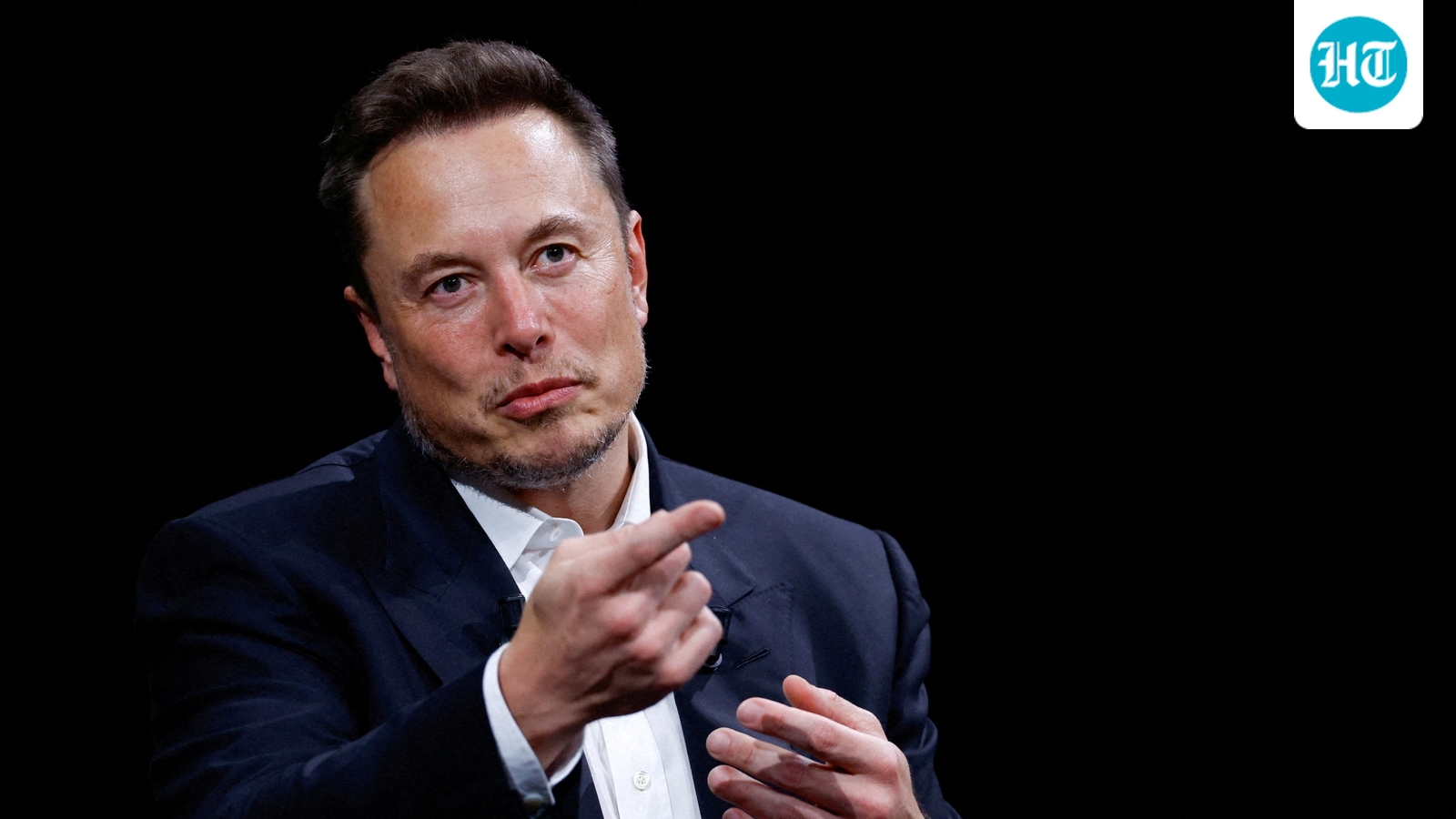
SpaceX CEO Musk noted that while Starlink is licensed in 165 countries, it has spent five years complying with Indian laws and government requirements.
Trillionaire Elon Musk on Thursday asked why Starlink was not issued a licence in India yet despite complying with every law for five years. His post received a response from Congress MP Rahul Gandhi.
The exchange came a day after Musk alleged that Starlink was being ‘blocked by certain oligarchs’ in India, an assertion rejected by the government earlier today. In its response, the Centre had said that India's regulatory framework for satellite communication services was “fair and non-discriminatory”.
Musk, the SpaceX founder and CEO, doubled down on his claims on Thursday and said Starlink was licensed in more than 165 countries and had spent five years complying with Indian laws and government requirements. “So why still no license?” he asked. “Is Ambani the real boss of India?” he added.
Leader of Opposition in the Lok Sabha Rahul Gandhi responded to his X post with a cryptic reference to “the other guy”. Gandhi responded to Musk’s post: “Welcome to India, Elon. Wait till you discover the other guy.”
Musk later thanked Gandhi for his response. "Thank you, Rahul. This is indeed troubling," Musk said in response to Gandhi's post.
The remarks come as Musk-owned Starlink awaits regulatory nod to begin commercial operations in India. The company has received a Global Mobile Personal Communications by Satellite (GMPCS) licence from the government but is awaiting security clearance and spectrum assignment before it can begin commercial services.
Rejecting Musk's claims, the ministry of communications termed it as “baseless and misconceived”.
“A post is being circulated in social media regarding the fairness of India’s regulatory framework for satellite communication services and suggesting that it is being applied in a discriminatory manner. The Government has put in place a fair and non-discriminatory authorisation framework for all telecommunication services, including satellite communication services,” it said.
The ministry said telecom licences had been granted to three companies offering GMPCS services using non-geosynchronous satellite orbits -- Starlink, Eutelsat OneWeb, backed by Bharti Airtel, and Jio Satellite Communications.
Under the terms of their licences, all three are required to demonstrate compliance with security conditions aimed at ensuring the safety of users and their data, the ministry said.
“Security assessment as part of this process is currently under way in respect of all the three licensees,” it said, adding that the companies were at “broadly the same regulatory stage”.
The government’s statement did not name Musk or Ambani and did not directly address Musk’s allegation involving the Reliance Industries chairman.
Musk’s latest post followed his allegation on Wednesday that Starlink was being blocked by “certain oligarchs” seeking to maintain their “monopolistic chokehold on the Indian people”.
“You can guess who they are … This is a crime against the people of India!” Musk said, responding to a post calling for Starlink to be allowed to begin commercial operations in India.
At the India Mobile Congress on Wednesday, Starlink vice-president Lauren Dreyer said the company had built its India operations around the country’s security requirements and had established 20 gateway sites comprising hundreds of antennas.
“We are ready to serve in India, once India is ready,” she said.
Starlink has also partnered with Bharti Airtel to explore bringing its services to Indian consumers and businesses, as well as connecting communities, schools and health centres in rural areas.
Follow the latest breaking news, major developments and agenda-setting stories from India and around the world with the newsdesk at Hindustan Times. Operating round the clock, the desk brings together experienced editors, reporters and correspondents to deliver fast, accurate and contextual reporting across subjects that influence public policy, governance, business, society and international affairs. The HT News Desk covers politics, elections, government policies, the economy, business and markets, science and technology, the environment, law and order, infrastructure, education, climate issues and geopolitics, while closely tracking developments across states, institutions and global capitals. The team also leads coverage of major breaking news events, policy announcements, court proceedings, natural disasters, public emergencies and significant international developments. Reports published by the newsdesk are based on information gathered from reporters on the ground, official statements, government agencies, court records, regulatory filings, recognised institutions and other authoritative sources. Stories undergo editorial scrutiny and verification processes to ensure accuracy, fairness and relevance, and are updated as events evolve and additional information becomes available. Whether covering a key political decision in New Delhi, an economic policy shift affecting millions, a landmark court ruling or a major global event, the HT News Desk aims to provide readers with reliable, fact-based journalism that delivers not only the latest developments but also the context and analysis needed to understand their wider implications.Read More