Exclusive: Return to Bangladesh not about power but to stand by people, says ex-PM Sheikh Hasina
A stable, democratic, secular and development-oriented Bangladesh is important not only for Bangladesh, but also for India’s security, Hasina said. | India News
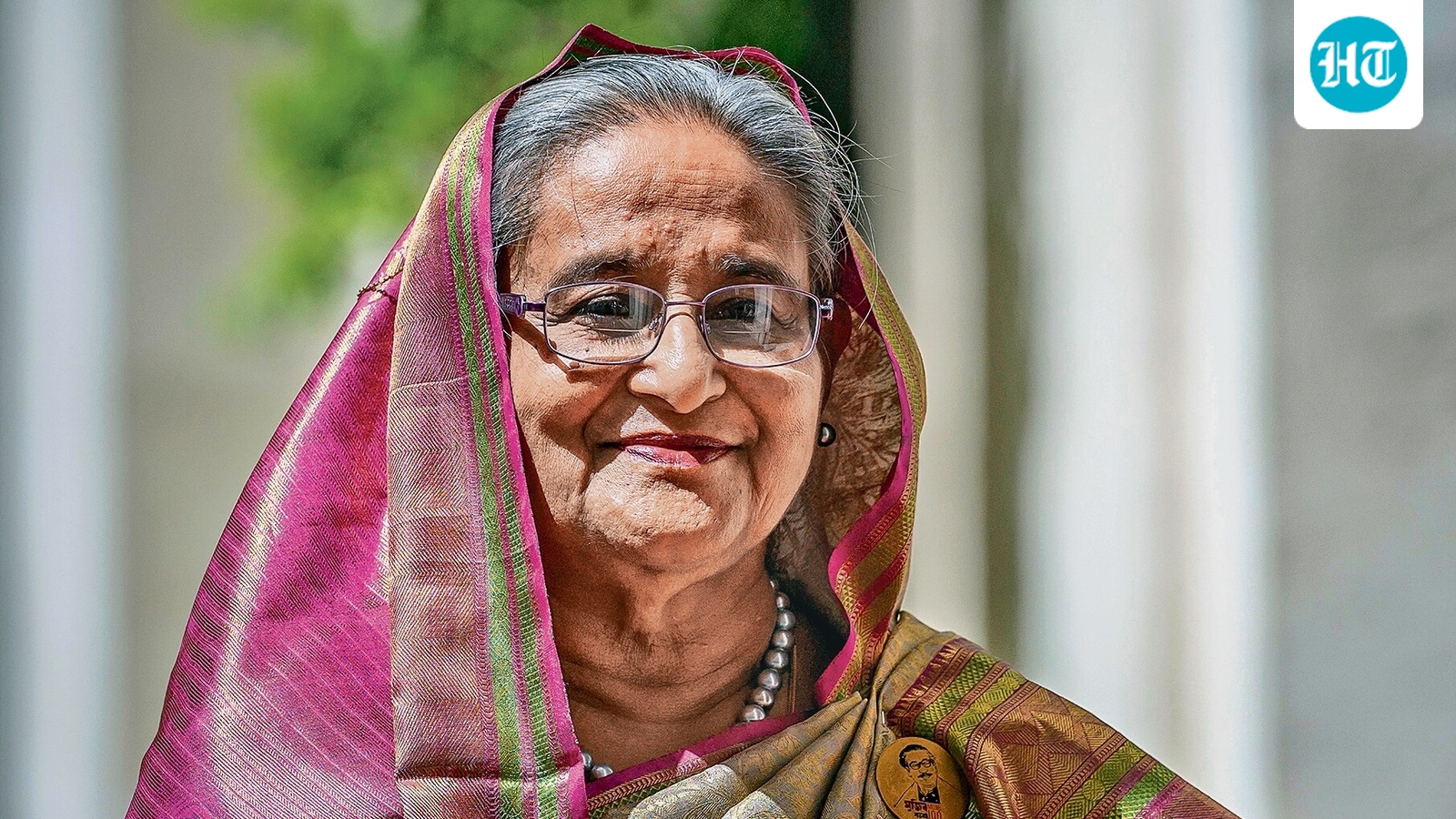
A stable, democratic, secular and development-oriented Bangladesh is important not only for Bangladesh, but also for India’s security, Hasina said.
Former Bangladesh premier Sheikh Hasina, in her first telephonic interview with Indian media, has questioned the Bangladesh Nationalist Party (BNP) government’s move to link her extradition to a possible visit to New Delhi by Prime Minister Tarique Rahman, saying she intends to return home on her own by December.
Hasina, who spoke to HT from an unspecified location, also questioned the BNP government’s decision to acquire combat jets from China under a $2.3-billion deal at a time when Bangladesh is grappling with electricity and gas shortages, lack of fertilisers and a cost of living crisis.
Excerpts from the telephonic interview:
The Bangladesh government says your press conference from Indian soil on August 5 vitiated the preparations for a visit by Prime Minister Tarique Rahman and Dhaka has set your extradition as a condition for this visit. What is your response to these developments?
I addressed a press conference at an international forum. How can this be a problem for relations between two countries? Tarique Rahman signed a stamp paper and given an undertaking that he would not do politics when he [left Bangladesh and] went to Britain in 2007. He indulged in politics from London and, in place of his mother [Khaleda Zia], acted as the chairman of his party. He participated in public and party meetings via video-conference. Did I ever tell the British government to stop a fugitive from my country from holding such meetings? I never made such an accusation. What is his problem?
Also Read | Bangladesh PM's early trip to India falls through, August visit possible
The way the leaders and workers of the Awami League are being persecuted and tortured, and their homes are being attacked — this was started by [interim government chief] Muhammad Yunus and it is being continued [by the Bangladesh Nationalist Party]. Not a day goes by without people being killed. Take the case in Rangpur, where four members of a family were killed, and the way a member of our youth wing was killed in Bogura city. Every day and every night, they are killing, arresting or registering cases against our party people. They are entering homes and assaulting men and women, beating up and harassing the elderly. In these circumstances, I can’t understand how my extradition is a condition.
I am going back to my own country, I don’t understand why he [Tarique Rahman] is objecting to that. They are talking about the extradition treaty, I want to go back on my own to my country. I will go back. Can I stay abroad my whole life? I have to return to my country, to my own people.
India-Bangladesh relations are not damaged by truth. They are damaged when democracy is destroyed, extremism is allowed to rise, minorities feel unsafe, regional security is put at risk, and state institutions are used for political revenge. A stable, democratic, secular and development-oriented Bangladesh is important not only for Bangladesh, but also for India’s security and South Asia’s stability.
Also Read | India again distances itself from Sheikh Hasina’s remarks
The issue of extradition is being used for political purposes. Legal and diplomatic processes will take their own course.
Have you finalised a timeframe for your return? Do you plan to return with other Awami League leaders in self-exile? Why did you say at your press conference you could be killed or arrested on your return?
I have said I intend to return by December because Bangladesh’s political crisis cannot be allowed to continue indefinitely. I will announce the specific date, time and point of entry in due course.
I want to return because Bangladesh is being pulled away from the path of development, democracy and stability. During our time in government, Bangladesh’s economy grew from about $70 billion to around $450 billion. Per capita income rose from $482 dollars to $2,784 dollars. That progress is now being damaged. GDP growth has fallen to 2.22% from 6.80% during the Awami League period. For the first time in 54 years, the industrial sector has recorded negative growth. Poverty has sharply increased, investment has turned negative. More than two crore people have become newly unemployed, and electricity and gas shortages have returned.
Also Read | Bangladesh sets Sheikh Hasina's extradition as condition for PM Tarique Rahman’s India visit
This is not only an Awami League issue, it is a national crisis. When development stops, jobs disappear. When law breaks down, people lose security. When extremist networks regain space, Bangladesh becomes a regional concern.