Explained: The unused constitutional clause on Supreme Court appointments
Article 124(3)(c) allows any citizen who, "in the opinion of the President, a distinguished jurist", to be appointed as a judge of the Supreme Court
Article 124(3)(c) allows any citizen who, "in the opinion of the President, a distinguished jurist", to be appointed as a judge of the Supreme Court
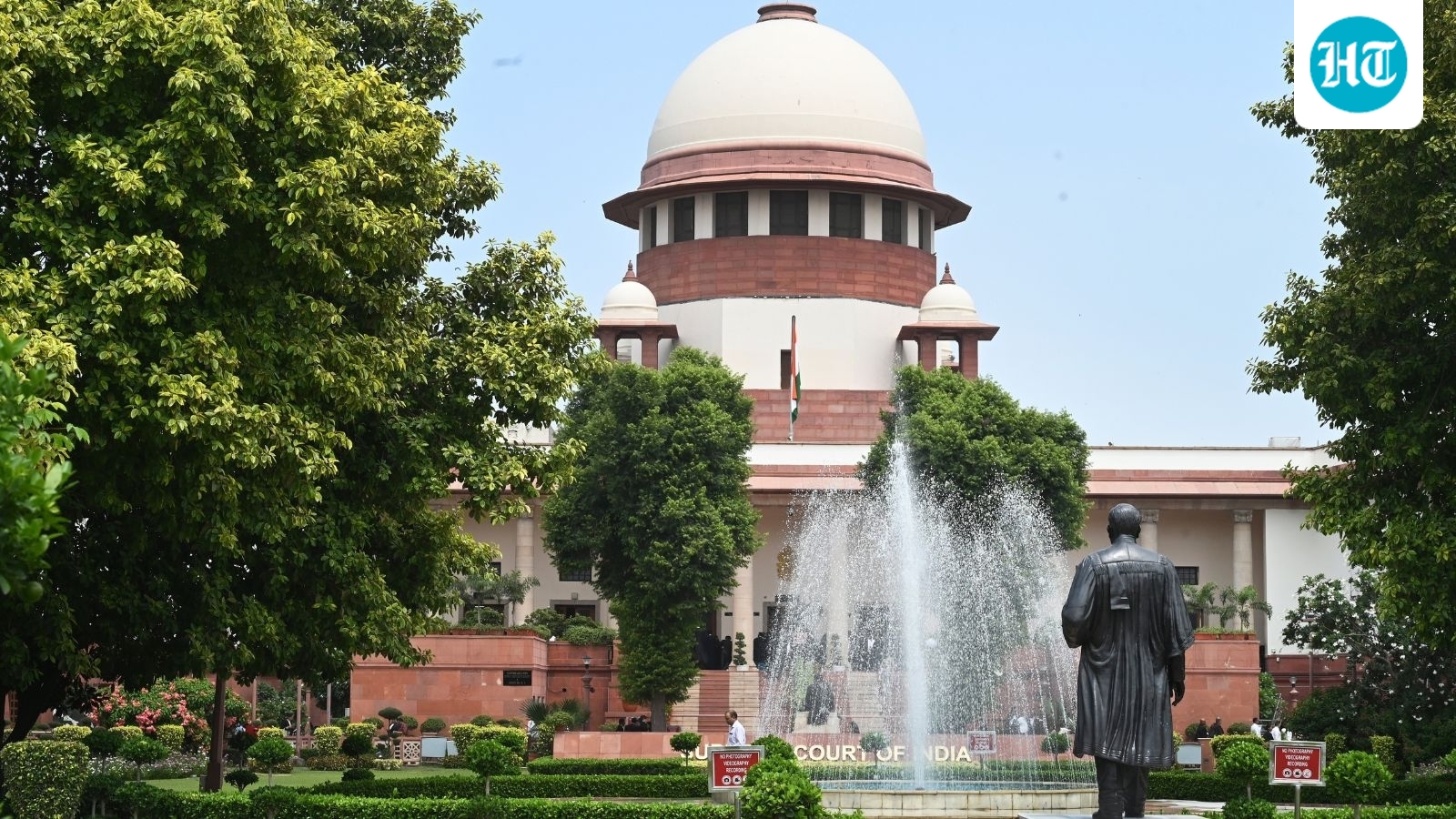
India’s Constitution contains a clause designed to bring eminent scholars and academics to its highest court. Yet, the provision has never been used, leading a sitting Supreme Court judge to recently describe it as one of the country’s great "unused mandates."
Speaking at the National Law University convocation in Delhi on August 30, Supreme Court judge Justice Ujjal Bhuyan questioned why India has overlooked legal researchers and professors for 76 years, relying only on veteran courtroom lawyers and career judges to make appointments to the country’s top court.
Also Read | Bar Council has no business disciplining students, says Supreme Court on law school row
The constitutional framework
According to Article 124(3) of the Constitution, which prescribes the qualifications to be a judge of the Supreme Court, a candidate must be an Indian citizen and have served as a high court judge for a minimum of five years, or have practised as an advocate in a high court for at least 10 years.
Article 124(3)(c) also allows the appointment of anyone who is, "in the opinion of the President, a distinguished jurist."
To be sure, the Constitution does not provide for the appointment of a “distinguished jurist’ as a judge of the high court.
Article 217 of the Constitution only provides two selection pools – judicial officers (having at least 10 years of experience) or advocates with a minimum of 10 years of practice. An option to appoint a distinguished jurist to the high court was added by the 42nd Amendment by the Indira Gandhi government during the Emergency in 1976 but was scrapped by the 44th Amendment by the Morarji Desai government.
But who qualifies to be a ‘jurist’? Does the Constitution define it? Is it specified in any of the statutory enactments? And more importantly, has this gap been tapped by the constitutional courts?

Justice Ujjal Bhuyan of the Supreme Court, speaking at a convocation at National Law University on August 30, observed that Article 124(3)(c) had not been used in the last 76 years. He said this expression has not been defined but would mean “all those eminent persons who are involved in the practice, teaching and research of law.”
Also Read | 'Baseless, born of animosity': Rajasthan HC acting Chief Justice slams SC judge's graft charge
Justice Bhuyan was of the view that it was not necessary for a person to practice law before a court to be acknowledged as a ‘distinguished jurist’. Since lawyers and judges are already enlisted separately under this Article, the expression ‘distinguished jurist’ would imply a community of people who are not practising lawyers or even judges, but who are skilled in law or knowledgeable in the field of law.
In India, the term ‘jurist’ is loosely applied, often to describe a lawyer or a judge of repute. Justice Bhuyan said that in the context of Article 124(3), it extended beyond the above two categories – judges and lawyers.
Section 3 of the Judges (Inquiry) Act, 1968, which deals with the investigation into misbehaviour or incapacity of a judge, does make a reference to the term, “distinguished jurist” when it refers to the composition of the committee to probe misbehaviour or incapacity of the judge. The first two members of this committee would be chosen from among the judges of the Supreme Court and the chief justices of the high courts. The third member, it says, would be a person who, in the opinion of the Lok Sabha Speaker or the Rajya Sabha Chairman, is a distinguished jurist. Invariably, the presiding officers have selected a senior advocate of repute and standing as the third member.
Article 124 provides that a judge of the Supreme Court is to be appointed by the President after consultation with such of the judges of the Supreme Court and the high courts in the states as the President may deem necessary. Judicial pronouncements since the 1990s provide for a collegium of judges, headed by the Chief Justice of India (CJI) and the four senior-most judges, to recommend names for appointment as judges of the Supreme Court.
In 2014, Parliament enacted the National Judicial Appointments Commission (NJAC) Act, which intended to replace the collegium with a six-member NJAC for selection and appointment of judges of constitutional courts. Besides the CJI, two senior-most judges and the Union law minister, two eminent persons were to be part of the appointment process.