How ‘Dhurandhar’ is a prime example of government-embedded filmmaking
Dhurandhar exemplifies government-embedded filmmaking, blending patriotism with a one-dimensional portrayal of Pakistan in contemporary cinema.
‘Dhurandhar’ features Ranveer Singh as an Indian spy infiltrating a Pakistani terror network. While some viewers celebrate its patriotic themes as a necessary response to historical narratives about Pakistan, the film perpetuates a one-dimensional view of the country and reinforces divisive tropes
Updated - August 16, 2026 12:23 pm IST
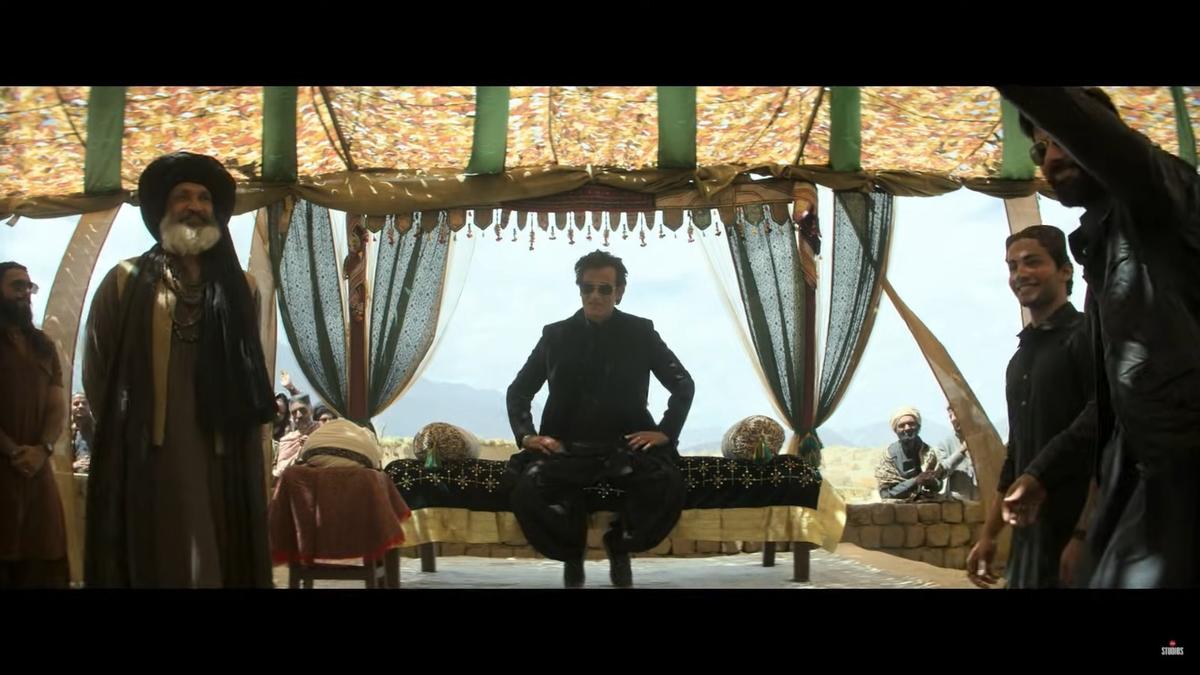
A still from Dhurandhar. | Photo Credit: YOUTUBE
The Hindi film Dhurandhar is becoming a sensation and a debate. It shows an Indian spy (Ranveer Singh) infiltrating a Pakistani gangster/terror network through Operation Dhurandhar. But the film, ironically, displays another kind of infiltration, putting it under a genre called “government-embedded filmmaking’, as coined by American writer Peter Maas. If the concept refers to the government giving special access to military/intelligence documents to induce favourable filmic portrayals of the security apparatus, here, I use it to mean how the ideological narrative of the government is being faithfully reproduced — a regular phenomenon now in India.
Dhurandhar is different from many other government-embedded films in that it has combined commercial film elements with some technical finesse in direction, screenplay, cinematography, art direction, and acting. Besides, it has infused some realism at the expense of melodrama. This distinguishes the director Aditya Dhar from the Sudipto Sens (Kerala Story) and the Vivek Agnihotris (The Kashmir Files; The Bengal Files).
Published - December 19, 2025 08:30 am IST
Text and Context / cinema / Hindi cinema / India-Pakistan
Terms & conditions | Institutional Subscriber
Comments have to be in English, and in full sentences. They cannot be abusive or personal. Please abide by our community guidelines for posting your comments.
We have migrated to a new commenting platform. If you are already a registered user of The Hindu and logged in, you may continue to engage with our articles. If you do not have an account please register and login to post comments. Users can access their older comments by logging into their accounts on Vuukle.


