India outplay England - but is women's Test cricket struggling for relevance?
The scheduling of the game and the announcement of Brendon McCullum's sacking left the historic Lord's Test between England and India struggling for relevance, so what is the future of women's Test cricket?
It is the eternal question facing women's Test cricket: how do you improve at something that you hardly ever get the chance to do?
Before the start of every Test both captains are asked about how special it is to play the format and whether they would like to do so more often.
It is a tiring yet necessary ritual for both players and press, considering the scarcity of these matches.
And the answer is almost always the same: yes, we would love to play more Tests, but we're not sure how the schedule allows it.
England's one-off match against India, the first women's Test to be played at Lord's after 150 for the men, was a week of mixed emotions.
It was historic and emotional, its significance felt from the beginning of day one when past England players from the amateur era filled the pavilion and rang the bell five minutes before play to honour their contributions to the game's position now.
There was also a record crowd for a women's Test of 37,846 across the game.
But its timing also made it feel like an afterthought, plonked into the calendar between the Women's T20 World Cup and The Hundred. It is indicative of the chaos of cricket's schedule that this was probably still the least disruptive option.
The England and Wales Cricket Board (ECB) point to this game being a recommendation of the Independent Commission for Equity in Cricket (ICEC) report in 2023.
England's squad was unusual, with key players rested because of the focus on said World Cup, and they had only two or three days after the final to train with the red ball.
Since the multi-format Ashes was first introduced in 2013, most women's Tests have been played as part of those series and worth a certain amount of points alongside white-ball games, but being a one-off Test left this one scrambling for relevance outside its historical context.
With the ever-growing influence of T20s, and an increasing gap in financial opportunities to fund the game professionally, where do women's Tests fit in?
'You can't have one every 18 months'
In the aftermath of the crushing 270-run defeat, England head coach Charlotte Edwards called for more women's Tests as she often did when she was captain too, but highlighted the need for domestic red-call cricket.
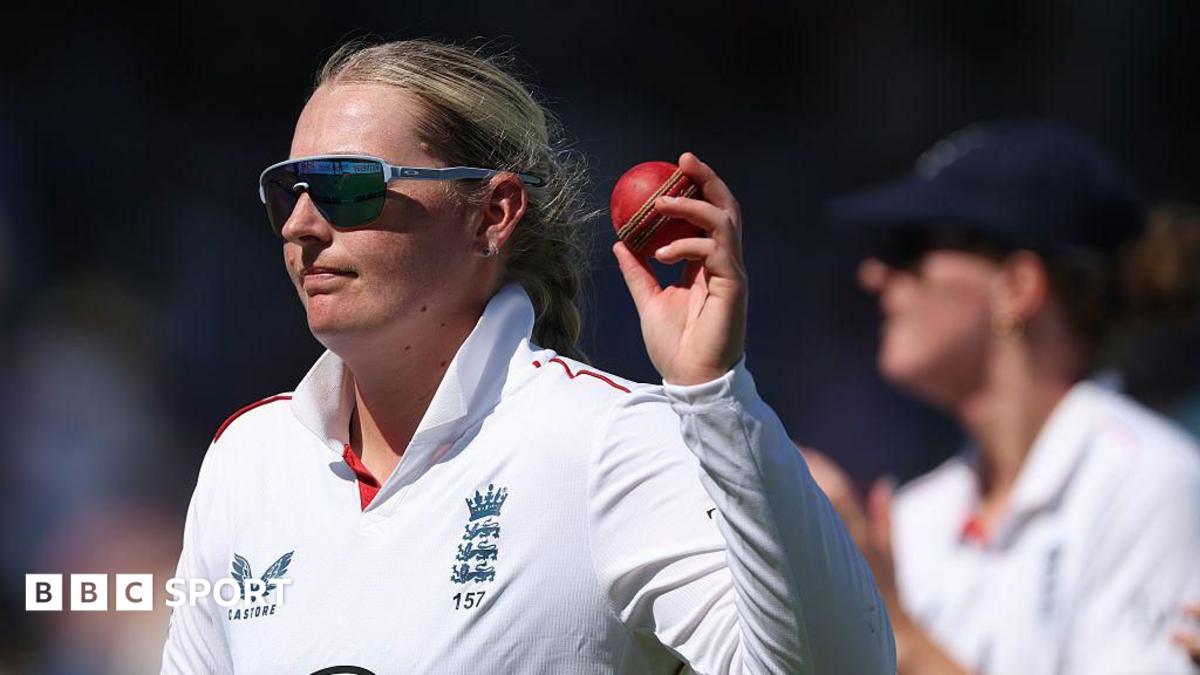
India outplayed England in all departments across the four days, which could come down to a number of factors.
They had an extra week off after the T20 World Cup having not qualified for the semis, England had to digest the emotions of defeat in the final but, crucially, India's domestic game does include some red-ball cricket.
Although their stars in this game such as Smriti Mandhana, Yastika Bhatia and Kranti Gaud did not play this year, it is a significant step in terms of the future of the game and how their next generation might fare coming through.
"I think there's a place for it [women's Tests] but maybe it has to be part of a multi series or a bilateral series. That's something to look at moving forward," Edwards told BBC Test Match Special.
"We've enjoyed Test cricket but you have to have it constantly, you can't have it every 18 months. I'm a huge advocate for it, there's so much you can learn from it. I think there's so much that can be learned from three- and four-day cricket, it only helps other aspects of the game.
"I think we need to see it in Tier One cricket, getting that exposure for younger players, older players, it's so important."
The lack of preparation was evident in England's performance as they were bowled out for 170 and 186 and averaged just four runs per dismissal against balls on the stumps throughout the Test.
The bowlers could also not bowl long spells consistently - again, of little surprise considering their diet of short-format cricket.
In theory, England's next Test match is scheduled to be in the Caribbean next April but to highlight the financial mismatch of the global game, Australia's Test against West Indies was dropped from the schedule earlier this year.
It would not be surprising if the same happened again and if it does, England will not play with the red ball until the home Ashes next summer.
There are currently 10 women's Tests in the Future Tours Programme up until April 2029, all involving England, Australia, India, South Africa and West Indies. In contrast, the next 10 men's Tests will be completed by the end of October.
The ECB told BBC Sport they are"an advocate of including Test cricket to create multi-format series where possible".


