India witnessed fall in extreme poverty, transformation in urban transport infra over 12 years: PM Modi
The state has declared 85 per cent of the region drought-hit and announced interim assistance of ₹5,000 before the festival. | India News
The state has declared 85 per cent of the region drought-hit and announced interim assistance of ₹5,000 before the festival.
Citing a World Bank report, Prime Minister Narendra Modi on Tuesday said around 50 crore people had been lifted out of extreme poverty in India over the last 10 to 12 years, noting that the fight against poverty was limited to "slogans" in the past.
Modi doubled down on the development agenda; underlined "transformation" in urban transport infrastructure over the past 12 years, and maintained that empowering the poor and delivering good governance were hallmarks of his government.
After inaugurating Pune Metro Line 3 (Pink Line) via video conferencing, Modi said India's operational metro network, which covered 248 km before 2014, now covers 1,200 km, and stressed that better urban infrastructure would accelerate the country's economic growth.
The 23-km-long Pink Line, built at a cost of over ₹8,300 crore, will connect the Hinjewadi IT hub to the District Court Metro station.
It is expected to improve daily commutes for thousands of IT professionals, ease traffic congestion, and reduce dependence on private vehicles.
Modi laid the foundation stone of four new metro corridors under Phase-II, involving a total investment of around ₹21,800 crore.
Also read: Modi inaugurates garment manufacturing unit in his Lok Sabha constituency Varanasi
He also laid the foundation stone of Pune Metro Phase-II, estimated to cost around ₹13,500 crore. The phase will comprise four corridors - Lines 2A, 2B, 4 and 4A - covering key residential, commercial and IT hubs across the city.
"When the country gave the NDA the opportunity to serve in 2014, we set out with a resolve to ensure the ease of living and ease of transportation for the middle class living in cities," Modi said.
Reaching out to farmers amid drought in Maharashtra, the Prime Minister said they should not worry and assured full support from the Union government.
He also appealed to people across the country to remember farmers during the ongoing festive season and ensure that drought-affected families also experience the happiness of Diwali.
"I am aware of the drought situation in Maharashtra. The state government has also provided advance assistance. I want to assure every farmer in Maharashtra that during this difficult time, the NDA government stands with them with full sensitivity.
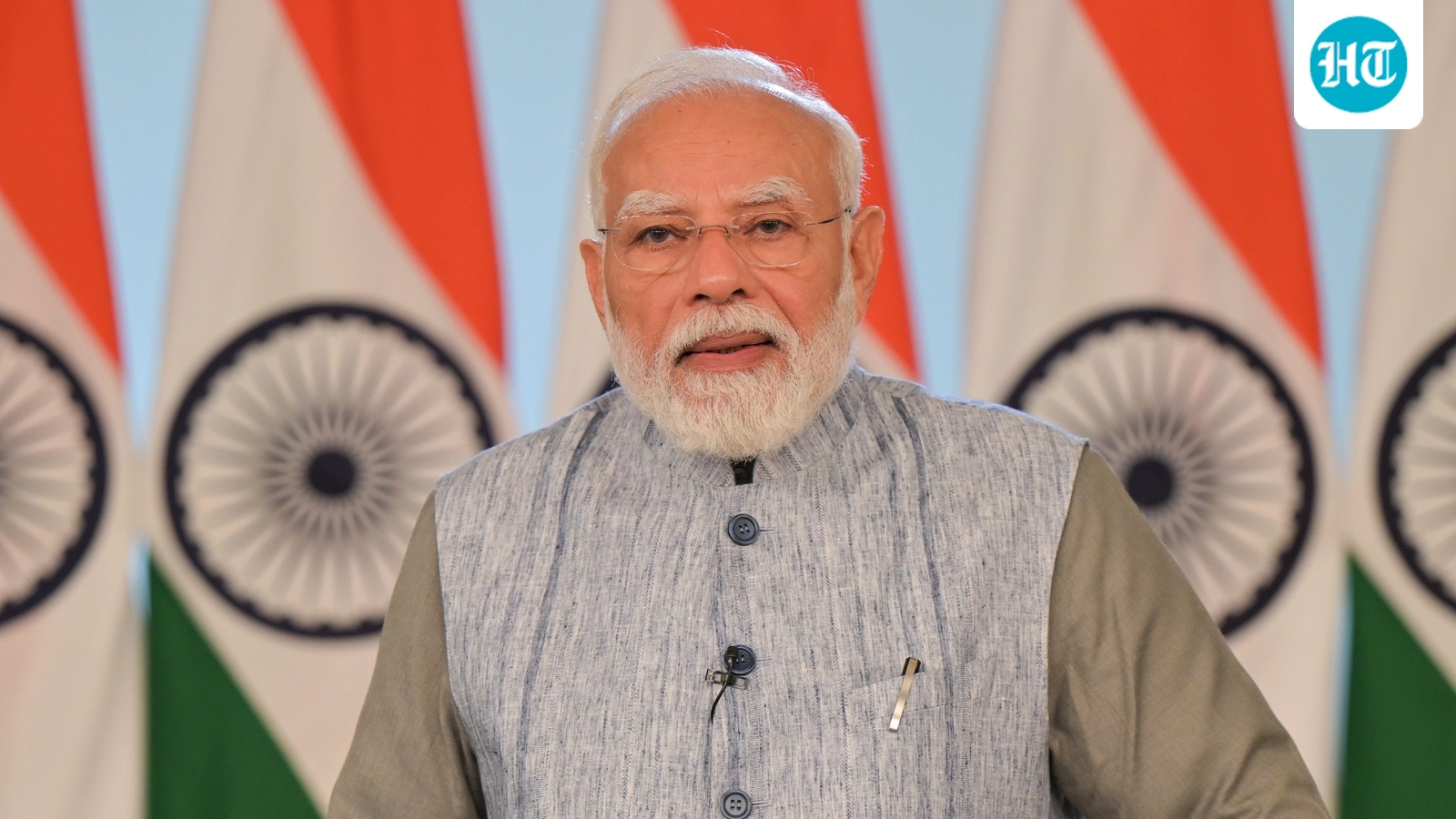
"Do not worry, we are all standing with our farmers. We will collectively face this crisis", Modi added.
Also read: If re-elected, BJP will implement Uniform Civil Code in UP: Amit Shah
He said the state government, under Chief Minister Devendra Fadnavis's leadership, has undertaken substantial water conservation work in recent years, but the current natural calamity has created serious challenges.
Modi referred to the assistance being provided through the PM-KISAN scheme and reiterated the government's commitment to supporting the farming community.
"We must ensure that Diwali celebrations reach their homes as well. This is also our social responsibility. We should not forget the difficulties faced by drought-affected citizens, farmers, and people living in villages," he added.
Citing a recent World Bank report, the Prime Minister said that around 50 crore people had overcome extreme poverty in India in the last 10-12 years.
"Earlier, the fight against poverty was limited to slogans. Today, India is defeating poverty on the ground," he said, adding that the country's economic growth and poverty reduction are interconnected, with increasing investments in infrastructure and welfare schemes improving people's lives and creating employment opportunities.
Modi said the government's approach is based on empowering people rather than merely providing assistance.
Referring to "transformation" in urban transport infrastructure, Modi said India now figures among the world's top three metro networks.
He said the expansion of metro networks across the country reflected the government's focus on people-centric, proactive good governance.
Stressing that urban infrastructure is central to the vision of a developed India, Modi said cities are no longer identified only by their industries or products but increasingly by their competitiveness and quality of life.
Also read: Yogi says face of Uttar Pradesh changed under Modi’s leadership, mafia reduced to dust"The expansion of metro networks is not only saving commuting time but also improving convenience for citizens. When a city's time is saved, its productivity increases, which in turn contributes to the country's economy and benefits the poor and the middle class," he added.