My fitness tracker knew I was pregnant before I did
Ravika is one of hundreds of women who are noticing early pregnancy signs through the data on their fitness trackers.
Ravika was celebrating her birthday on holiday with her husband when she got an unusual alert from her fitness tracker.
Her Oura ring flagged that her health score was poor. Her heart rate had gone up, her body temperature was elevated and her heart rate variability (HRV) had dropped. Yet Ravika felt completely fine.
When the stats hadn't improved a week later, the 34-year-old solicitor from the West Midlands did some research online and found a community of women who all said their fitness trackers had been giving them signs they were pregnant, based on the data the trackers had collected. It was another week before Ravika had a positive pregnancy test.
But following some cramping and a notification on her phone telling her that her body appeared to be under significant strain, she went to the doctor and was told she'd need to return 10 days later for further testing to find out if the pregnancy was healthy.
The wait was agonising - and led to her anxiously checking her fitness tracker stats, waking up at 4am every night "just to refresh my app to see if my stats were still low, if my temperature was still elevated. I was holding on to hope that it was a viable pregnancy".
The stats, she said, became an "obsession" - but "for me it really did feel like a life or death situation".
For many women, the first sign that they might be pregnant is a period that doesn't arrive when expected. This is around the same time it's possible to take a pregnancy test. With the exception of some tests that claim to be able to detect a pregnancy early, most aren't able to spot the change in hormones until the first day of a missed period.
But Ravika is one of hundreds of women who are reporting online that they are seeing the signs earlier than this, through the data on their fitness trackers.
Fitness trackers - including smart rings, smart watches and chest-mounted trackers - have surged in popularity in the UK. According to YouGov research, 36% of British adults in January 2026 owned and used a fitness tracker - nearly twice the proportion in July 2019.
Finnish-US company Oura has the highest sales in the smart ring market, which also includes India-based Ultrahuman, and Hong Kong-based RingConn.
Predicting miscarriages as well as pregnancies
One of the key signs of pregnancy is a change to body temperature - which means trackers that can monitor body temperature are popular with those trying to conceive.
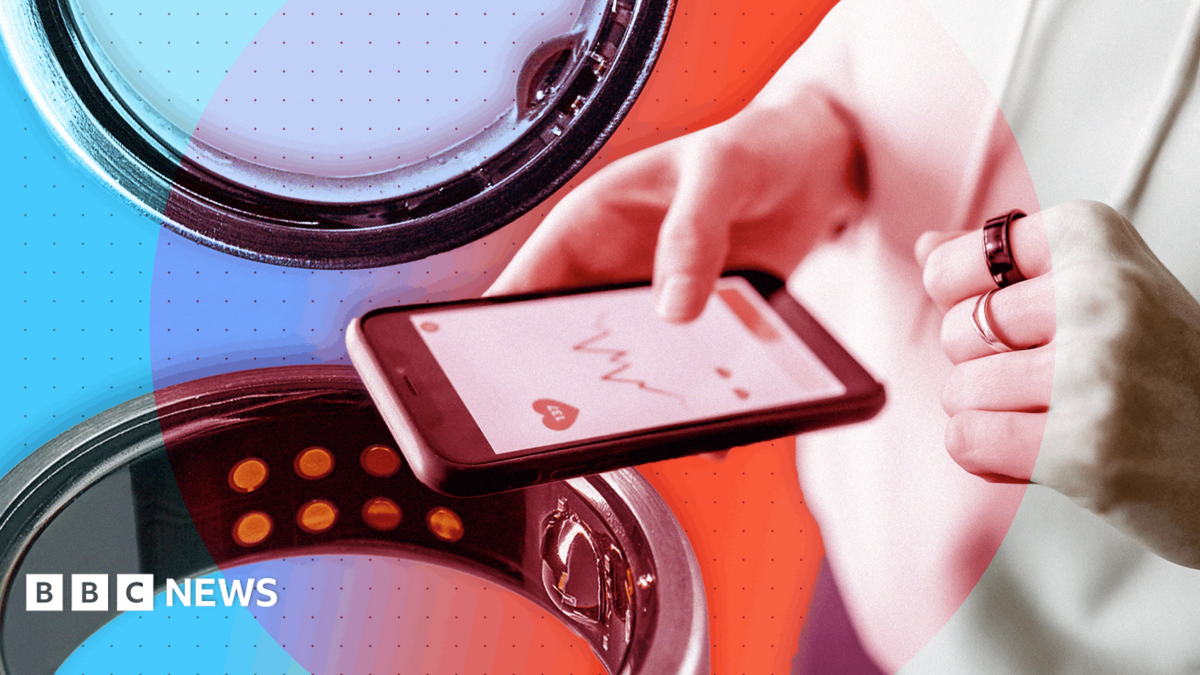
In a typical cycle, a woman's body temperature will be elevated until just before her period comes, when it drops sharply. In early pregnancy, body temperature usually stays high. If a fitness tracker measures body temperature, it can pick up on this early symptom.
As well as her stats, Ravika started reading Reddit posts from women who said their Oura ring had predicted not only their pregnancy but their miscarriage as well, through the ring's "major signs" notification.
Sofia, 32, had been one of them. She lost two pregnancies, both of which she spotted in the data from her Oura ring, before becoming pregnant a third time with her now five-month-old baby son.
The first time she became pregnant early last year, she kept checking her app every morning.
"When I would wake up to see the [temperature] line progressing, and then I saw in the app one morning that my temperature had dropped - and that's how I knew, something's weird," she said.
"When I did have the miscarriage, I kind of was already mentally prepared because of the data I saw."
The same thing happened again three months later, and Sofia and her husband decided to take a break from trying to conceive - but it was during this break that she got a notification of "minor signs of strain" from her ring, and noticed her temperature was elevated again. She took a test, and it was positive.
Though this pregnancy was healthy, Sofia felt anxious throughout those early weeks and found herself repeatedly checking her data.
"I was like, 'Oh my God, is this going to happen again?', and I remember I would wake up at four or five in the morning and just check my app to see if my temperature had dipped," she said.
"I was so conscious of that piece of data to the point where, when I reached seven or eight weeks [pregnant], I had to take my ring off and didn't wear it for all of the first trimester."
Dr Stuart Lavery, consultant of reproductive medicine at University College Hospital in London, said: "People are understandably using this technology to try to get a greater understanding, and to try and pick up things as early as possible because it has such a profound impact on your life if you're planning a pregnancy."