New technical education routes to be offered at 14 in England
The government wants pupils to take subjects like AI and manufacturing which are linked to local jobs.
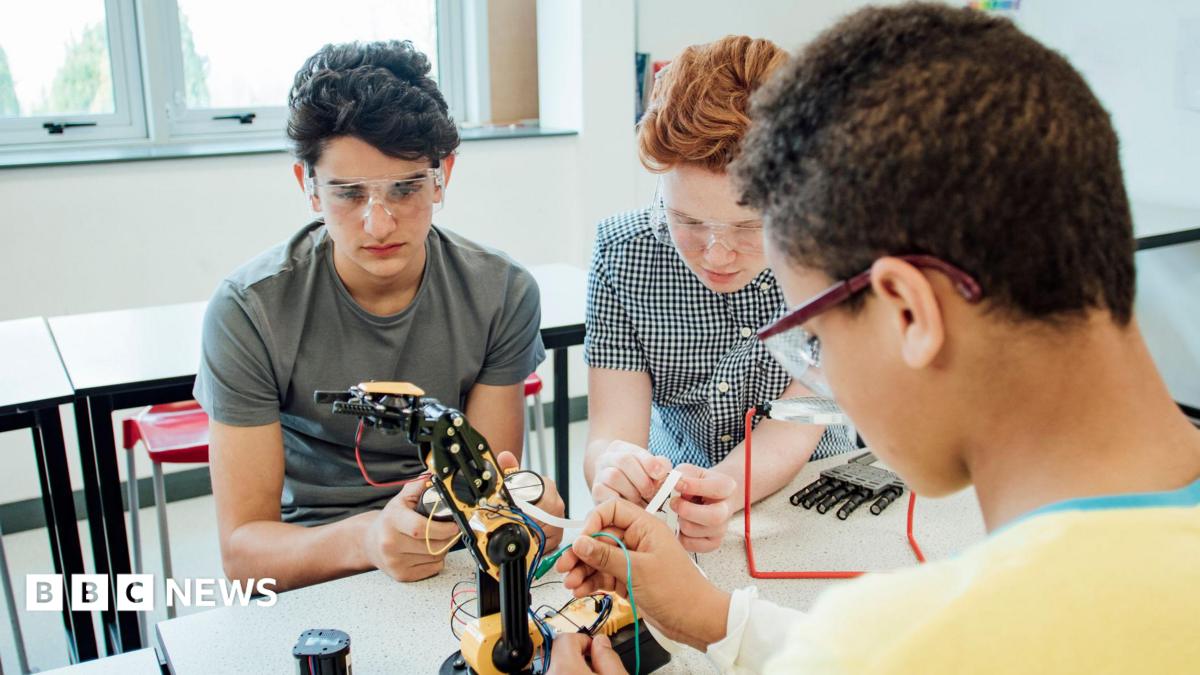
Pupils will be able to study subjects like manufacturing and AI alongside core academic learning from age 14 under new government plans for education in England.
The government said the courses available from Year 10 would be linked to local jobs and industries.
The announcement comes after data published earlier this year showed more than one million young people across the UK were not in education, employment or training, or "Neet" - the highest level in more than 12 years.
School leaders' unions welcomed the government's ambition to improve technical education, but called for greater clarity on how and when the changes would be implemented, and how they would be paid for.
Prime Minister Andy Burnham said "for too long" students had been told to take academic subjects to "do well and be respected".
"My message to young people is this - whether you choose construction, coding or classics, or maths, manufacturing or mechanics, you'll get the skills you need and be given the respect you deserve," he said.
He said the government was delivering the "major shake-up" required to fix the youth unemployment crisis in Britain, starting with improving the availability and quality of technical education.
This would provide students with skills training, work experience and connections with employers, the government said.
It said students would have the chance to combine core academic subjects such as English and maths with a high-quality technical education linked to the jobs available in their area.
"They will be able to spend time with employers and gain real-world experience," it said.
The BBC understands that the government expects the new pathways into work to be up and running in some areas by 2028.
The changes announced on Tuesday will only impact England, as education is a devolved policy area.
But improving access to technical and vocational education has been a common focus for governments in Wales, Scotland and Northern Ireland too in recent years.
In an interim report published in May, former minister Alan Milburn said young people risked becoming part of a "lost generation", as part of his review into why so many across the UK fall into the Neet category.
That report was published the same day as figures from the Office for National Statistics showed 13.5% - more than one in eight - of all UK 16 to 24-year-olds were Neet at the start of this year.
The plans for technical education reform will build on local initiatives like the MBacc, or Greater Manchester Baccalaureate, which was announced in 2023 by the now prime minister when he was the city's mayor.
Launched there in September 2024, it has provided a framework for pupils to pick GCSE subjects in both academic and technical subjects which align with growing local industries, like green energy or digital.
The government said it would be working with regional mayors, local leaders, schools, colleges and employers to deliver its plans nationally.
Education Secretary Lucy Powell said the announcement "marks the start of a real shared effort with employers, businesses, mayors and councils to design an education system that connects young people to jobs and careers in their local area".
"The technological revolution we are living through should mean young people become the fresh lifeblood our economy needs to adapt and grow," she said.
"I want to make sure this generation is able to seize that opportunity, whatever their background or postcode."
Milburn said the changes announced for England on Tuesday were "very welcome".
"They are a big step in the right direction and consistent with the findings of my review," he said.
"A whole system reset is needed across health, welfare and labour market policy as well as in education and skills.
"I know the PM recognises this and my final report will outline the further changes that are needed."
But Laura Trott, the shadow education secretary, said the announcements "don't come anywhere close to undoing the damage Labour has already done to the job market".
"We all want to see better opportunities for young people and a boost to technical education, but this announcement is all over the place...
"It's not clear whether or not Labour intends to replace GCSEs, which would be a disaster.
"The focus should be on the knowledge-rich curriculum that has helped the most deprived children."
Pepe Di'Iasio, general secretary of the Association of School and College Leaders, said he was pleased the government was treating the "shocking" number of Neets as an "urgent priority".