Not liable for every DMK social media post: Stalin to HC on Aadhav Arjuna plea
MK Stalin also denied instructing or approving a social media post in June this year by the DMK IT Wing that linked Arjuna to John Britto | India News
MK Stalin also denied instructing or approving a social media post in June this year by the DMK IT Wing that linked Arjuna to John Britto
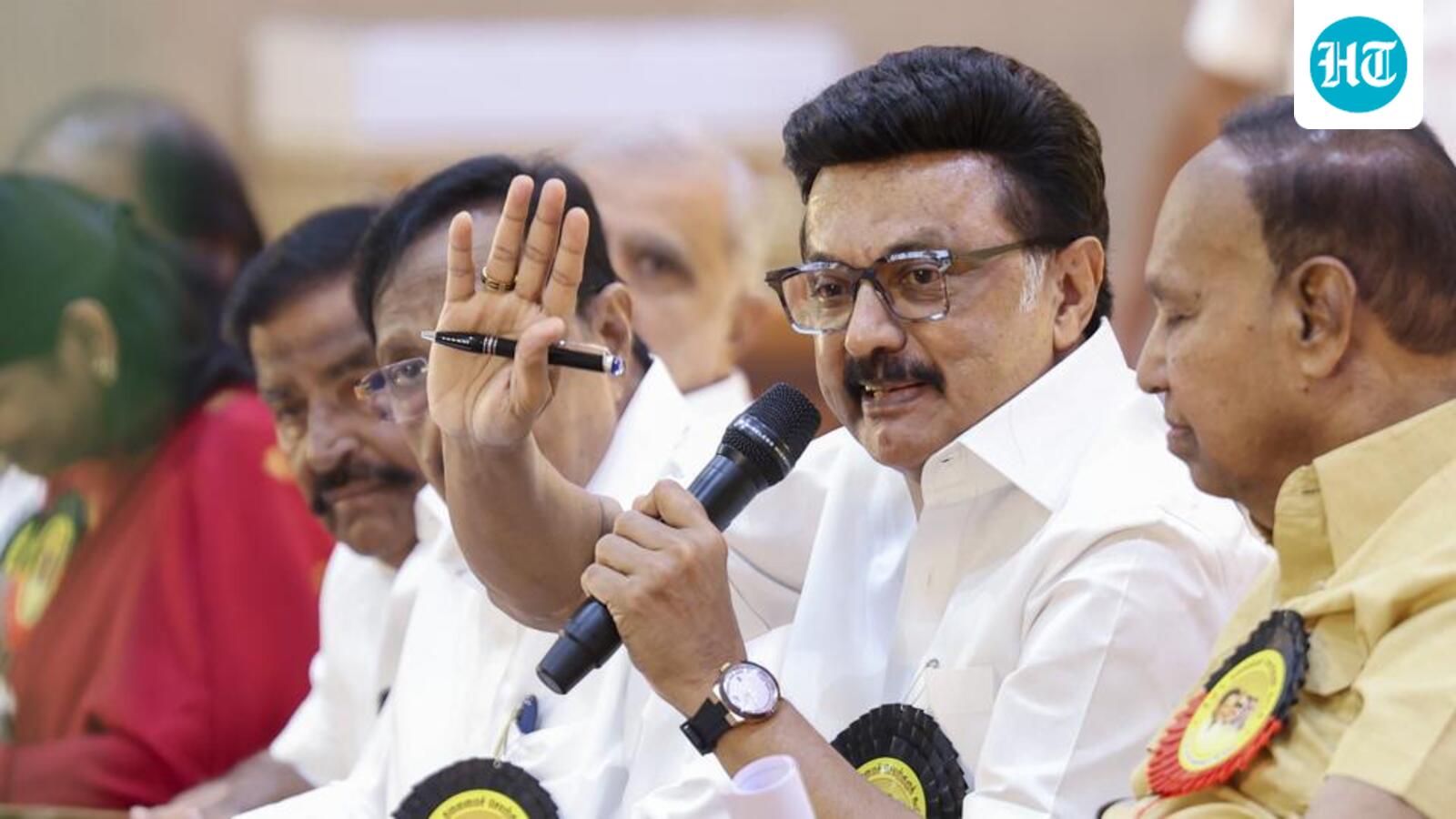
Dravida Munnetra Kazhagam (DMK) president MK Stalin on Tuesday told the Madras High Court that he could not be held responsible for “every social media post” made by different wings or functionaries of his party merely because he was the party president.
“Though I am the head of the party and I exercise administrative control over the office-bearers of various wings of the party, I cannot be legally responsible or liable for any individual acts of the members or wings of the party,” Stalin said in a counter filed in a civil defamation suit filed against him by Tamilaga Vettri Kazhagam (TVK) minister Aadhav Arjuna.
In his counter affidavit before a bench of justice K Govindarajan Thilakavadi, Stalin also denied instructing or approving a social media post in June this year by the DMK IT Wing that linked Arjuna to John Britto, an accused in a narcotics case.
Arjuna has sought ₹1 crore in damages from Stalin and the DMK IT Wing, alleging that the June 8 post falsely claimed that Britto, described as the mastermind of a drug-trafficking operation involving the seizure of narcotics worth ₹258 crore, was his close relative.
Arjuna has denied having any connection with the accused. According to his suit, his relative, P John Britto, had complained to the Greater Chennai Commissioner of Police that he was being wrongly identified as the man arrested in the narcotics case because their names were similar.
Stalin, however, argued that Arjuna has failed to show he suffered any “loss of reputation, public standing or goodwill” as a result of the post.
He also denied any vicarious liability for the IT Wing’s social media activity and called upon Arjuna to establish that he had specifically instructed the wing to publish the post.
Stalin further referred to criminal cases involving Arjuna’s family members, including his wife, mother-in-law and father-in-law, and to the CBI investigation against Arjuna in connection with the Karur stampede tragedy.
“Therefore, the applicant’s claim that linking him to an accused person has ruined his reputation is bizarre when there are pending criminal cases against his immediate family members and one criminal case pending against him,” he said in the counter affidavit.
Stalin also argued that Arjuna had not distanced himself from relatives facing investigation and therefore could not claim that his reputation had been damaged by being linked to another person accused of criminal activity.
Arjuna, in his suit, has alleged that the said post was not an isolated act of a party functionary but was published on Stalin’s instructions, given his control over the affairs of the DMK and its IT Wing.
He has sought a permanent injunction restraining Stalin and the IT Wing from making similar statements, besides directions for an unconditional apology, deletion of the post and compensation for the alleged loss of reputation and mental agony.
Justice Thilakavadi took Stalin’s submissions on record and adjourned further hearing in the matter to October 26.
Ayesha Arvind is a Senior Assistant Editor specialising in legal and judicial reportage. She covers High Courts and tribunals across southern India, and believes that important legal developments do not only come from New Delhi. Her work focuses on bringing significant decisions and developments from the region to a wider audience and explaining what they mean beyond the courtroom. She tries to make legal material accessible by translating legal jargon into clear, readable prose and putting pleas, lawsuits, judgments and legal developments in context. She also looks at their political realities and practical consequences for people. Ayesha is committed to the standards of integrity journalism requires. She places a premium on accuracy and fairness, and believes that journalism's powerful voice must be tempered by humility and a sense of proportion. Over almost two decades in journalism, she has covered law and order, civil law, crime and other areas of legal affairs. Her work includes breaking news, legal affairs stories, online analysis and commentary. Ayesha is deeply interested in the law, court judgments and the Constitution because they shape everyday life. She believes every citizen should have a basic understanding of them. What she enjoys most about covering courts is that every story brings something new to learn.Read More