Supreme Court calls for alternative protest venue to Jantar Mantar in Delhi
The Supreme Court on Friday called for a rethink of Delhi’s decades-old arrangement of holding demonstrations at Jantar Mantar | India News
The Supreme Court on Friday called for a rethink of Delhi’s decades-old arrangement of holding demonstrations at Jantar Mantar
The Supreme Court on Friday called for a rethink of Delhi’s decades-old arrangement of holding demonstrations at Jantar Mantar, recording that the Delhi Police commissioner and other competent authorities would consider designating an alternative venue with better facilities for peaceful protesters.
A bench comprising Chief Justice of India (CJI) Surya Kant and justices Joymalya Bagchi and V Mohana said the national capital needed a larger, better-equipped space where citizens could exercise their democratic right to protest without compromising public safety, access to emergency services or the interests of other residents.
Also Read | 'Don't use hammer to kill a fly': Supreme Court asks Centre, Delhi Police to lift blanket curbs on metro, trains
“It is high time that some other place with amenities for peaceful protestors need to be identified and designated,” the bench recorded in its order, adding that the competent authority should consider the suggestion and take an appropriate decision.
The court also stressed that any alternative site should have basic amenities, including portable cabins, toilets, drinking water and medical facilities. It said a venue must be spacious enough to accommodate demonstrators while allowing emergency services to reach them in the event of an incident.
Also Read | 'Please appreciate, see students' future': Top court refuses to reopen FIRs over CJP's July stir
The suggestion emerged during the hearing of pleas challenging sweeping restrictions on metro and railway services ahead of the October 10 protests in Delhi. The court directed the Centre and Delhi Police to reconsider the complete stoppage of public transport, emphasising that preventive security measures must remain proportionate and cannot deprive millions of residents of access to essential services.
During the hearing, the bench said many of the difficulties surrounding protests arose from Jantar Mantar’s geographical location and suggested that another open space could allow demonstrations to take place with better facilities and fewer logistical complications.
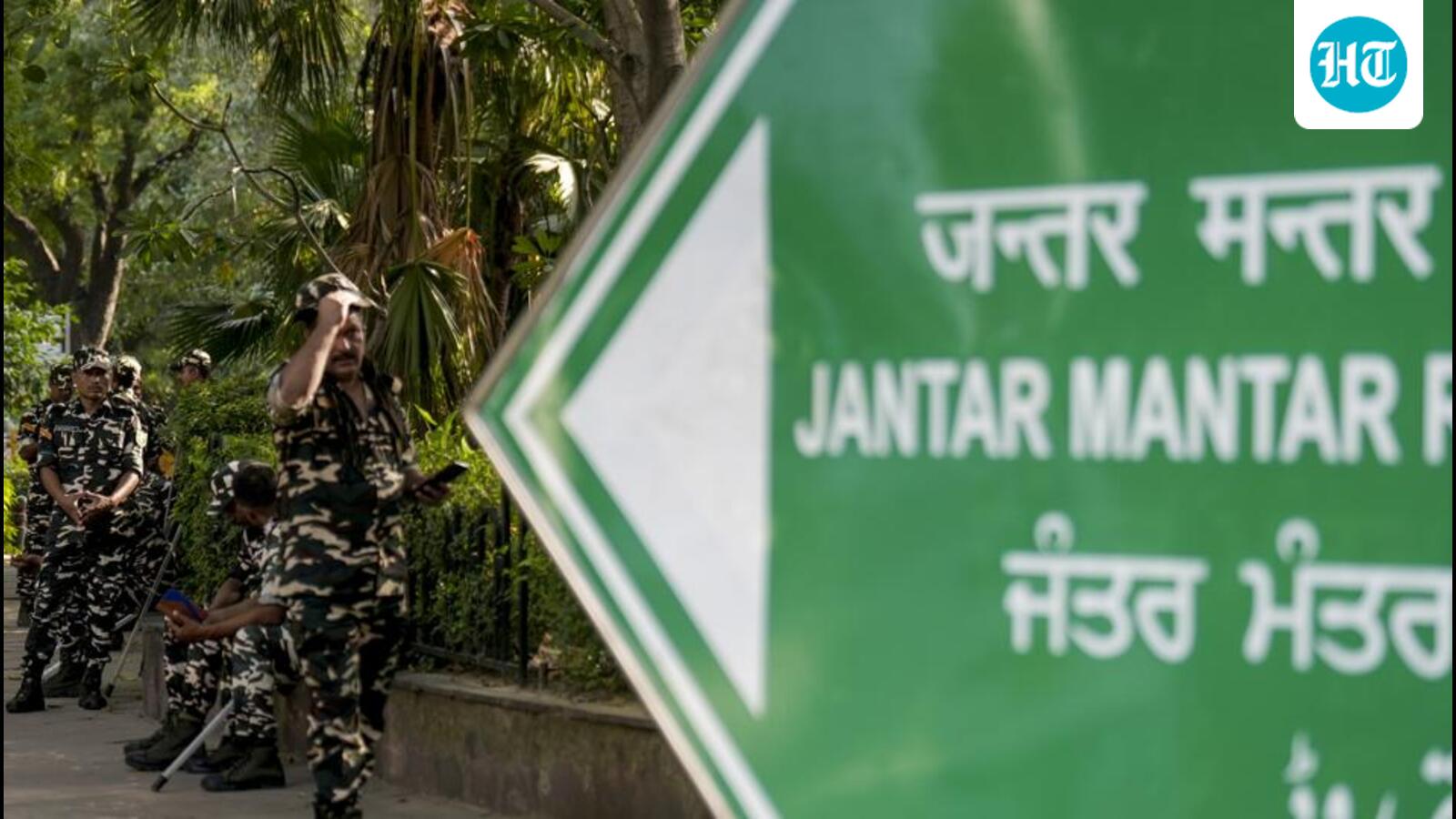
“Why don’t you find an alternative space where you can also provide better facilities?” the bench asked solicitor general Tushar Mehta, who appeared for the Centre and Delhi Police. Mehta said he would convey the court’s sentiments to the appropriate authorities.
Senior advocate Kapil Sibal, representing Communist Party of India (Marxist) general secretary Mariam Alexander Baby, responded that Ramlila Maidan had previously served as an alternative protest venue but was no longer being offered as an option when permission to demonstrate at Jantar Mantar was denied.
The bench subsequently recorded the parties’ agreement on the need to identify another site.
The intervention carries significance because Jantar Mantar has served as Delhi’s principal protest hub for more than three decades, hosting demonstrations by political parties, farmers, trade unions, students and civil society groups. Its location in central Delhi, within reach of Parliament and government offices, has made it a prominent venue for citizens seeking to draw attention to their grievances.
The site emerged as the capital’s principal space for organised demonstrations in 1993, after authorities moved away from the Boat Club area near India Gate, where large protests had raised concerns about access to the seat of government and traffic management.
In 2017, the National Green Tribunal ordered a ban on protests along Jantar Mantar Road and directed that demonstrators be shifted to Ramlila Maidan, citing complaints about noise, sanitation and the occupation of public space. The Supreme Court set aside the blanket prohibition in July 2018, holding that peaceful demonstrations could not be prohibited altogether, although they could be regulated to protect residents’ rights and maintain public order.
The Supreme Court’s latest observations revive the question of whether the existing arrangement adequately balances the right to protest with the practical demands of managing large gatherings in the national capital.
The immediate dispute arose after Delhi Police denied permission for the proposed October 10 demonstration at Jantar Mantar while imposing extensive security measures, including restrictions on metro services and railway movements. The protest, called by the Cockroach Janata Party and other groups, seeks the resignation of chief election commissioner Gyanesh Kumar over alleged irregularities in electoral-roll revisions.