‘US won't let India become next China’: Russian envoy claims ‘Freudian slip’ revealed Washington's concerns
The envoy’s remarks come as India faces US pressure over its purchase of Russian crude oil, especially after the Graham Act was signed into law. | India News
The envoy’s remarks come as India faces US pressure over its purchase of Russian crude oil, especially after the Graham Act was signed into law.
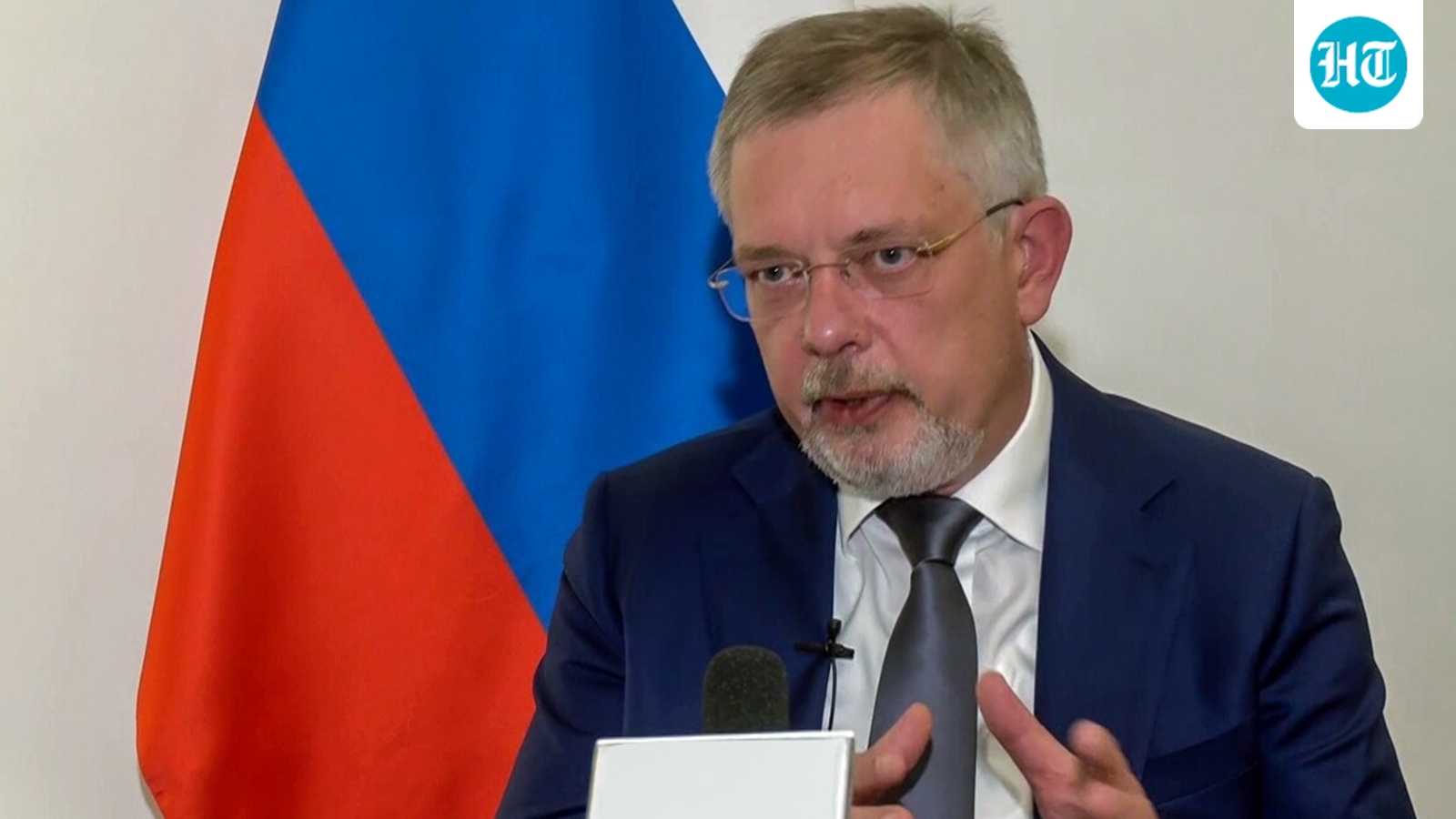
Russia's envoy to India Denis Alipov said on Sunday that a senior US official had publicly admitted that Washington would not let India become another China, a competitor, calling the remark a "Freudian slip".
Speaking at the NDTV Defence Summit, he said the US would “do everything possible to contain India” and pointed to the Graham Act as one such measure.
Russian envoy’s big claim
Alipov said the US official made the remark during this year's Raisina Dialogue in the national capital.
“I think this year at the Raisina Dialogue, one of the top US officials revealed and spoke publicly that the 'US will never allow India to become the next China' as a competitor. It was like a Freudian slip,” he said.
Notably, “Freudian slip” refers to an unintentional error in speech that is believed to reveal a person’s hidden thoughts or feelings.
He said the US would seek to contain India as the country grows stronger. “So as India becomes stronger and stronger, and eventually a superpower, which is inevitable, the US would be doing everything possible to contain India. And so, we regard this measure, the Graham Act, as such.”
The Indian government has not released an official statement on this remark yet.
US pressure over India’s Russian oil purchases
The envoy’s remarks come as India faces US pressure over its purchase of Russian crude oil.
Last week, Trump signed the Lindsey O Graham Sanctioning Russia and Iran Act of 2026 into law, giving Congress-backed authority to impose tariffs of up to 100% on goods from the five biggest buyers of Russian oil - a group that, based on current import volumes, includes China and India. However, the law does not name any country as a target.
“India is buying Russian oil not for the sake of Russia. India is buying Russian oil for the sake of its own economy and its own people. Because it is there at a competitive offer," Alipov told NDTV.
He said such “tactics” would continue as India grows stronger. “In response to this, I think India has shown strategic autonomy and strength. The US has articulated its pressure on Russia with this act. It is, by itself, absurd. And the US, I would repeat, very well knows that. I think as India rises, this kind of pressure and these tactics will continue and will aggravate and increase,” he said.
What India said on Russia sanctions bill
Earlier this month, India said it would take all necessary measures to safeguard its trade and economic interests after the legislation was passed by the US House of Representatives.
The external affairs ministry said that India remained firmly committed to meeting the energy needs of its 1.4 billion people.
“The Indian side has also made clear its determination to take all necessary measures to protect its trade and economic interests,” the ministry said in a statement, without specifying what steps could be taken. “Government will work closely with Indian trade and industry bodies to deal with the implications of these developments.”
The ministry added that India would continue to protect its energy security through “diversified sourcing and on the basis of evolving market dynamics”.
Follow the latest breaking news, major developments and agenda-setting stories from India and around the world with the newsdesk at Hindustan Times. Operating round the clock, the desk brings together experienced editors, reporters and correspondents to deliver fast, accurate and contextual reporting across subjects that influence public policy, governance, business, society and international affairs. The HT News Desk covers politics, elections, government policies, the economy, business and markets, science and technology, the environment, law and order, infrastructure, education, climate issues and geopolitics, while closely tracking developments across states, institutions and global capitals. The team also leads coverage of major breaking news events, policy announcements, court proceedings, natural disasters, public emergencies and significant international developments. Reports published by the newsdesk are based on information gathered from reporters on the ground, official statements, government agencies, court records, regulatory filings, recognised institutions and other authoritative sources. Stories undergo editorial scrutiny and verification processes to ensure accuracy, fairness and relevance, and are updated as events evolve and additional information becomes available. Whether covering a key political decision in New Delhi, an economic policy shift affecting millions, a landmark court ruling or a major global event, the HT News Desk aims to provide readers with reliable, fact-based journalism that delivers not only the latest developments but also the context and analysis needed to understand their wider implications.Read More