VAR, timewasting and subs - new rules for the new season
The 2026-27 season will feature an unprecedented number of new laws, mostly designed to tackle tempo disruption and make the game quicker.
The 2026-27 season will feature an unprecedented number of new laws, mostly designed to tackle tempo disruption and make the game quicker.
These rules were all initially rolled out at the World Cup, but still caused confusion in the first round of the Carabao Cup last weekend.
These changes will be deployed right through English football, from the EFL kick off this weekend, Sunday's Community Shield between Arsenal and Manchester City, to the Premier League and right down to Sunday league - apart from the video assistant referee (VAR), of course.
The idea is to cut out those moments which cause supporters real frustration, and get more football played without adding on loads of stoppage time.
It worked at the World Cup. In Qatar in 2022, the ball was in play for an average of 58 minutes three seconds, or 56.86% of the total match time. This summer, it was 58 minutes 16 seconds but there was far less added time, meaning the ball was in play for 60.43%.
The changes are intended to change player behaviour, rather than be applied as a strict punishment.
However, they could be seen as a negative for teams who were used to using the dark arts to run down the clock and hold on to a result.
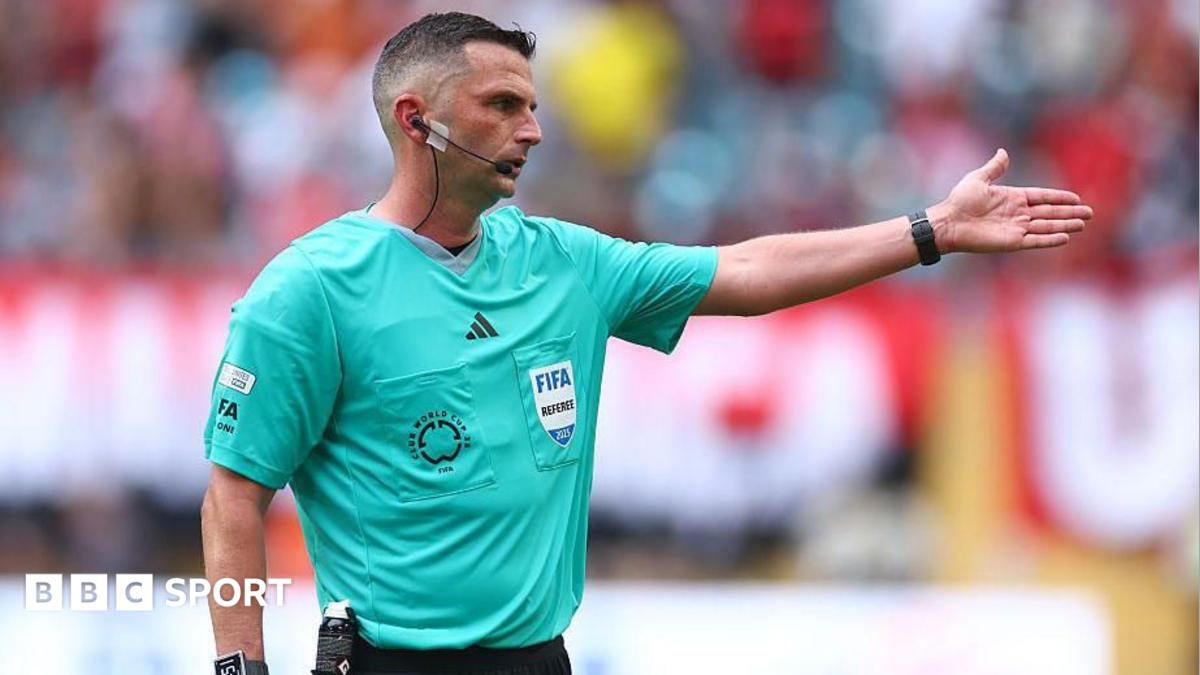
Here is what you need to look out for and how the new laws will work.
Countdowns for goal-kicks and throw-ins
This is about players who deliberately delay the restart of play, so a countdown does not begin as soon as the ball goes out.
Any tactic which can be judged as disrupting play - including leaving the ball on a cone and dropping the ball for a team-mate - could trigger a countdown.
The referee will blow the whistle to tell the player to hurry up, and to signal the start of the five seconds, while they will visibly make a count by moving an arm up and down.
If the time runs out, the referee will blow the whistle again and give the throw to the other team, although the new rules will not cover long throws, as these are considered to be set-piece routines.
And as a deterrent to goalkeepers who take a long time over goal-kicks towards the end of games, he can now give the opposition a corner instead if the keeper takes too long.
"What supporters love is the ball in play"
Time-limited substitutions
Substituted players have 10 seconds to leave the field at the nearest point.
If they fail to do so, the substitute cannot enter the field for at least one minute and the team must play with 10 players.
Middlesbrough's Will Lankshear was the first to be punished in the Carabao Cup tie against Wrexham.
With Boro leading 1-0 in the 80th minute through a Lankshear goal, the striker slowly jogged off the pitch while clapping the fans.
Boro boss Kim Hellberg urged Lankshear to hurry up, but he took too long and substitute Fin Cartwright was told he could not come on immediately.
"I didn't know!" the former Tottenham player said after the game.
The substitute has to stay off until the next break in play, so a team could potentially be left with 10 players for several minutes.
There are a few exemptions - such as if a player is injured or there are security concerns about where they can go off.
Injured players must now go off for one minute
Fans have been used to players staying off the field for 30 seconds after the physio has been on the pitch.
Now the time has been upped to one minute. And it is more strict, too.
A player must go off if they cause the referee to stop the game even if they do not request treatment. This is to prevent players trying to break up the opposition's momentum.
It will not apply if a player is down and the ball naturally goes out of play, for instance for a throw or goal-kick.
There are some concerns that one minute is too long, as it could penalise players who are genuinely injured.
There are a handful of exceptions when it will not apply.
If the player who has committed the foul gets a yellow or red card, the injured player now does not have to stay off in all circumstances.
This reduces the potential for tactical bad challenges to get a team reduced to 10 men.
No more goalkeeper tactical timeouts?
The 'goalkeeper tactical timeout' has become a hot topic in recent seasons.
It is used by a manager to get new instructions to his players, or to impact the momentum of the opposition.
The goalkeeper sits on the turf and signals for the physio, the other players rush to the technical area for a team talk. As soon as the coach has got his message across, the keeper stands up to play on.
All leagues and competitions in English professional football will adopt a new trial to try to eradicate it.