VAT to be cut from household electricity bills in October
Homes will save around £45 a year through the cut announced on Andy Burnham's first full day as prime minister.
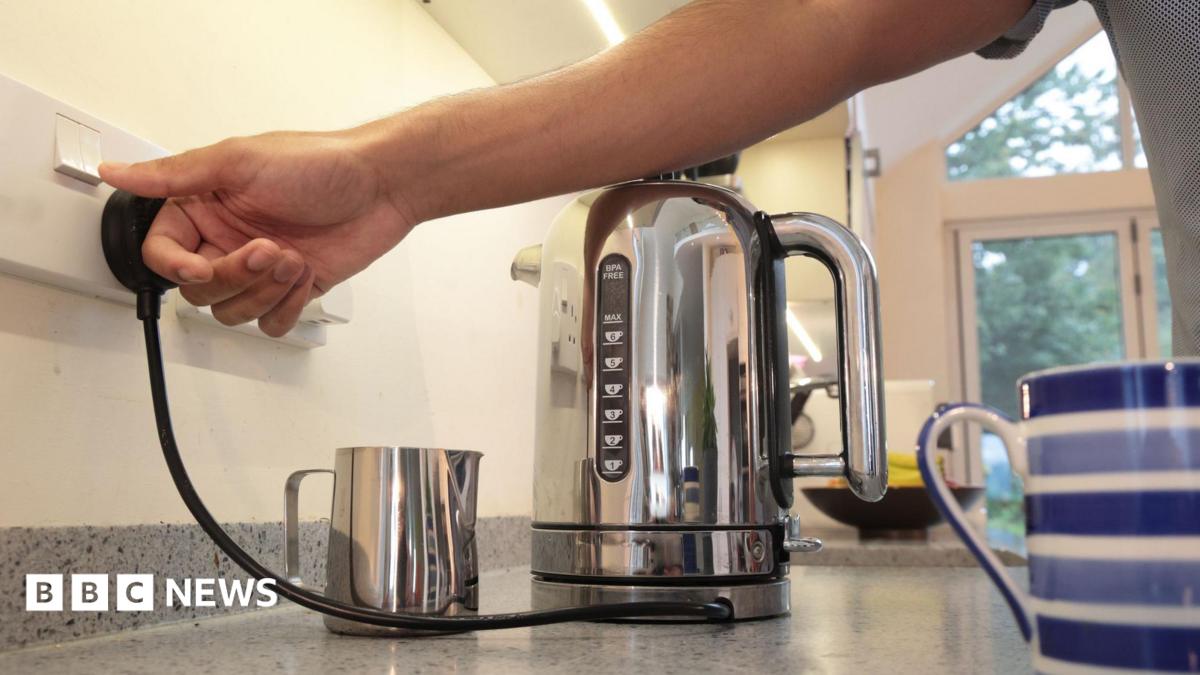
VAT will be cut from household electricity bills, the government has announced, as part of new Prime Minister Andy Burnham's pledge to help with the cost of living.
The reduction from 5% VAT to zero will come into effect on 1 October, saving a typical household about £45 a year.
Ministers said it would be funded by savings from the cancellation of the digital ID programme, which was going to cost £1.8bn over the next three years. The government estimated it will cost £850m this financial year.
But Labour's Darren Jones, who was sacked as chief secretary to the prime minister on Monday, accused the government of announcing an unfunded tax cut.
Jonathan Reynolds, the new business secretary, said the cut would give people some "breathing space".
He said it was funded until "the end of the financial year" in March 2027 and any changes beyond that would have to be announced in the next Budget.
Suppliers have been told the VAT reduction should be passed on to all household customers, including those on fixed tariffs, as was the case when some charges were taken off bills in April.
The cut will take effect in England, Scotland and Wales, but equivalent funding would be given to Northern Ireland, which is regulated differently, the government said.
The reduction could not be automatically be applied in Northern Ireland due to EU rules limiting the range of goods which can be sold without VAT. Following Brexit, England, Scotland and Wales are not bound by these restrictions.
Small businesses who qualify for the domestic energy VAT relief and are not registered for VAT, as well as charities and residential care homes eligible for the reduced rate, will also benefit.
Cutting VAT is a relatively basic tool to reduce an energy bill - with larger households likely to save more as they use more electricity.
However, some vulnerable households are also high electricity users, such as for running medical equipment.
Jones, who was also previously chief secretary to the Treasury, wrote on X, external that the Digital ID programme was unfunded.
While praising the VAT cut as "good", he said "the government will have to set out how it will pay for its new policies at the budget".
Conservative Shadow Chancellor Mel Stride also criticised the use of the Digital ID budget to fund the VAT cut.
"The cuts to the Digital ID card budget are not real because the money was never provided in the first place.
"We are only one day in and already its smoke and mirrors on the public finances."
Reynolds told the BBC's Today programme a VAT cut to electricity bills would be funded through a "straightforward switch spend" redirecting money for digital ID.
He said money for digital ID "would have had to have been found" and that scrapping the scheme removed "pressure" from the budget allowing the government to "give real help to people".
But the Office for Budget Responsibility said last November that digital ID would have to paid for out of savings from government departments and these had not yet been identified.
The spending watchdog said bringing in Digital ID had "provisionally forecast to cost £1.8bn in total over the next three years".
Government sources have insisted that departments have been working to find savings to fund Digital ID since the OBR made its forecast in November and this money would now be reallocated to fund the VAT cut.
Household energy prices rose by 13% for millions of people in England, Scotland and Wales at the start of July, under regulator Ofgem's price cap.
Price rises were driven by the higher cost of gas, but have a relatively limited impact owing to warm weather and lower energy use during the summer months.
However, higher energy prices caused by the US-Israeli war with Iran, which has constrained global supplies of oil and liquified natural gas, are likely to persist into the winter, according to analysts.
The VAT cut only applies to the current financial year — any decision to keep it in future years would have to be made in a Budget.
The government expects it will lower inflation by 0.1 percentage points.
In his first speech as the UK's prime minister, Burnham vowed to provide "breathing space" for households struggling with the cost of living.
On Tuesday, he said the VAT cut would "put more money in people's pockets".
The VAT cut is the second intervention on energy bills by the government in six months.
Former chancellor Rachel Reeves removed one levy and shifted others onto general taxation to lower bills in April.