Which supplements do athletes take and why?
There is a long list of supplements taken by elite athletes in the pursuit of marginal gains - what do they take and why?
It was at the 1992 Olympics in Barcelona when the mutterings about a new "secret weapon" started.
Dozens of Great Britain athletes had been taking a new product that increased muscle mass and improved athletic performance – a "wonder pill" that didn't fall foul of any doping rules.
They were talking about creatine.
Now found in tubs and bags on many supermarket shelves and tagged in your social feeds, it is the supplement of choice for millions of people and one of the most scientifically researched.
But back then, when it came on the scene at the very top of British elite sport, there were suspicions and stigma around the use of any substance described as 'performance enhancing' – even if it was legal.
From the minute an athlete wakes, to the moment they go to bed, they are thinking about how they can optimise their performance and recovery.
Today, creatine is just one of a long list of supplements taken by elite athletes in this pursuit of marginal gains. Some help with muscle size and strength, while others correct deficiencies in the diet.
"There are various reports in the literature of some studies that say maybe up to 90% of athletes take supplements. I often jokingly say that means 10% are lying," says Prof Graeme Close, professor of human physiology at Liverpool John Moores University.
"The sports teams that I've worked in, I think that's probably closer to 100% of athletes will be taking some form of supplementation."
So, what do supplements actually do and why do athletes take them? And in the world of strict liability, where elite athletes are solely responsible for what they put in their bodies, how do they make sure they stay clean?
While experts like Close advocate for seeking to meet nutritional needs through food in the first instance, it may not always be possible or practical to do this - and that is where supplements come in.
Take, for example, creatine, which is found naturally in meat and fish.
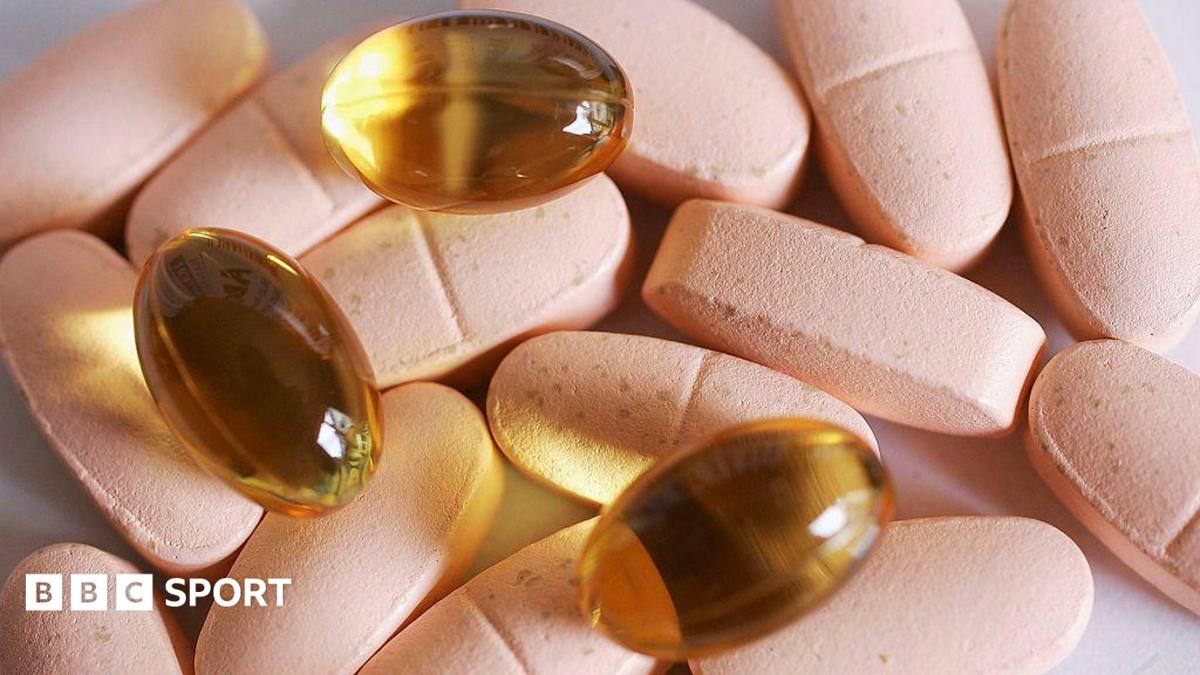
"You would need the best part of a kilogram of raw chicken a day to get the amount of creatine you need," says Close. But it is unsafe to eat raw poultry because of the food poisoning risk from harmful bacteria.
Creatine is a natural compound in the body produced in the kidneys, liver and pancreas. It is a quick source of energy for muscles, which is especially important for short-duration, high intensity activities such as sprinting.
Its big break as a supplement came in the 1990s when two scientists who had been researching it for two decades shared their findings with Steve Jennings, whose Maxim sports nutrition company supplied products to the British Olympic team.
During the 1992 Barcelona Games, investigative reporter Doug Gillon had learned of a 'secret trial' involving British athletes and seen a box of their Ergomax C150 – effervescent creatine tablets. He wrote that if the scientists' claims - that creatine could improve explosive athletic performance by 1-3% - were true, then "sport may never be the same again".
In terms of sport supplements and nutrition, he was right. By the time of the next Olympics in 1996, an estimated 80% of athletes were taking creatine, and since then it has become mainstream, with research suggesting there may be cognitive benefits as well as physical.
According to the Journal of the International Society of Sports Nutrition, the creatine breakthrough of the 1990s had "launched a new era in sports nutrition" and "sparked exploration into other supplements".
The global dietary supplements market size was valued at $209.5bn (£154bn) in 2025 and is projected to grow to $431.7bn (£317.4bn) by 2033, according to Grand View Research., external
Close, who oversaw nutrition for last year's British and Irish Lions rugby union tour, sees supplements as the "final piece of the jigsaw" rather than a starting point.
"What we're talking about is small margins of benefit, where actually these athletes who focus on the food, I think what you often find is that they've got the big-ticket items right," he says.
"So they're seeing great performance benefits because their overall diet is immaculate.
"They might be missing out on the one per-centers, but they've really nailed the 99 per-centers. And they often do better than those who chase the one per-centers but have not given enough attention to the 99 per-centers."
Australian cyclist Nicole Frain agrees, adding: "I'm a pretty big believer that they are called sport supplements. They are there to supplement the things you already do right.


