Global TB Report 2026: Nearly 10.6 million fell ill with TB worldwide; India accounts for 25% of cases
The WHO’s Global Tuberculosis Report 2026 estimates 10.6 million people fell ill with TB worldwide in 2025, with India accounting for nearly a quarter of cases. | India News
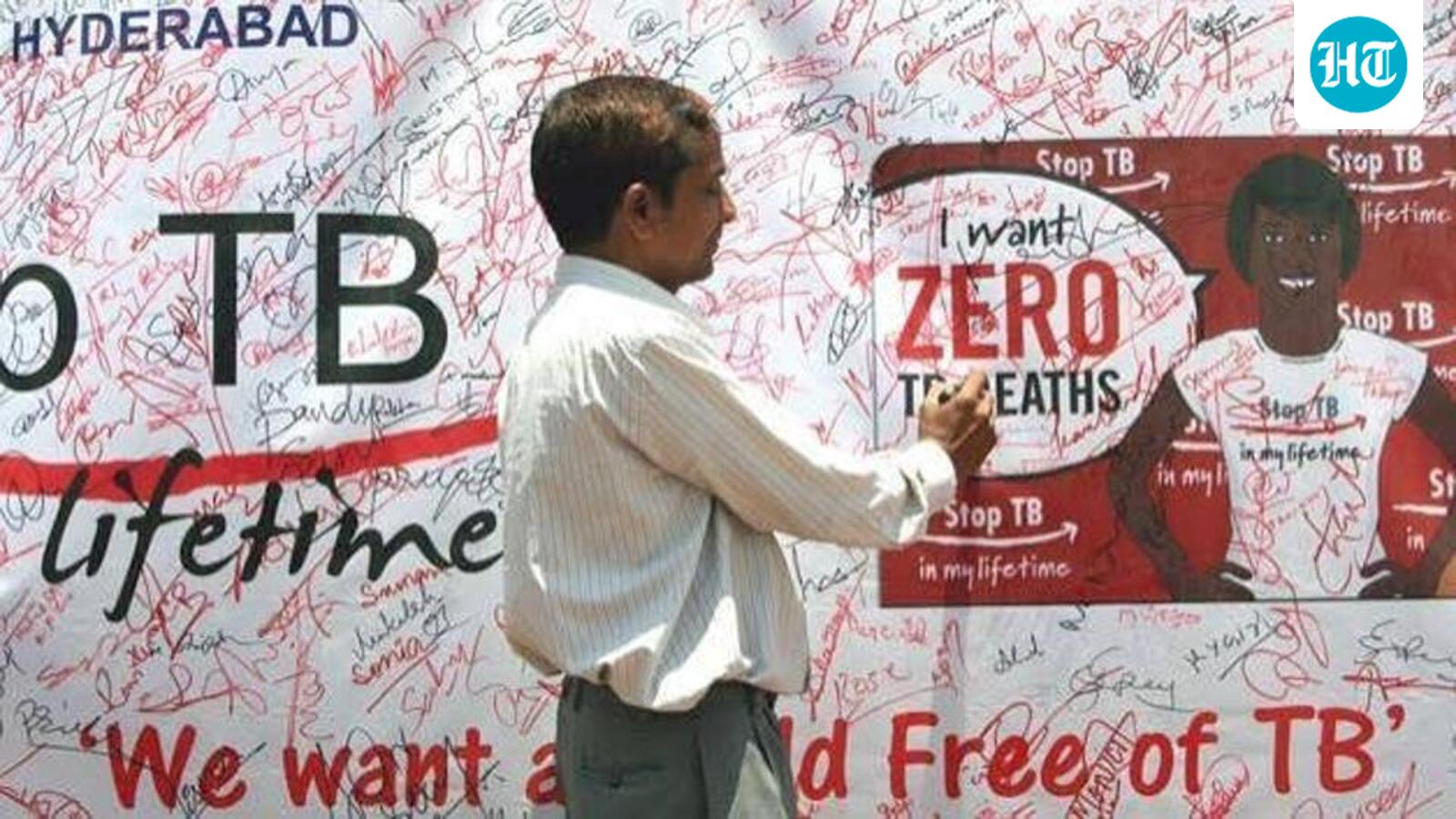
The WHO’s Global Tuberculosis Report 2026 estimates 10.6 million people fell ill with TB worldwide in 2025, with India accounting for nearly a quarter of cases.
An estimated 10.6 million people fell ill with tuberculosis (TB) worldwide in 2025, a decline of 75,000 from the previous year, while India continued to account for about a quarter of the global disease burden, according to the World Health Organization’s (WHO) Global Tuberculosis Report 2026, released on Thursday.
The report also noted a 38% reduction in TB deaths in India since 2015, compared with a 35% decline globally.
The global TB, the report added, incidence rate declined by 1.6% between 2024 and 2025, from 131 to 129 cases per one lakh people. However, the reduction remains far below the World Health Organization’s End TB Strategy milestones, which called for a 50% decline in TB incidence by 2025 and an 80% reduction by 2030, compared with 2015 levels. Between 2015 and 2025, the global incidence rate fell by 14%.
Tuberculosis remained the leading cause of death from a single infectious agent worldwide and ranked 13th among all causes of death, the report said. The 30 countries with a high TB burden accounted for 88% of the estimated global cases in 2025. Eight countries accounted for about two-thirds of the total, with India alone contributing nearly a quarter, followed by Indonesia (10%), the Philippines (6.8%), China (6.5%), Pakistan (6.4%), Nigeria (4.9%), the Democratic Republic of the Congo (3.9%) and Bangladesh (3.7%).
The top five countries accounted for more than 50% of the global total, data showed.
India’s progress in TB prevention and treatment
India carries roughly a quarter of the global TB burden. The report, however, noted the country’s overall progress.
“In recent years, the National TB Elimination Programme in India has made substantial efforts to improve TB prevention and care, with the goal of accelerating reductions in TB mortality and TB incidence… India has established a system for district-level sentinel surveillance of population-level trends in the prevalence of TB disease and TB infection,” it said.
Last year’s report also highlighted progress in India. Despite carrying the world’s largest TB burden, India outpaced global progress on key indicators. Between 2015 and 2024, India’s TB incidence fell by 21%, nearly twice the global rate, while deaths fell by 25% and treatment coverage rose from 53% to 92%.
The Indian Council of Medical Research’s (ICMR) National TB Prevalence Survey found that nearly half of people with TB have no symptoms. In response, India shifted its focus from waiting for patients to visit clinics to actively identifying cases in communities. Under the TB Mukt Bharat Abhiyaan, the National TB Elimination Programme (NTEP) has deployed AI-compatible handheld X-ray machines for community screening, expanded molecular testing to nearly 11,000 facilities, and provided nutritional support through the Ni-kshay Poshan Yojana and Ni-kshay Mitras.
Under the TB Mukt Bharat Abhiyaan, India is finding more people with TB than ever before. Between December 2024 and March 2026, the campaign screened more than 28 crore vulnerable people and notified over 39 lakh TB patients, including nearly 13 lakh who had no symptoms.
India has built one of the world’s largest molecular testing networks, with nearly 11,000 facilities, most of them using Truenat, a homegrown platform, alongside GeneXpert. According to the WHO’s 2025 report, around 60% of people with presumptive TB underwent a molecular test in 2024. Community screening is now identifying lakhs of people with TB, many of them without symptoms. The next phase is to make molecular testing universal. This will require tests that work without sputum, handle much higher volumes, cost less at scale and reach the places where people are being identified.
New diagnostic tools to expand testing
This year, the WHO issued its first-ever recommendations on three tools --- Near point-of-care (nPoC) molecular tests,Tongue swabs, and Sputum pooling --- aimed at addressing these needs.
The nPoC are portable tests for primary health centres and community settings, at less than half the cost of many current molecular tests, while the tongue swabs involves a needle-free sample collection method for adults and adolescents who cannot produce sputum. Sputum pooling is testing several people’s samples together on existing platforms such as Truenat and GeneXpert, reducing costs and machine time.
At ICMR’s India Innovation Summit, 86 TB diagnostic innovations were showcased. An ICMR panel found that 10 were already approved and available for NTEP use, 15 more were recommended for fast-tracking, and 33 were at an earlier stage of development.