INDIA bloc’s outreach fails to convince Stalin, Pawar against delimitation Bills
INDIA bloc struggles to sway DMK and NCP on delimitation Bills, with Stalin firm and Pawar non-committal ahead of Parliament’s session.

Sharad Pawar makes no commitment; Rahul Gandhi, in a cryptic comment after the meeting, says “It’s all good”
Updated - November 30, 2026 02:04 am IST - Chennai/ Mumbai/ New Delhi
Trinamool Congress (TMC) chief Mamata Banerjee, Telangana Chief Minister Revanth Reddy, along with INDIA Bloc leaders, arrive at Breach Candy Hospital to meet NCP (SP) chief Sharad Pawar on November 29, 2026. | Photo Credit: ANI
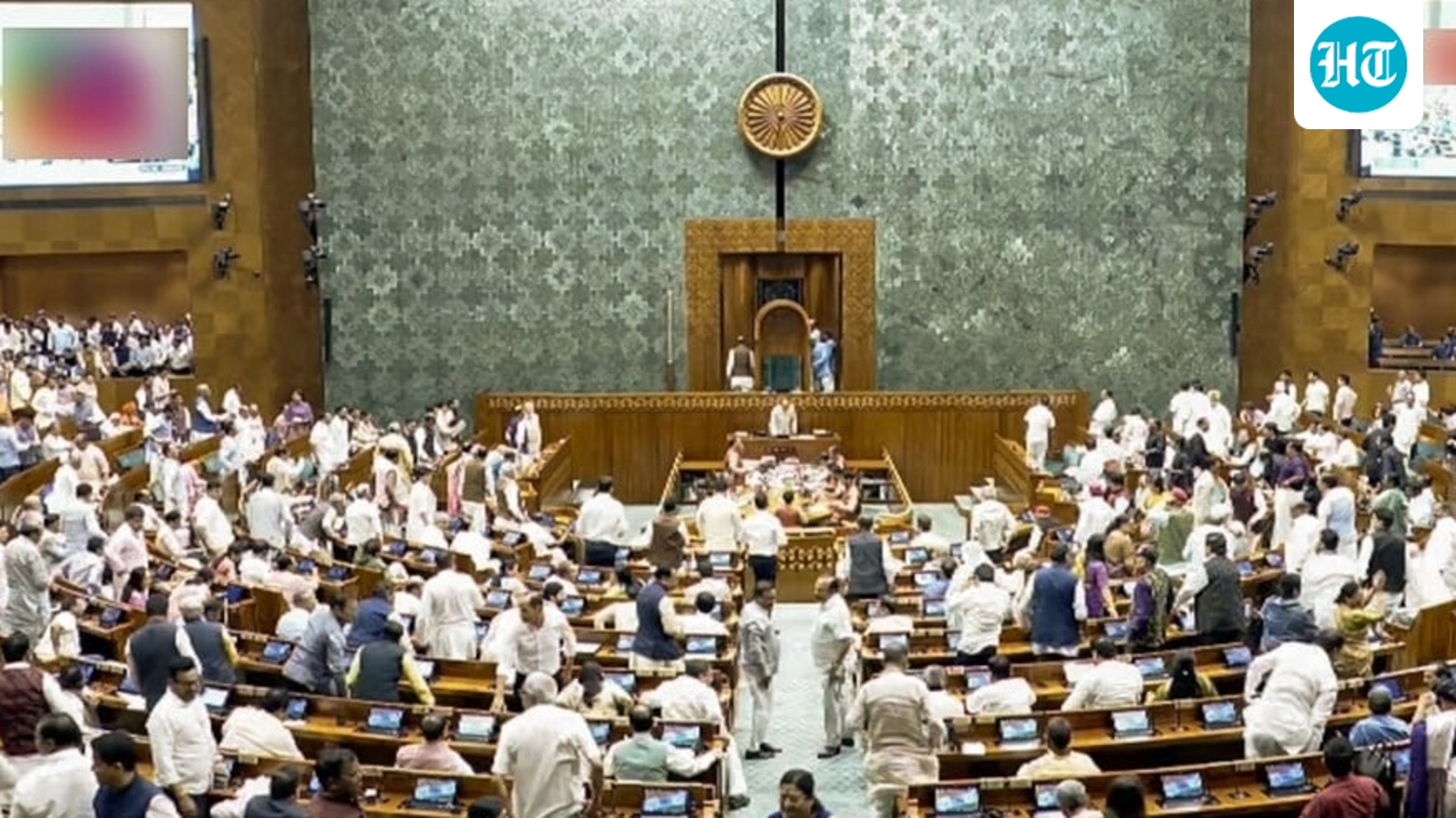
A day ahead of the special session of Parliament beginning on Monday (November 30, 2026), last-ditch efforts by the INDIA bloc to persuade key regional parties and allies to oppose the delimitation-linked Constitution Amendment Bills suffered a setback on Sunday (November 29, 2026), with Dravida Munnetra Kazhagam (DMK) President M.K. Stalin refusing to reconsider his support for the proposed legislation. In Mumbai, Sharad Pawar gave no commitment after Opposition leaders met him.
A leader present at the 40-minute meeting in Breach Candy Hospital, where the 85-year-old Mr. Pawar is recuperating after suffering from dehydration, told The Hindu: “He (Mr. Pawar) listened to all the INDIA bloc leaders intently and said he will speak with his party MPs.” The Nationalist Congress Party (Sharadchandra Pawar) has eight Lok Sabha members and is expected to support the legislation.
Delimitation Bill - key highlights
Congress leader Rahul Gandhi made a cryptic comment after the meeting, saying, “It’s all good”, even as Karnataka Chief Minister D.K. Shivakumar said he hoped that Mr. Pawar would “support the nation” and “help the INDIA bloc”. In the meeting, Mr. Gandhi said the delimitation Bill will polarise the country and cause chaos in the new constituencies. Supriya Sule, Mr. Pawar’s daughter, was not present and updated her WhatsApp status to ‘Delhi’ after the meet.
The Opposition outreach, led by Congress Parliamentary Party chairperson Sonia Gandhi, began in Chennai, where the leaders met Mr. Stalin to convince the DMK to change its position. Ms. Gandhi did not travel to Mumbai.
The government is scheduled to introduce the Constitution (132nd Amendment) Bill and the related delimitation legislation on Monday (November 20, 2026).
The meeting with Mr. Stalin, which lasted over an hour, was marked by considerable personal warmth, with the DMK chief setting aside months of political differences with the Congress. He received the leaders at his doorstep, hugged Mr. Gandhi, and saw off the delegation after the meeting. But the bonhomie did not extend to political reasoning, with Mr. Stalin making it clear that the DMK would not withdraw its support for the Bills.
He argued that the proposed legislation incorporated safeguards the party had been seeking and that defeating it could leave Tamil Nadu and other southern States without even the “minimum protection” they had secured.
“If the Bill is defeated, Tamil Nadu will lose the minimum protection it has secured. Southern States, including Tamil Nadu, will be betrayed by the Delimitation Commission to be constituted in January 2027. No one can prevent it, and it will become inevitable. It is a constitutional provision. We do not have the political strength or a two-thirds majority in Parliament to change it,” he said.
Mr. Stalin maintained that a delimitation exercise based on a Census conducted after 1971 would severely affect Tamil Nadu and reduce its share of seats in the Lok Sabha. The DMK had secured a commitment that the State’s existing 7.18% share would not be reduced and that the proportion of parliamentary representation among States based on the 1971 Census would be maintained.
“It will not only reduce Tamil Nadu’s political importance and strength but will affect all southern States. It is a do-or-die situation for regional parties, particularly those in the southern States. We have no option but to support the Bill to prevent this,” he said, adding that the INDIA bloc leaders had not offered an alternative.
Mr. Stalin maintained that the DMK, founded by C.N. Annadurai and led by M. Karunanidhi and himself, would continue to fight for the rights of Tamil Nadu and other States. Asked about the implications for political alliances, he said the party’s position was “Tamil Nadu first”.
Mr. Gandhi had made a direct appeal to the DMK chief to stand up for Tamil Nadu and oppose what he described as the BJP-RSS’s attempt to redraw the country’s electoral map through the proposed expansion of the Lok Sabha to 850 seats. He alleged that the RSS was an “anti-Tamil force” that hated the Tamil civilisation, language and culture, and wanted to control them.