India slams UN over ‘selective targeting’ after experts flag crackdown on protests
More than 20 UN human rights experts in Geneva expressed alarm over what they described as a "repeatedly heavy-handed police response" to peaceful protests. | India News
More than 20 UN human rights experts in Geneva expressed alarm over what they described as a "repeatedly heavy-handed police response" to peaceful protests.
India said that human rights must not be used to exert political pressure or selectively target countries, after more than 20 UN human rights experts in Geneva expressed alarm over what they called a "repeatedly heavy-handed police response" to youth-led protests in the national capital.
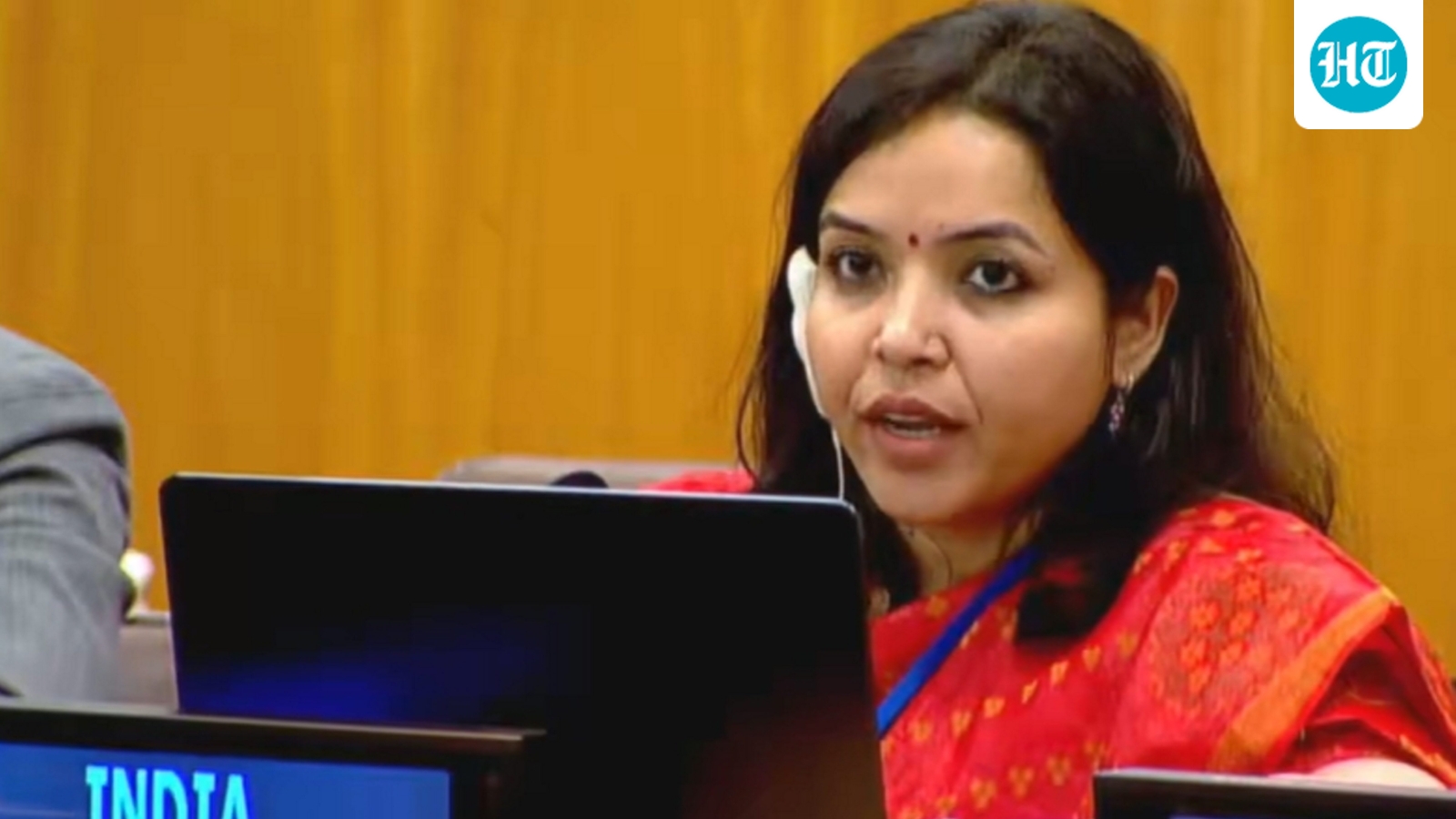
Barkha Tamrakar, deputy secretary in the ministry of external affairs, made the statement on India's behalf at the UN General Assembly's Third Committee on Tuesday. She was speaking during a discussion on the agenda item concerning the 'Working Group on Enforced Disappearances'.
India hits out at UN over ‘selective targeting’
Delivering the remarks, Tamrakar pointed out the constitutional and institutional safeguards in place in India to address allegations of human rights violations.
She said, "Human rights not to be used as an instrument of political pressure or selective country targeting,” Tamrakar said in her statement.
“India engages with international human rights mechanisms, but such engagement must be based on dialogue, consultation, cooperation with non-selectivity and transparency as guiding principles,” she added.
She said India was willing to address specific cases supported by proper documentation through established channels. However, the country opposed any "attempt to convert unverified allegations, incomplete statistics or a report that contains no India country observation into a negative characterisation of the world's largest democracy".
Tamrakar also called for accountability, transparency and cooperation to address enforced disappearances at the UN General Assembly's Third Committee.
Describing India as a vibrant democracy governed by the rule of law, she said constitutional provisions and independent institutions served as safeguards against alleged enforced disappearances.
“Enforced disappearances are clear violations of human rights and deeply affect the families of victims. We call upon States to eradicate instances of this grave human rights violation through preventive measures, accountability, and the protection of civil society,” she said.
India also noted that it had signed the International Convention for the Protection of All Persons from Enforced Disappearance and reaffirmed its engagement with international human rights mechanisms.
UN experts slam India's ‘heavy-handed’ crackdown
UN experts have criticised the Indian police's “heavy-handed” response to youth-led demonstrations in Delhi and other areas over the past three months. They urged the authorities to protect peaceful protests and ensure justice for alleged human rights violations during these and earlier demonstrations.
“This crackdown reflects a broader, troubling pattern,” the experts said in a statement issued in Geneva on Tuesday. “We have repeatedly alerted the Indian authorities to undue restrictions on peaceful assembly, excessive use of force, arbitrary detentions, enforced disappearances, and the targeting of student activists, amongst others.”
The experts also said the Special Intensive Revision (SIR) process affects 130 million people, or 13 crore, roughly equivalent to Mexico's population. According to the experts, those affected reportedly include members of the Muslim minority, Scheduled Castes and Scheduled Tribes.
The unrest over the SIR has gathered pace since late September, after reports that two deputies of chief election commissioner (CEC) Gyanesh Kumar raised internal concerns about the exercise.
The youth-led Cockroach Janta Party (CJP) and student groups have sought Kumar’s resignation and a halt to the SIR exercise.
With inputs from agencies
Follow the latest breaking news, major developments and agenda-setting stories from India and around the world with the newsdesk at Hindustan Times. Operating round the clock, the desk brings together experienced editors, reporters and correspondents to deliver fast, accurate and contextual reporting across subjects that influence public policy, governance, business, society and international affairs. The HT News Desk covers politics, elections, government policies, the economy, business and markets, science and technology, the environment, law and order, infrastructure, education, climate issues and geopolitics, while closely tracking developments across states, institutions and global capitals. The team also leads coverage of major breaking news events, policy announcements, court proceedings, natural disasters, public emergencies and significant international developments. Reports published by the newsdesk are based on information gathered from reporters on the ground, official statements, government agencies, court records, regulatory filings, recognised institutions and other authoritative sources. Stories undergo editorial scrutiny and verification processes to ensure accuracy, fairness and relevance, and are updated as events evolve and additional information becomes available. Whether covering a key political decision in New Delhi, an economic policy shift affecting millions, a landmark court ruling or a major global event, the HT News Desk aims to provide readers with reliable, fact-based journalism that delivers not only the latest developments but also the context and analysis needed to understand their wider implications.Read More