Supreme Court asks NTA where things stand on 2024 exam reforms plan
The Supreme Court stressed on the need to institutionalise the NTA and equip it with the adequate manpower required to run a unified national testing agency. | India News
The Supreme Court stressed on the need to institutionalise the NTA and equip it with the adequate manpower required to run a unified national testing agency.
The Supreme Court on Wednesday asked the Union government to present details of its implementation of the recommendations of the K Radhakrishnan committee, constituted in the aftermath of the NEET-UG 2024 controversy, along with a definite timeline, stressing that it was more concerned with institutionalising the National Testing Agency (NTA) than merely putting in place security protocols on paper.
A bench of justices PS Narasimha and Alok Aradhe, hearing petitions related to the NEET UG 2026 paper leak , directed the Union government to file an affidavit detailing the steps taken to implement the Radhakrishnan committee’s recommendations, as “reflected and nuanced” by the high-powered task force headed by Infosys co-founder Nandan Nilekani, and give indicative timelines for their implementation.
Radhakrishnan committee's recommendations
As part of its efforts to address the 2026 paper leak, the Union government set up a committee headed by Nilekani to address systemic issues; it has also sought to strengthen NTA, by creating new senior level positions, including for security. The Radhakrishnan committee was set up in the wake of a similar controversy two years ago, and submitted its recommendations in October 2024.
HT reported in late July that only 57 of the 101 recommendations of the Radhakrishnan committee were fully recommended and another 10 partially. One of the most significant of these recommendations, the restructuring of NTA, was implemented only in the third week of July, following the 2026 NEET paper leak, which forced a retest. The controversy eventually claimed the head of then education minister Dharmendra Pradhan.
The court directed the secretary concerned to file an affidavit within three weeks, detailing the steps taken to implement the Radhakrishnan committee’s recommendations as reflected and nuanced by the Nilekani committee, along with indicative timelines.
The order said its concern was the “institutionalisation of National Testing Agency with all necessary infrastructure, manpower and other technological capabilities.”
SC points out “systemic problem”
The court’s intervention came as the Centre explained in detail the elaborate security measures currently employed by the NTA to prevent question-paper leaks, including multiple layers of question-paper selection, sealed transportation, GPS tracking, CCTV surveillance, police escort and one-time-use boxes that have to be physically broken open before the examination.
But the bench said such measures were already part of the examination systems examined by the Radhakrishnan committee and the real concern was whether these safeguards could survive changes in personnel and evolve into a permanent institutional processes.
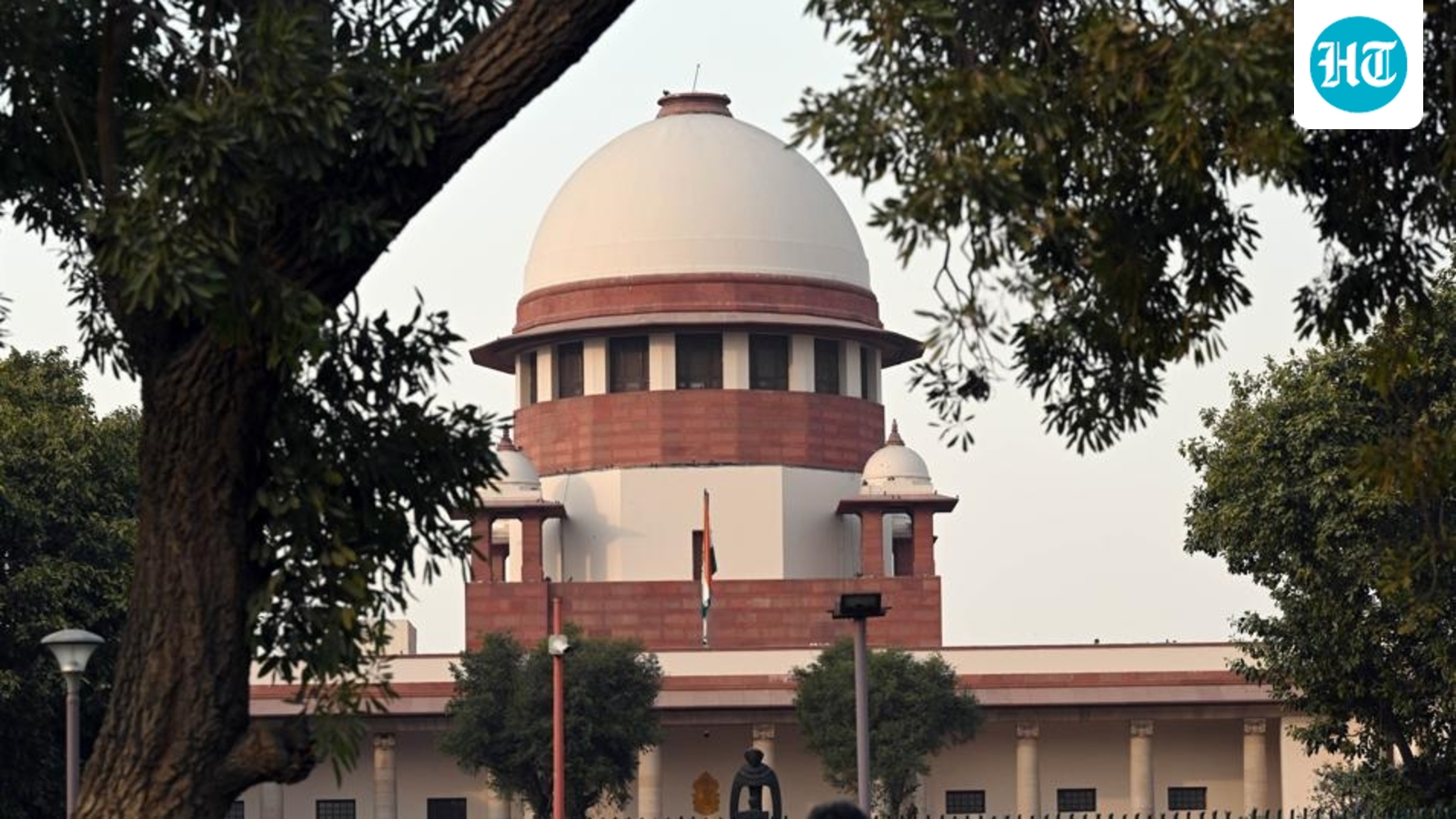
“All this was already under the purview of the Radhakrishnan committee,” observed the bench, pointing out that the court had gone through the systems being developed over a period of time. It added that the committee had correctly identified the problem as systemic, requiring institutionalisation.
“This process on paper, everything is good. But then one exam happens and by the time the second exam happens, it is a new picture altogether,” said the bench, adding that it wanted to know what the NTA actually looked like as an institution -- how many officers it had, where its office was situated, how much staff and security it had and what infrastructure had been created.
In addition to the recent paper leak, NTA has also been left red-faced by errors in some papers, their most recent being those in UGC-NET discovered Sunday.
On Monday, reacting to the Sunday incident, education ministry officials said NTA has fired at least 50 staff and embarked on the process of filling 10 new senior positions including Chief Technology Officer, General Manager (Test Security), and GM (R&D and Psychometrics).
Solicitor General reveals Centre's moves
The Supreme Court’s observations on Wednesday assume significance against the backdrop of recurring NEET-UG paper leaks and the court’s earlier concerns that merely shifting an examination online would not by itself eliminate the possibility of question-paper breaches.
Solicitor general Tushar Mehta told the court that the Centre had accepted the Radhakrishnan committee’s recommendations “in toto” and that steps were being taken to implement them.
Mehta added that advertisements had been issued for several positions, including a technology officer, chief finance officer and general managers.