Teenagers from 15 should be given free MenB vaccine, say UK experts
Advisers are asking the government to consider introducing MenB jabs following concerns over an outbreak in Kent earlier this year, in which two people died.
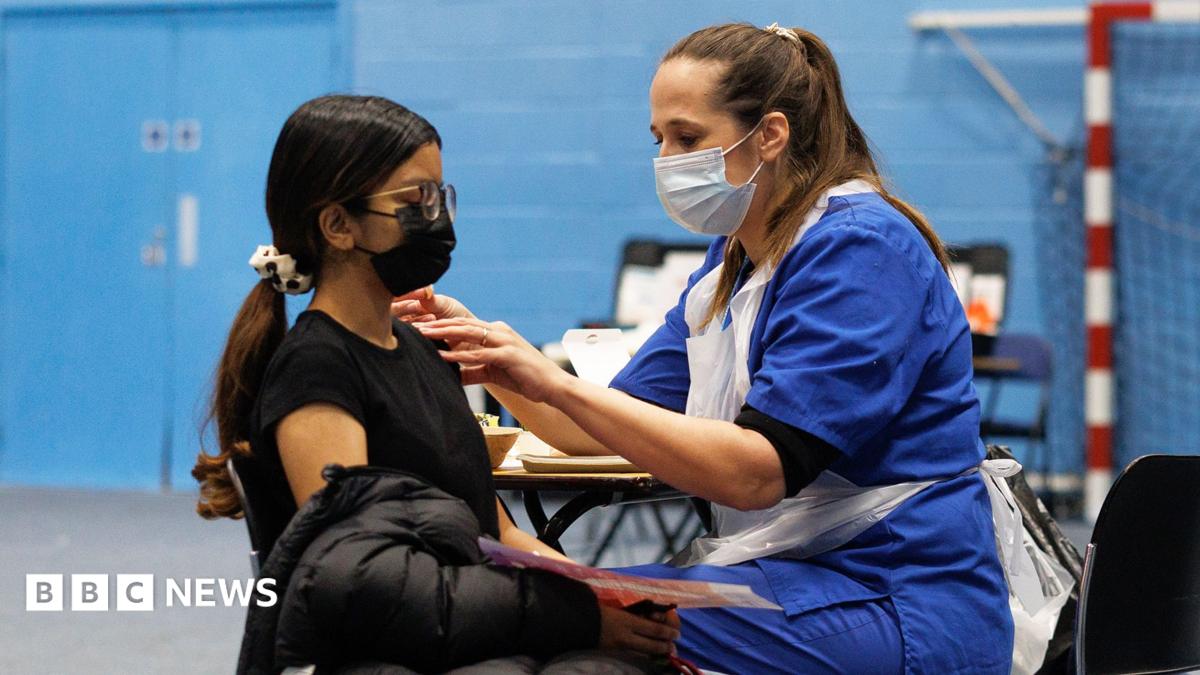
All teenagers should be offered a free vaccine against meningitis B (MenB) at around the age of 15, UK experts are now recommending - a change to previous advice.
It follows concerns over the UK's largest and fastest growing outbreak that happened in Kent earlier this year, in which two people died.
As a precaution, a one-off vaccination campaign is already being launched around the UK this summer for young people heading off to university for the first time, among some others.
Advisers, external are asking the government to consider introducing MenB jabs routinely for secondary school-aged people to better protect them against a disease that can be deadly.
MenB: The vaccine young people shouldn't miss
Anthony Mills, whose 18-year-old son Aaron died after contracting MenB during the Christmas break from his studies in Liverpool, said teenagers getting the jab was his son's "legacy".
Aaron's family has been raising awareness and fundraising for Meningitis Now, in the months since his death.
The Department of Health and Social Care said: "We will consider the advice and will update on any future programme in due course."
It will be up to ministers in each nation of the UK to decide whether the financial cost of providing this via the NHS is worth it and, if so, how to offer it.
People getting the jab would not have to pay.
Shortly after the outbreak in Kent, when there were 29 confirmed or suspected meningitis cases and two deaths, there was a rush on some pharmacies by parents buying the vaccine privately for their teenage children.
At the time, the government and the JCVI said there was no need for wider vaccination of teens in the UK.
The advice has now changed in recognition of teenagers being more likely to catch it and fall ill. Two doses are needed for the fullest protection.
Meningitis infections can be spread through close contact - including kissing or sharing vapes.
Anthony Mills told the BBC that he believes Aaron's story played a key role in convincing the JCVI to amend the guidance and urged the government to follow the recommendation.
"The only thing that could have saved Aaron is the vaccine," he said.
Anthony added that while this announcement was vital, there must be "more impactful literature" to educate the public about MenB.
He said the family had not known before Aaron died that a MenB vaccination was available, thinking his school vaccinations at 14 fully protected him.
It was only after his death they realised he had only been vaccinated for MenACWY - four other types of bacteria that can cause meningitis.
"We had no chance," he said.
Becca Heritage, who had her legs and one of her hands amputated after contracting MenB as a medical student in Southampton, welcomed the announcement and also stressed the importance of educating young people about the dangers of the disease.
"It's easy to think 'it'll never be me' but all young people should know the signs and symptoms, as well as taking ownership of getting their vaccines, and knowing which strains they are protected against," she said.
Becca urged the government to follow the recommendation, saying "young people's lives are at stake".
"Young people's lives are not expendable and this vaccine is our best protection... Anything other than following the advice would be failing our young people."
MenB infection can cause serious, life-threatening problems including inflammation of the lining of the brain (meningitis) and blood poisoning (sepsis).
It can lead to life-changing disabilities such as amputations, hearing loss and brain damage, and in some cases can be fatal.
Vaccination can save lives.
Prof Wei Shen Lim, who is chair of the Joint Committee on Vaccination and Immunisation (JCVI) advisory group, said: "Invasive meningococcal disease is a rare but very serious illness, which can have a devastating impact on lives.
"JCVI has worked closely with meningitis charities and would like to thank all those who responded, including on behalf of loved ones who sadly died or had life-changing complications. Their lived experiences were carefully considered."
Dr Tom Nutt, head of campaign group Meningitis Now, called the recommendation a "significant moment" in the fight against the disease.
"Today's recommendation is an important step towards ensuring that far more young people are protected from this devastating disease," he told the BBC.
All babies are already offered the MenB vaccine because they are more likely to get invasive infections more often than other age groups, and their bodies are less likely to be able to fight them off.