The feminist netball pioneer who set out to build 'physically perfect' women
Derived from basketball and developed by teenagers in late-Victorian England, netball is sport's great misunderstood "girly game". It could be heading to the Olympics in 2032.
"Big up the netballers. That sport is so difficult."
Derived from basketball and developed by teenagers in late-Victorian England, netball is sport's great misunderstood "girly game".
A hotbed of feminist rebellion, its corset-shattering, myth-busting history encompasses a journey of emancipation, imagination, and healthy disdain for patriarchal expectations.
Netball is one of the Commonwealth Games' great sports, and Glasgow 2026 will thrust it into the spotlight again: sinew-stretching athleticism, pinpoint shooting, frantic end-to-end pace.
British rap superstar Stormzy ripped ligaments in his fingers, external the first time he played netball. Underestimate the physical demands, external of this non-contact sport at your peril.
But netball's leaders have an even greater platform than the Commonwealth Games in mind, not least because doubts linger over the long-term future of that event.
If ambitious efforts come to fruition, netball will be rewarded with an Olympic Games debut at Brisbane 2032, "future-proofing" it for future generations.
So yes, that sport you played in the school playground was slyly, quietly revolutionary.
But the suffragist Swede who pioneered netball in England was anything but quiet.
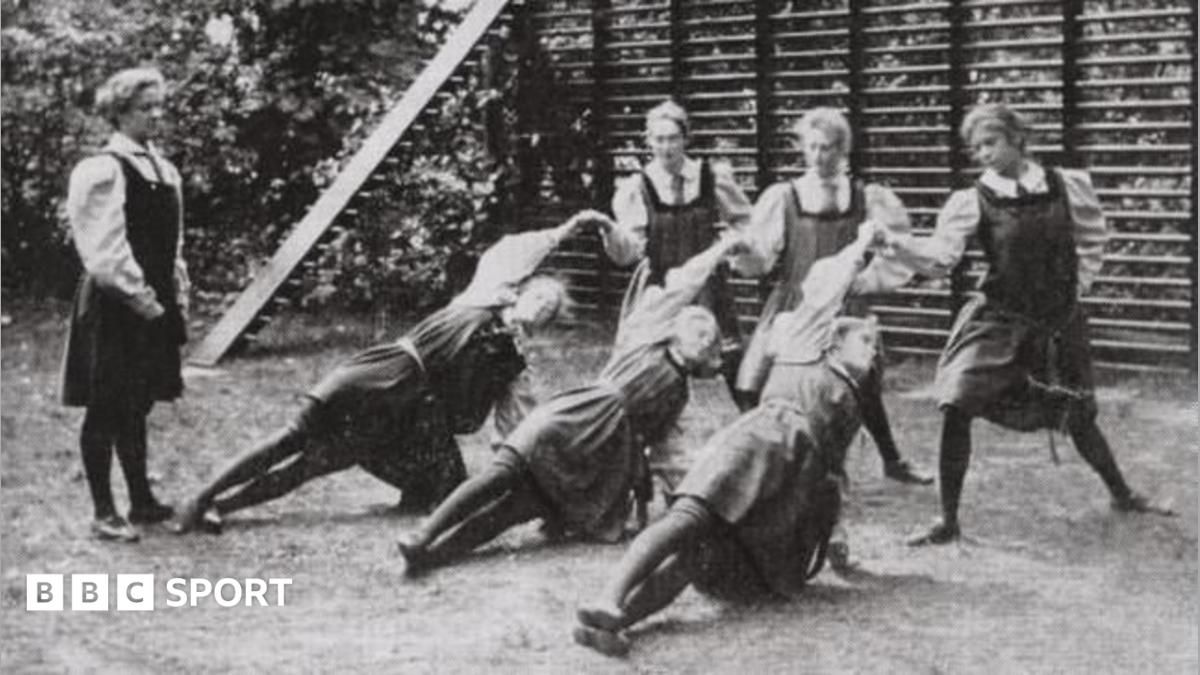
Martina Bergman Osterberg was a powerhouse liberal, a college owner and principal who strategically and scientifically set out to build "physically perfect" women before dispatching them to teach and create more in their likeness.
Netball was a mid-1890s by-product of her extraordinary physical education college operation - a fitting launchpad for a sport that has had to scuffle for attention, respect and a worthy stage, and has achieved all that thanks to decades of female steadfastness.
The by-product is pivoting into its professional era in the 21st century.
Elite netball teams are relocating from sports halls to major arenas, and players are noticing a difference in their pay packets.
Australia's Suncorp Super Netball is where the top money is for now and, while salaries are veiled in secrecy, the cream of the crop there are reputedly nudging close to the six-figure mark.
Rank-and-file in the UK-based Netball Super League are scraping into five figures and often working second jobs, although full-time marquee players fare much better.
Netball Super League is two years into a 10-year pathway to professionalism.
England were Commonwealth Games gold medallists in 2018 and World Cup runners-up in 2023. Such feats drive public interest, and attendances jumped by 45% in the first year of the professional journey.
And it remains a sport driven by women, as Osterberg would doubtless have wanted.
She was a brilliantly radical leader: demolishing the concept of men being best suited to train women, dismissing rival teaching methods, and convincing head teachers they needed her college graduates to run their physical education programmes.
A magazine account admiringly described Osterberg's students, typically in their late teens, as "teachers in embryo... destined high priestesses of a new cult".
That verdict came in 1897, towards the end of a century in which women who exercised and played sports had frequently faced disapproval.
Through her audacity and fierce self-belief, Osterberg was a prime mover in rewriting the playbook for women in British sport.
And it was not beyond her to borrow a good idea...
Osterberg caught wind of the invention of basketball by Massachusetts gym teacher James Naismith in 1891 and its subsequent rapid surge in popularity earlier than most in the UK. Her exposure to the sport possibly came on an 1893 trip to Chicago.
It took just that seed for its sister sport netball to take root - initially also going by the name of basketball.
By summer 1895, students were lobbing small balls into waste paper baskets perched upon poles on the lawn of a new Dartford talent factory: Madame Bergman Osterberg's Physical Training College.
The sport also cadged elements from a women's version of basketball featuring player zone restrictions.
America's basketball fad had been swiftly deconstructed, repurposed.
Goals were awarded instead of points, dribbling outlawed and rings with nets replaced the bins.
In 1901, netball's first set of formal rules was established and Australia and New Zealand were by now on board.
Like basketball, netball began as a nine-a-side sport. Rules diverged and were not globally standardised to seven-a-side until 1960.
A sport cannot function seriously on a world scale without such conformity, and a World Cup - launched in 1963 and contested every four years since - needed that.