Beyond fighter jets: What India needs to prepare for the wars of tomorrow
In a conversation with HT Senior Anchor Aayesha Varma on Point Blank, Executive Editor Shishir Gupta argued that India must look beyond fleet numbers. | India News
In a conversation with HT Senior Anchor Aayesha Varma on Point Blank, Executive Editor Shishir Gupta argued that India must look beyond fleet numbers.
India’s airpower debate is no longer simply about how many fighter jets the country needs. It is about what those aircraft can achieve in skies increasingly threatened by long-range missiles, drones and sophisticated air defences.
In a conversation with Hindustan Times Senior Anchor Aayesha Varma on Point Blank, Executive Editor Shishir Gupta argued that India must look beyond fleet numbers. More fighters remain necessary, but they must form part of a wider military capability combining unmanned systems, longer-range weapons and layered defences. The central objective is deterrence: preventing an adversary from attacking by making the likely costs unacceptably high.
More fighters, but not numbers alone
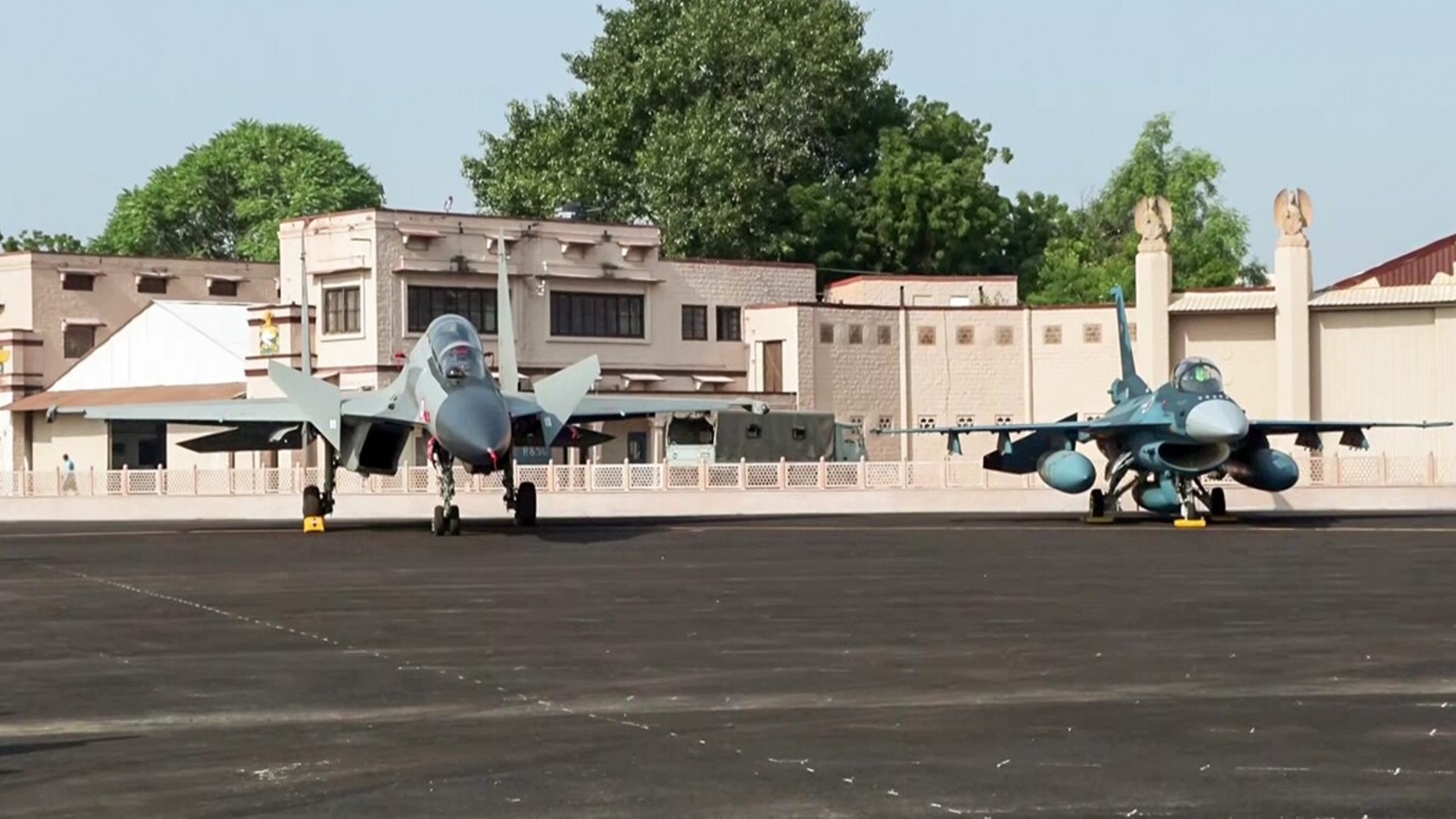
The discussion began with Air Chief Marshal A.P. Singh’s call to induct 38–40 fighters annually as the Indian Air Force seeks to rebuild its declining strength. Gupta said the fleet had fallen below 30 squadrons, against a benchmark of approximately 42.5. He also drew a distinction over that benchmark, saying it had been authorised by the Chairman, Chiefs of Staff Committee, rather than the Cabinet Committee on Security.
Yet the numerical shortfall tells only part of the story. Gupta questioned whether adding aircraft, without improving the weapons they carry, would deliver sufficient military advantage.
His argument centred on standoff weapons: missiles and other munitions that allow aircraft to strike from farther away, reducing their exposure to hostile air defences. A larger fighter fleet becomes more useful when its aircraft can attack without having to fly deep into an adversary’s defensive envelope.
Why range changes the equation
For Gupta, the priority is not choosing between aircraft and missiles, but ensuring they work together.
Longer-range air-to-air weapons can threaten enemy aircraft at greater distances. Air-to-ground weapons can allow pilots to attack targets while remaining farther from defensive systems. The same logic, he argued, should influence where India stations its aircraft, with attention to protecting bases from enemy strikes.
He also cautioned against viewing India’s requirements primarily through Pakistan. China, he said, must shape the longer-term assessment of the scale and sophistication of the threat.
That shifts the question from “How many fighters are enough?” to something more demanding: what combination of aircraft, weapons and protected infrastructure can remain effective against a powerful adversary?
Also Read | Does India need stand-off missiles or more fighter jets?
What drone warfare does - and does not - prove
Gupta pointed to Ukraine, Iran and the Houthis to illustrate how forces with limited conventional airpower can use missiles and drones to impose costs on stronger opponents.
In his assessment, attacks on infrastructure demonstrate that military pressure need not depend entirely on a large fighter fleet. Relatively inexpensive weapons can also create an uncomfortable economic imbalance when defenders use costly interceptors against them.
But he stopped short of arguing that India should abandon manned aircraft. India, he said, has too much at stake to rely exclusively on drones, loitering munitions or missiles.
The lesson is therefore not that fighters have become irrelevant. It is that they cannot be expected to deliver every military objective by themselves. Gupta’s preferred approach combines manned and unmanned capabilities according to the target, the adversary and the intended outcome.
Also Read | ‘Delay in inducting new fighter jets hurting IAF’: Air Chief Marshal AP Singh highlights need for strengthening IAF
A shield must match the threat
The discussion also highlighted the importance of defending against the weapons transforming offensive warfare.
Gupta argued that India needs a layered response rather than a single, all-purpose shield. Different threats require different interception options, particularly when the cost of destroying a cheap drone can far exceed the cost of launching it.
He discussed systems ranging from lower-level interception capabilities to Akash and the S-400, alongside indigenous interceptor development. His broader point was that defensive planning must account for both effectiveness and affordability.
The stakes extend beyond military installations. Gupta linked protection against missile attacks to civilian morale and economic confidence. In that framing, air and missile defence are not merely supporting capabilities; they help preserve the stability on which national growth depends.