Defence minister Rajnath Singh reviews battle readiness, infra push along LAC in Sikkim
Singh asked the armed forces to strengthen cyber resilience, information integrity and domain awareness to boost combat readiness and tackle emerging threats. | India News
Singh asked the armed forces to strengthen cyber resilience, information integrity and domain awareness to boost combat readiness and tackle emerging threats.
Defence minister Rajnath Singh on Saturday reviewed the army’s operational preparedness along the Line of Actual Control (LAC) in Sikkim, focusing on border infrastructure development and the deployment of advanced military equipment and emerging technologies to sharpen combat effectiveness.
He was briefed at the Sukna-headquartered 33 Corps, near Siliguri.
“Sukna and its surrounding region is a critical hub for the movement of supplies, weaponry, food, medical provisions and personnel to forward locations. Its geographical sensitivity necessitates round-the-clock operational readiness,” Singh said.
Army chief General Dhiraj Seth, Eastern Army commander Lieutenant General VMB Krishnan, and corps commander Lieutenant General Man Raj Singh Mann were present.
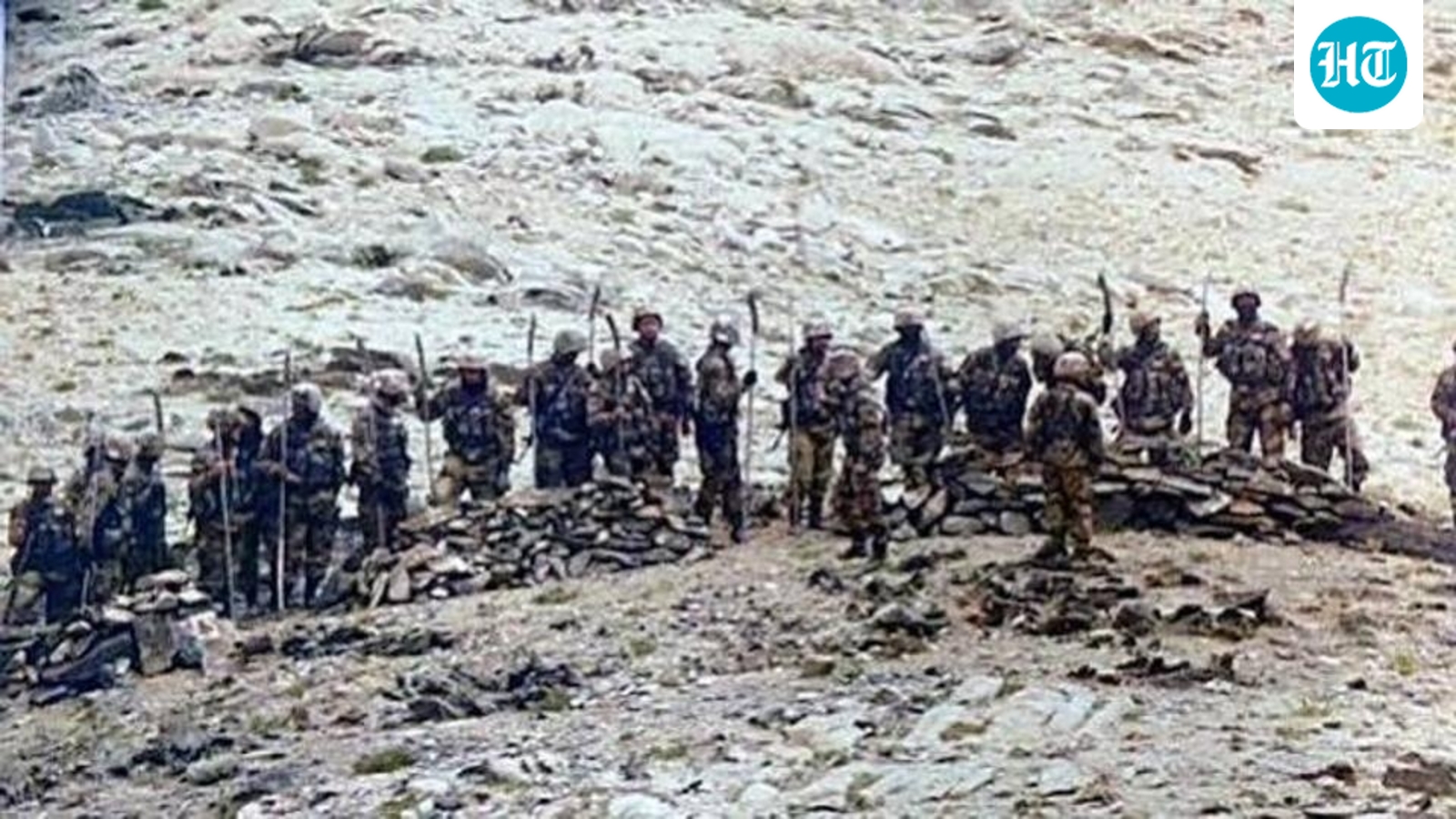
The defence minister is scheduled to visit the Sherathang war memorial in Sikkim on Diwali to pay tribute to Indian soldiers killed in the 1967 Nathu La and Cho La clashes with China. The battles ended in a decisive Indian victory, with one account putting Indian casualties at 88, against 340 on the Chinese side.
In Bagdogra, also near Siliguri, Singh asked the armed forces to strengthen cyber resilience, information integrity and domain awareness to boost combat readiness and tackle emerging threats. Security landscape has become more complex, with warfare stretching beyond conventional engagements along the borders to include “asymmetric warfare, proxy wars, cyber-attacks, drone swarms, information operations and narrative management,” he said while interacting with air warriors at Air Force Station, Bagdogra.
“Often, the adversary avoids direct confrontation and instead seeks to exploit our vulnerabilities. Through social media, the adversary may attempt to sow doubt in the minds of the local population and our soldiers by spreading misleading information. In such a scenario, your role extends beyond that of an ordinary soldier,” Singh said.
IAF chief Air Chief Marshal Ashutosh Dixit was also present.

Singh described Bagdogra as a strategically important region and a crucial link in India’s security framework, particularly for the North-east.
A December 2025 report of the parliamentary committee on external affairs contained pointed mentions about Chinese activities in areas surrounding the so-called “chicken’s neck,” or the Siliguri Corridor—the territory linking India’s strategic northeastern states to the rest of the country.
The report on “Future of India-Bangladesh relationship” said China’s increasing footprint in Bangladesh, especially through infrastructure and port development and military cooperation, is a concern though the government is taking all measures to safeguard India’s national interests.
Singh said that the air warriors deployed in the region serve as a robust shield for the security of the eastern sector, and their preparedness is fundamental to maintaining stability in the region. “The more you engage with the local community, the weaker the adversary’s conspiracies will become.”
He described the revamped Agnipath scheme as a Diwali gift for Agniveers, while reiterating the government’s commitment to the welfare of military personnel and their families. The new Agnipath framework will apply only to existing Agniveers who miss out on retention, giving them two more years in uniform and another shot at becoming permanent soldiers, as first reported by Hindustan Times. Essentially, all current Agniveers will become permanent after this two year extended service, subject to meeting specific eligibility criteria and individual consent
The government will revisit the scheme’s provisions for those who begin their military training after December 31. The Agnipath reboot was announced by Chief of Defence Staff General NS Raja Subramani on November 4, weeks before the three services were set to release 75% of Agniveers from their first batch after four years of service, retaining only the 25% selected on merit for another 15 years under the scheme’s earlier provisions.
Rahul Singh is Defence Editor at Hindustan Times and has covered military affairs and national security for nearly 25 years. Apart from extensive and deep reporting on the Indian military, including several newsbreaks that have set the national news agenda over the years, Rahul has reported from conflict zones including Jammu & Kashmir, India’s North-east and the Democratic Republic of Congo. Rahul has co-authored the bestselling 'India's Most Fearless' series of books on recent Indian military operations. Widely read and translated into multiple languages, the books place an emphasis on firsthand accounts of daring missions across the three services. His work has been adapted into web series and films including the National Award-winning Amaran. Rahul comes from an Army background and attended schools across the country before completing his education from Panjab University, Chandigarh. Grew up playing tennis, now mostly cheers from the sidelines. Works in Delhi, heart in the mountains.Read More