India, China agree on early boundary delimitation push in new 8-point consensus
India and China agreed to establish two additional border military hotlines in the eastern and middle sectors of the LAC to improve border management. | India News
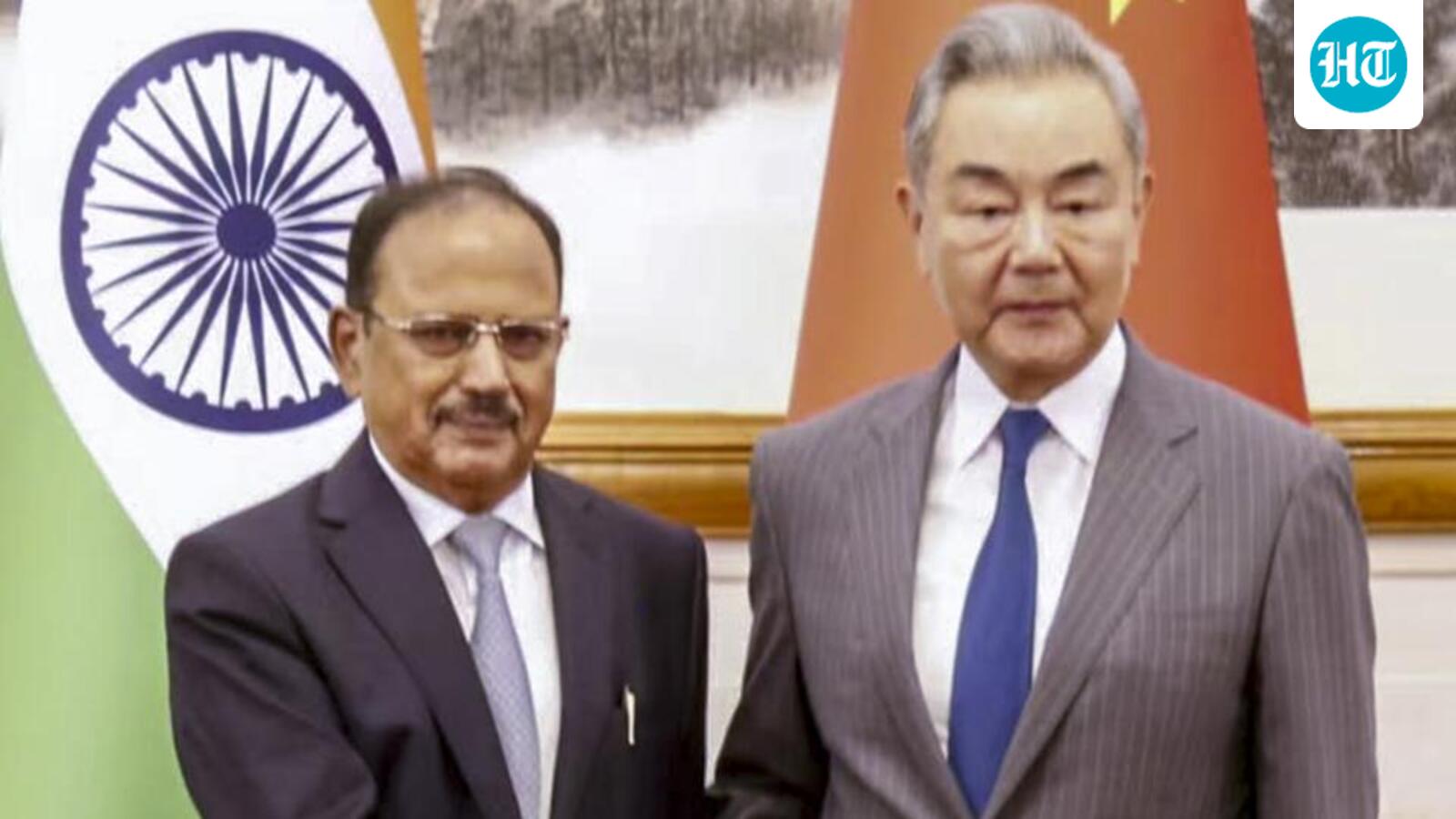
India and China agreed to establish two additional border military hotlines in the eastern and middle sectors of the LAC to improve border management.
India and China have agreed to take forward talks on an “Early and Substantial Harvest” of boundary delimitation and to promptly address any situation to avert “misunderstanding and miscalculation” along the Line of Actual Control (LAC) during talks between the Special Representatives on the border issue.
They further agreed during the 25th round of talks between the Special Representatives in Beijing on Tuesday to establish two additional points for meetings between generals and senior military commanders and two additional border military hotlines in the eastern and middle sectors of the LAC to improve border management.
A joint statement issued by the two sides on Wednesday said the Special Representatives – India’s National Security Adviser Ajit Doval and China’s foreign minister Wang Yi – reached eight points of outcomes and consensus, including holding a meeting of an Expert-Level Mechanism on Trans-border Rivers in September.
Also Read: India, China discuss peace along LAC, border delimitation: ‘Met in keeping with guidance from Modi, Xi Jinping’
The Special Representatives mechanism was established in 2003 to finalise a framework for resolving the dispute over the 3,488-km India-China border. Doval and Wang met for the third time since the two countries reached an understanding in October 2024 to end a standoff in the Ladakh sector of the LAC that took ties to a six-decade low.
“The Expert Group on Boundary Delimitation and Working Group on Border Management under the WMCC [Working Mechanism for Consultation and Coordination] would respectively advance discussions on an Early and Substantial Harvest of boundary delimitation and Border Management,” the joint statement said without going into details.
The first task for both the groups will be to agree on their respective terms of reference, the joint statement said.
The development assumes significance, as reports suggest that the two sides are considering demarcating segments of the LAC where there aren’t significant differences. The two groups on boundary demarcation and border management were set up during the last round of Special Representatives’ talks a year ago.
As part of the eight outcomes, India and China agreed that “any situation on the ground would be addressed promptly through existing diplomatic and military channels, including the WMCC, local commander‑level meetings and other agreed mechanisms, to resolve outstanding issues and avoid misunderstanding and miscalculation along the LAC”. The two sides also discussed ways to improve understanding of the LAC in “appropriate areas, for better border management”.
This comes against the backdrop of reports of a fresh face-off between Indian and Chinese troops along the border in Arunachal Pradesh in July. The Indian side has insisted that the state of the border will determine the overall course of the relationship.
The two sides will hold the next meeting of the India-China Expert-Level Mechanism on Trans-border Rivers in September and “maintain communication on issues including hydrological data sharing, and renewal of the relevant MoUs”, the joint statement said.
New Delhi has highlighted its concerns about a $137-billion mega dam being built by China in the upper reaches of the Brahmaputra river on the ecologically fragile Tibetan plateau that can affect millions downstream in India and Bangladesh.
In the context of trans-border cooperation, the Indian side appreciated China’s efforts to increase the number of batches for the Indian official pilgrimage to Kailash Manasarovar in Tibet. Both sides appreciated the reopening of three designated border trade points, and agreed to strengthen exchanges and cooperation in border trade, pilgrimage and other areas.
Also Read: China's Xi Jinping may visit India next month for BRICS Summit 2026, 1st trip in 7 years
As part of the outcomes, India and China will uphold the guidance received from Prime Minister Narendra Modi and President Xi Jinping, maintain peace and tranquillity in the border areas and “create an atmosphere for healthy and steady development of bilateral relations”. They will also advance negotiations on a framework for settling the border in line with the Agreement on Political Parameters and Guiding Principles for Settlement of the India-China Boundary Question signed in 2005, and the consensus reached in Special Representatives’ talks in pursuit of a fair, reasonable and mutually acceptable solution.