Silicon meets DNA: AI’s bioscience boom has its creators and researchers worried
Backed by up to £300 million in funding and model commitments, Britain’s new AI Biosecurity Lab highlights the race to separate medical breakthroughs from bioweapon risks | India News
Backed by up to £300 million in funding and model commitments, Britain’s new AI Biosecurity Lab highlights the race to separate medical breakthroughs from bioweapon risks
A week earlier, the United Kingdom became the first country to set up an AI Biosecurity Lab, the first of its kind anywhere in the world. This lab will serve two key objectives. First, to use AI to accelerate research, improve disease understanding, and support the discovery of new medicines and vaccines; and second, to ensure AI doesn’t help anyone build a biological weapon.
The AI Biosecurity Lab will have £100 million in government funding, and up to £200 million in company commitments from OpenAI and Anthropic. Google DeepMind will also work closely with the Lab for research, and look to provide trusted access to frontier Gemini models as well as their specialised science models. The lab sits inside the UK’s broader £165m National AI Biosecurity Initiative and sees Silicon Valley’s fiercest rivals come together as the boundary between AI models, coding and physical biology disappears fast.
Looking back to late February, when Chen Bo Calvin Zhang wrote in a research paper titled ‘LLM Novice Uplift on Dual-Use, In Silico Biology Tasks’ alongside colleagues from the University of Oxford, UC Berkeley and SecureBio, a single uncertainty sat at the heart of scientific acceleration and dual-use biosecurity risk.
“Large language models (LLMs) perform increasingly well on biology benchmarks, but it remains unclear whether they uplift novice users—i.e., enable humans to perform better than with internet-only resources,” Zhang wrote at the time.
Whether the paper’s researchers had envisioned the paradigm of artificial intelligence (AI) with life sciences and medicine research, which frequently overlaps, changing rapidly since, or were quietly trying to nudge development in the right direction, the trajectory is clear to see. Zhang, then at Scale AI, has been a Research Program Manager at OpenAI since June. The AI company is part of a troika that includes Anthropic and Google DeepMind, actively researching solutions.
Bioscience AI research core focus areas include molecular structures and typical AI tasks include protein folding, genomic sequencing, and metabolic pathway mapping. Medicine AI research focuses on disease diagnosis, clinical trial matching and predicting patient outcomes.
There is collaboration between academia, which is increasingly using specialised AI models, and AI companies. The key to this is two parallel streams of development—general-purpose frontier LLMs, and specialised Biological Design Tools, or BDTs.
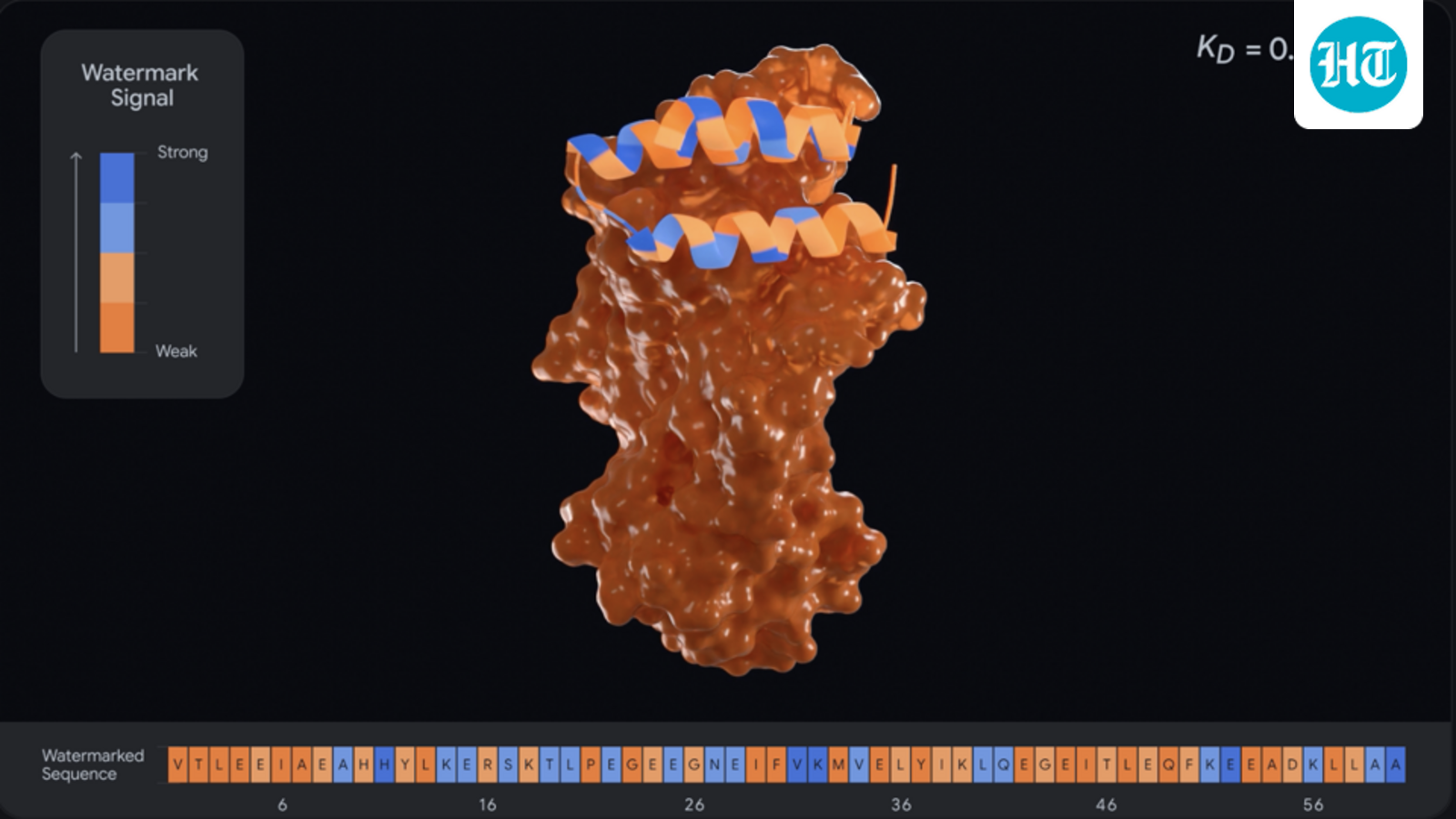
In August, Stanford University and the Arc Institute said that generative AI had helped compose a complete, functional genome for the first time, with 16 designs becoming bacteriophages that infected and killed E. coli., and was done using genome language models Evo 1 and Evo 2.
Research organisation RAND warns that no single safeguard can prevent an actor from using AI to try and develop weapons. They point to multi-layered architecture as a viable counter-approach: access restriction, precursor screening, misuse detection, and deterrence and response.
“We don’t know exactly how fast AI capabilities in biology will advance, or which actor will try to exploit them first, but we do know that the window for building preventive infrastructure is open now,” says Sella Nevo, director of RAND’s Center on AI, Security, and Technology.
In general AI, capability scales predictably with massive compute and data. In biology, a relatively lightweight model fine-tuned on high-resolution genomic or structural data can design novel phages as the Stanford and Arc research did, or toxins.
“Developing a drug involves many varied tasks: doing early research to identify a target for a drug and the right type of drug to engage it, designing a molecule with the right properties, optimising it to be manufactured reliably at scale, drafting the regulatory filings needed to run clinical trials, designing and administering those trials, and much more. Our strategy to realise AI’s medical benefits is based on having AI increasingly involved in all of these tasks,” Anthropic says in a statement.
Last week, they detailed early stage research progression, including increasing the usefulness of a cancer treatment known as CAR T-cell therapy, developing drugs that would detach the IgE molecule that sets off a chain reaction leading to food allergies from human immune systems, and using AI to flag issues in clinical trials by scanning thousands of pages of documentation.