Why has British Steel been nationalised?
The UK's only remaining plant making virgin steel has been taken into public ownership after years of uncertainty over its future.
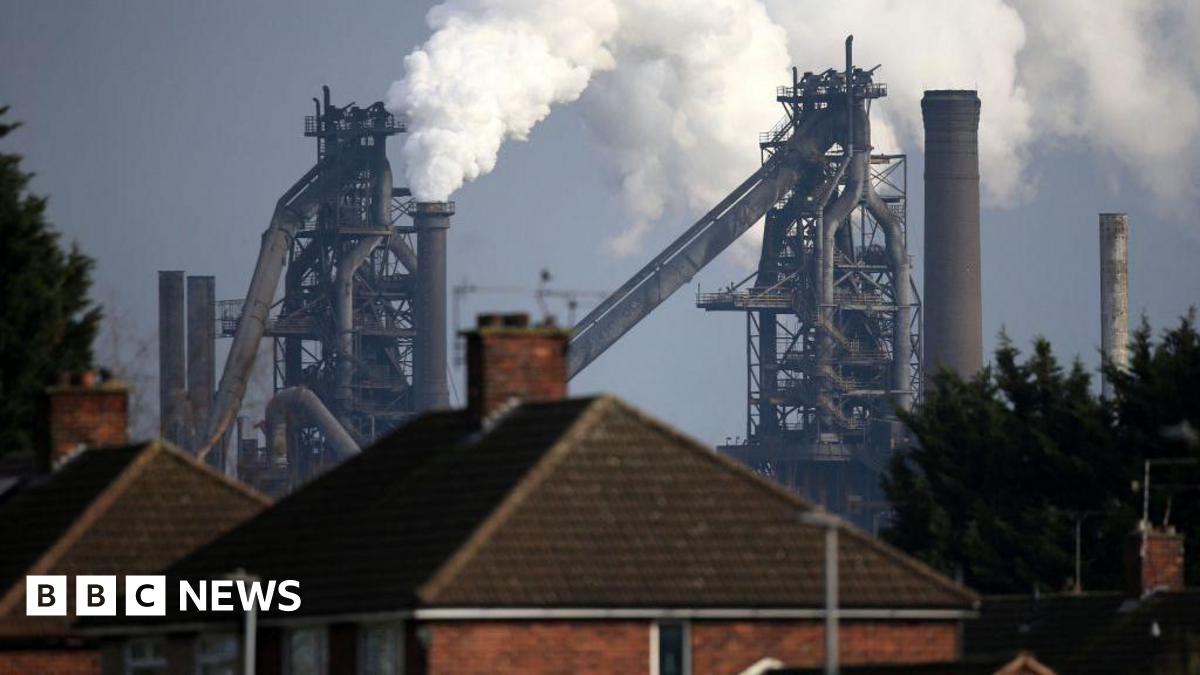
British Steel has been taken into public ownership after years of uncertainty over the future of the steelworks.
It comes months after the UK government took control of the company's plant in Scunthorpe, Lincolnshire, though it was still owned by China's Jingye Group.
What is British Steel and why is it important?
British Steel's Scunthorpe plant employs 2,700 people, about three-quarters of the company's workforce.
It is the last plant in the UK producing virgin steel, which is used in major construction projects like buildings and railways. It has fewer imperfections than the recycled steel made elsewhere in the country.
Were the plant to stop producing virgin steel, the UK would be the only member of the G7 group of leading economies without the ability to make it. The government views that as a risk to the UK's economic security.
Who has owned British Steel?
In 2016, Tata Steel sold the loss-making part of its business that made "long products" like transport rails and steel sections for construction.
Private investment firm Greybull Capital bought it for £1 and renamed the business British Steel.
However, following financial collapse in 2019, British Steel was taken over by the government's insolvency service.
It was sold to Chinese steel-making firm Jingye the following year.
On 16 July this year, the UK government brought it into public ownership, and Jingye is now seeking compensation for nationalisation.
China's commerce ministry has hit out at the nationalisation, saying it "firmly opposes and is strongly dissatisfied with the British government's decision".
Why is the Scunthorpe plant losing money?
In late March 2025, Jingye said the plant was losing around £700,000 a day and launched a consultation on its closure.
It said the blast furnaces were "no longer financially sustainable," blaming "highly challenging" market conditions, tariffs and costs associated with moving to lower-carbon production techniques.
A later report from the National Audit Office in March this year noted that the Scunthorpe steelworks was costing the government about £1.3m a day.
UK steel production has been falling for several decades and the financial pressures facing the industry were heightened last March when the US imposed a 25% tariff on any steel it imports.
Global over-production has created "a glut of steel on the international market", according to a UK government briefing,, external which has pushed prices down. British manufacturers also face higher costs, particularly on electricity, than firms in other countries.
What has the government said?
The government says nationalisation will protect jobs and safeguard "a vital national capability".
Nationalisation buys it time and gives it the power and freedom to decide on the future of the plant, while keeping the blast furnaces going.
Ultimately it is unlikely the government will want to remain in charge of a business that is costing it more than a million pounds a day.
The question over whether Jingye should be compensated for the nationalisation based on the value of the company will be determined by an independent assessor, Business Secretary Peter Kyle told the BBC.
"But let me be really clear, there is an alternative here - that we let this business go bust," he said.
"If that business disappears, we will lose the ability for primary steel production in our country, we will become entirely dependent on global supply."
Can British Steel's blast furnaces keep running?
Scunthorpe's skyline has four blast furnaces, all named after English Queens - Bess, Mary, Anne and Victoria. Bess and Anne are the only two still working.
Both are very old - Bess started producing steel in 1938 and Anne in 1954 - and are approaching the end of their operational lives.
Blast furnaces are designed to run continuously. Allowing them to cool can cause serious damage, and extensive work is required to restart them. Even a planned refurbishment can cost tens of millions of pounds.
The supplies needed to keep them running - coking coal and iron pellets - are also running low.
Why can't a blast furnace easily be restarted?
Turning off a blast furnace without making it permanently unusable is notoriously difficult.
The furnaces operate at extreme temperatures, with iron ore and coking coal poured in at the top and liquid iron extracted at the bottom. This iron goes to the steel plant to make steel.
If a furnace stops working, the molten metal will cool and solidify. This is called a "salamander".





