Nepal floods: ‘Bodies buried in slush, families refusing food’, Khalsa Aid volunteers witness devastation
Khalsa Aid volunteers witness heartbreaking devastation in Nepal floods, providing aid to families amid overwhelming loss and despair.

From mud-swallowed homes and makeshift mortuaries to grieving families waiting for news, volunteers describe the devastation in Nuwakot, Rasuwa and Dhading as they provide food, clothes and medical aid.
Published - August 29, 2026 09:25 pm IST - NEW DELHI
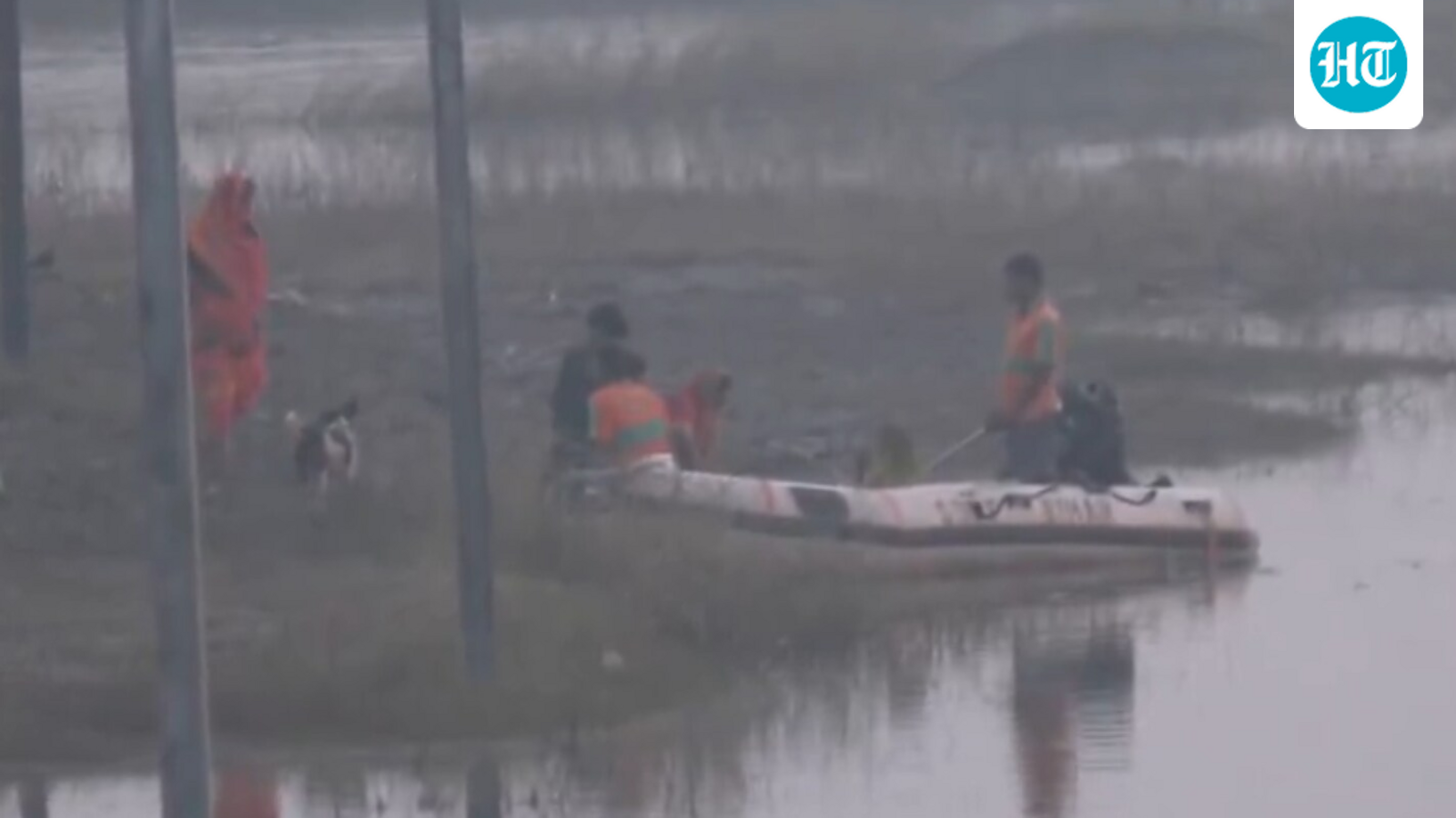
Khalsa Aid volunteers reached the flood hit Nepal for relief operations. | Photo Credit: Special arrangement
Thick slush swallowing houses, roads turned treacherous, the stench of decomposing bodies of people and animals hanging in the air, and army camps transformed into makeshift mortuaries where ambulances arrive carrying the dead — these are scenes from Nepal’s flood-ravaged valleys, as described by Khalsa Aid volunteers working in the worst-hit areas.
For these volunteers who have spent the past three days moving through the affected areas, the devastation along Nepal’s border with Tibet is difficult to comprehend. In Nuwakot, Rasuwa and Dhading, entire stretches of villages and markets have been buried under mud and debris after a sudden flood tore through the mountain valleys.
“Today, if you go, you will not see water. But there is a lot of slush. Buildings are fully submerged in it. Many bodies are buried inside this,” said Manohar Naidu, a Bengaluru native who is currently in Nuwakot with Khalsa Aid.
“Even when we are trying to walk on the sides, we are slipping into the slush. The entire area is now stinking because of all the dead bodies of humans and animals. The situation on the ground is really bad,” Mr. Naidu said.
The disaster began on Wednesday (August 26) when a section of a Himalayan glacier collapsed near the Nepal-China border, sending a mass of ice, rock and debris into the Lhende river system. The resulting surge swept through Nepal’s Rasuwa district before moving downstream into Nuwakot and Dhading.
Volunteers capture the devastation following flash flood in Nepal | Photo Credit: By Arrangement
By Saturday (August 29), the scale of the catastrophe had become clearer. At least 676 people had died in Nepal and Tibet, while nearly 2,400 remained missing. More than 3,700 people had been rescued in Nepal, but large parts of the affected terrain remained difficult to reach because roads and bridges had been destroyed.
For those on the ground, however, the numbers do little to capture what the disaster looks and smells like.
In Rasuwa and Nuwakot, army camps have been turned into temporary mortuaries as hospital morgues run out of space. The volunteers described convoys of ambulances arriving with bodies recovered from the debris, which are being kept at the camps in the interim before being sent for identification.
Outside the tents, families wait in desperation.
Some have spent hours standing in the hope of receiving news about relatives who disappeared when the flood came. Mr. Naidu said many families have refused even the hot food - including rice, lentils, curries, being offered by volunteers.
“They are not even willing to accept the food that we are offering them. All they want to know is about their loved ones,” he said.
“Those who are with families are still eating a little. Those who have lost their loved ones aren’t even willing to eat at all,” said Manpreet Singh, a volunteer from Patiala, Punjab.
Khalsa Aid volunteers serving food for affected families in Nepal | Photo Credit: By Arrangement
Mr. Singh, who has also worked during floods in Assam and a cyclone in Tamil Nadu, travelled to Nepal with five other volunteers from Punjab.
Their team recently reached Gajuri Bajar in Dhading, where they saw a large market area that had been almost completely washed away.
“Locals told us the market was active and full of people when the flood came. A lot of people were washed away and thousands remain missing still,” he said.
The volunteers had initially been assisting with rescue operations and the identification of bodies alongside the Lions Club, but on Saturday (August 29) were told by the authorities that rescue operations would be handled by the army and external organisations would not be allowed to take them up.
Their role has consequently shifted towards relief and support for those waiting at military camps for news of relatives. Khalsa Aid volunteers are currently providing hot meals, clothes and basic medical assistance at relief camps. One camp in Nuwakot is sheltering around 400 people, who are being looked after by volunteers.
Among the people Mr. Singh met was a 16-year-old girl who survived because her family received a warning moments before the flood struck.